

Army denies soldiers were ordered to write farewell letters pre-Gaza
General tells Knesset that no such instruction was issued by mid-to-senior officers and that the IDF strongly opposes the idea
 Add ToI as a Preferred Source on Google
Mitch Ginsburg is the former Times of Israel military correspondent.
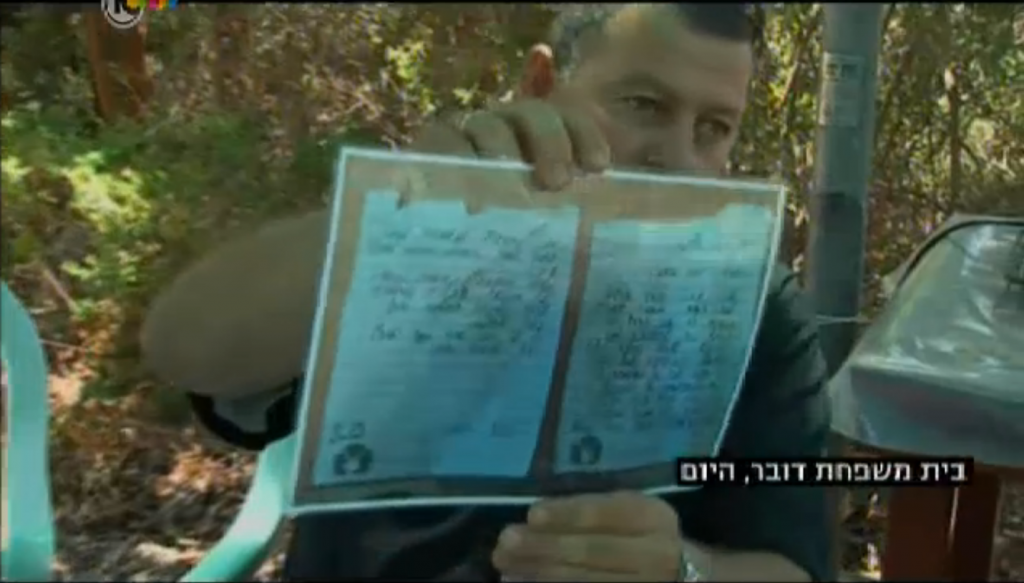
The army categorically denied Tuesday that senior or mid-level officers ordered soldiers to write good-bye letters to their families before the ground operation was launched in Gaza this summer.
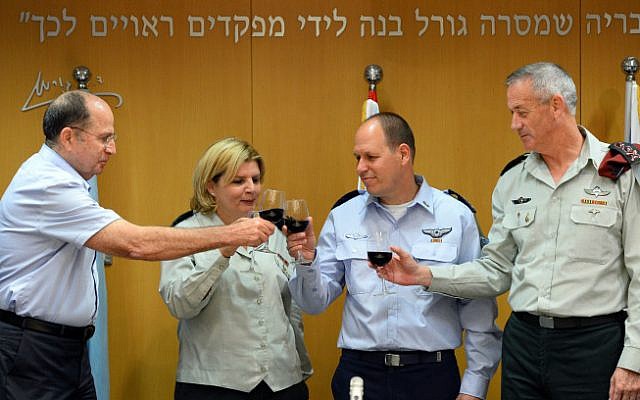
“There is no such procedure, there was no order, and the Israel Defense Forces issued no directive to write farewell letters before heading into battle,” Maj. Gen. Hagi Topolansky, the head of the IDF manpower division, told the Knesset.
Members of a subcommittee of the Knesset’s Foreign Affairs and Defense Committee asserted earlier this month that such an order had, in fact, been issued in several instances. Both MK Elazar Stern (Hatnua party), a former general, and Ofer Shelah (Yesh Atid) said they personally had heard of cases, from bereaved parents, in which soldiers had been instructed to write letters in advance of Operation Protection Edge.
The chairman of the IDF manpower subcommittee, MK Omer Bar-Lev (Labor Party), a former army colonel, said at the time that the army appeared untroubled by the issue and therefore had failed to investigate the matter, making it “doubly grave.”
During the 50-day operation in Gaza this summer, 67 soldiers were killed. In several instances, platoon mates and friends fished crumpled notes out of the soldiers’ gear and delivered them to the bereaved parents.
First Sgt. Shahar Dauber, a paratrooper killed in Khan Yunis on July 23, wrote that he was nervous, that he was excited to be doing something for his country, that he missed his family and his cat, Kitzy, and that he wished, above all, “to be remembered.”
His father, Boris, said he was surprised to receive the letter and that “that thing, in essence, broke my heart.”
Maj. Gen. (res) Yitzhak Brik, the IDF ombudsman and a recipient of the Medal of Courage, who was present during both Knesset meetings, said that writing a farewell letter on the eve of war intensifies a soldier’s fears, makes him lose concentration, and punctures his faith that he will return home safely.
Seated beside Topolansky, he said that if farewell letters were written, under orders, “it is not a standard phenomenon.” Perhaps, he allowed, the order was given “on the periphery.”
Topolansky explained that the manpower division currently has 12 teams examining different aspects of the war, including this issue. He said that, once the work has been completed, he’ll have more conclusive answers, but that for now he can assure the Knesset that no battalion commander, or anyone of higher rank, issued such an order.
Both generals allowed for the possibility that “a squad leader” — the lowest level of command in the IDF — may have instructed a few troops to write farewell letters, but said that the IDF unequivocally condemns the practice.
Bar-Lev urged Topolansky to write an open letter to all soldiers, stating clearly that the army views such an order as contrary “to the ethos of the IDF.” He reiterated that it is important that the message be delivered from the top echelons “to the last of the soldiers.”






The Times of Israel Community.