

Astronomers find closest black hole to earth, a mere 1,000 light years away
Celestial object located in double-star solar system visible to the naked eye; researcher calls discovery ‘tip of an exciting iceberg’
 Add ToI as a Preferred Source on Google
Luke Tress is The Times of Israel's New York correspondent.
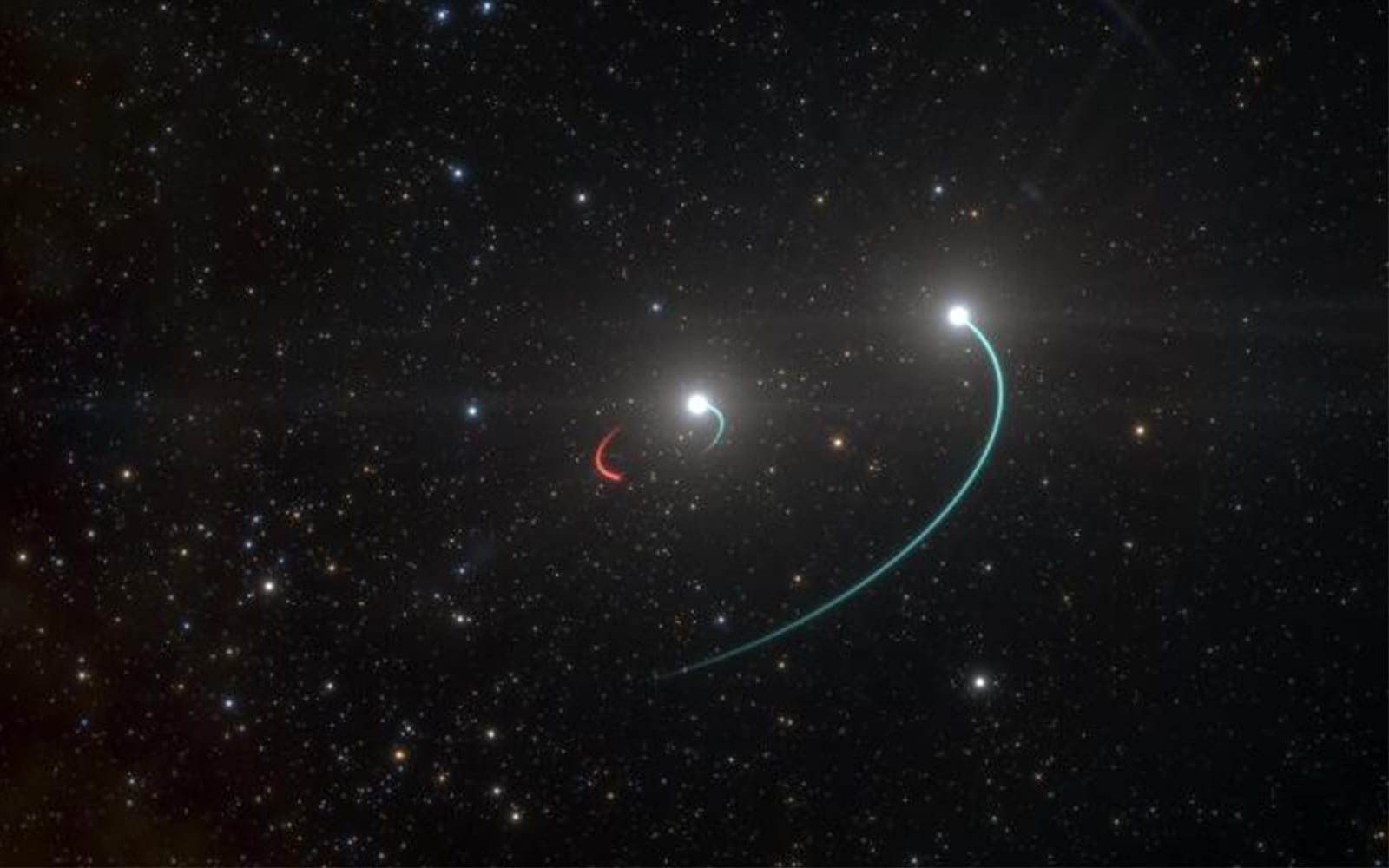
A team of European astronomers has located a black hole lurking a mere 1,000 light years from earth, the closest black hole to our solar system ever discovered, according to a study published Wednesday.
The black hole’s solar system, which has two stars, is so close to earth that its stars can be seen by the naked eye from the southern hemisphere on a clear night.
“We were totally surprised when we realized that this is the first stellar system with a black hole that can be seen with the unaided eye,” said Petr Hadrava, one of the study’s co-authors.
The researchers said many similar black holes could be found in the future.
The study, conducted by astronomers from the European Southern Observatory research organization, was published Wednesday in the peer-reviewed Astronomy & Astrophysics science journal.
The team discovered the black hole by accident. It is located in the Telescopium constellation in a star system dubbed HR 6819, which the team was initially observing for a study on double-star systems.
The researchers, using a telescope at the La Silla Observatory in Chile, noticed that the system’s inner star orbited a hidden object every 40 days. They were able to affirm the black hole’s presence and calculate its mass after several months of observations.
“An invisible object with a mass at least four times that of the Sun can only be a black hole,” said Thomas Rivinius, who led the study.
The system’s second star is located farther away from the black hole.
Researcher Dietrich Baade called the finding the “tip of an exciting iceberg.”
The black hole is one of the first discovered, of its size, that does not interact violently with its surroundings. It therefore appears truly black — most of the black holes in our galaxy pull matter into them, including stars, and release powerful x-rays, making their presence visible.
Astronomers have found a couple dozen black holes in our galaxy, but estimate that many more were created as stars collapsed since the beginning of the Milky Way. The newly discovered system could provide clues going forward.
“There must be hundreds of millions of black holes out there, but we know about only very few. Knowing what to look for should put us in a better position to find them,” Rivinius said.
Scientists have already turned their attention to another nearby star system called LB-1, some 7,000 light years away, which could hide another black hole.
“LB-1 is a bit further away from Earth but still pretty close in astronomical terms, so that means that probably many more of these systems exist,” said Marianne Heida, one of the study’s co-authors.










The Times of Israel Community.