

Border instability brings Ukrainians, Jews closer, says Jewish NGO
At Lviv’s Limmud FSU conference, leaders say the surge in armed attacks on the borders with Russia compel non-Jewish Ukrainians to sympathize with Israel
 Add ToI as a Preferred Source on Google
Yifa Yaakov is a breaking news editor at The Times of Israel.
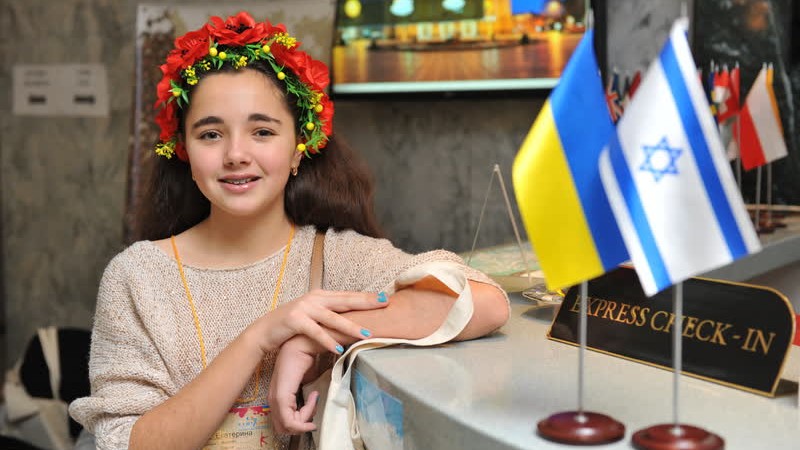
LVIV, Ukraine — At the Lviv, Ukraine, Limmud FSU conference last weekend, despite the city’s remote distance from the Russian border, the turmoil of violence in the east and the political instability were palpable.
Echoes of last winter’s Maidan Square attempted civil revolution — a series of pro-European rallies, which turned into violent clashes between civilians and pro-government mercenaries — are felt in the city and in the Ukrainian refugees who have fled their homes under siege for the past six months on the Russian border.
Ukraine warned Thursday that the security situation is steadily worsening in the country’s rebel-held east as separatist fighters move closer to government forces. One official said he feared an attack soon by Russian forces.
A cease-fire agreed upon in September — between the pro-Russian rebels and Ukraine’s government in Kiev — has been violated daily, especially around areas coveted by both sides, such as the airport in the eastern city of Donetsk.
Although Russian officials deny the charges, National Security and Defense Council spokesman Andriy Lysenko said the Russian army is massing troops, including air-defense units, near the border. Ukraine for months has accused Russia of directly supplying the separatist forces.
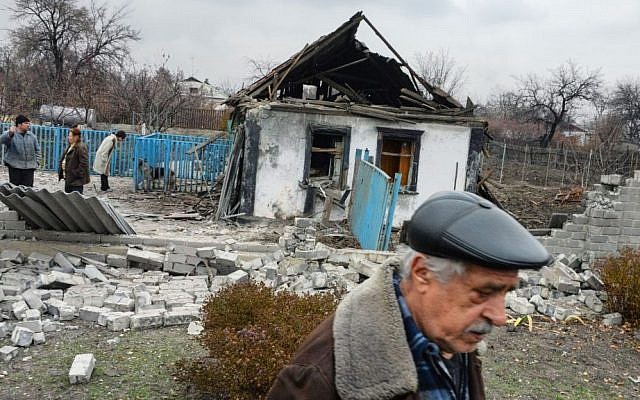
Speculation about a planned separatist assault has been swirling in the Ukrainian media, following a news report citing unnamed rebel commanders as saying an offensive would begin Sunday.
An island of time at Limmud FSU conference
At the Limmud FSU conference, many Ukrainian participants — who see themselves as Ukrainian, as they are Jewish — observed a moment of silence for their dead compatriots.
Some participants traveled to Limmud from cities on the eastern border, where banks have stopped operating, municipalities struggle to restore some semblance of normality and transportation has become so irregular that train tickets are hard to come by. It took one Donetsk resident, besieged by shelling last week, two days to reach the conference in Lviv, a 750-mile distance.
And as humorous plays, comedy routines and uplifting klezmer music — to the tune of Russian folk songs and Yiddish classics alike — rang out in the conference rooms, dozens of Limmudniks basked in the merry atmosphere, relishing the much-needed cheer.
Michail, a kippah-clad young man from the northeastern city of Kharkiv, said that at several points over the past year, there were clashes “a step away” from his city.
“It’s very dangerous,” he told The Times of Israel, but added that it is very difficult to make the decision to leave.
“How can you leave? Your whole life is there,” he said, likening the situation of the Jews of eastern Ukraine to that of the Jews of the Middle East in the late 1940s and early 1950s.
“People have lives, businesses,” he said, adding that throughout the conference, he attended sessions about music and humor to put the turbulent situation out of his mind.
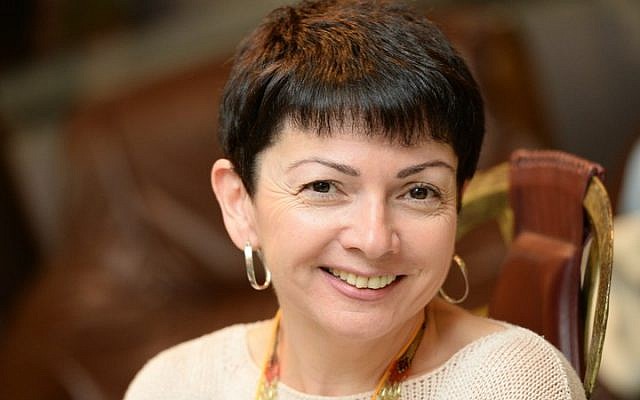
Galina Rybnikova, the director of Limmud FSU, is a native of Lugansk, where clashes have been taking place in the streets since the spring. She said she has not returned to her hometown since traveling with Limmud to Jerusalem in June.
And there are continuous reasons not to return to Lugansk.
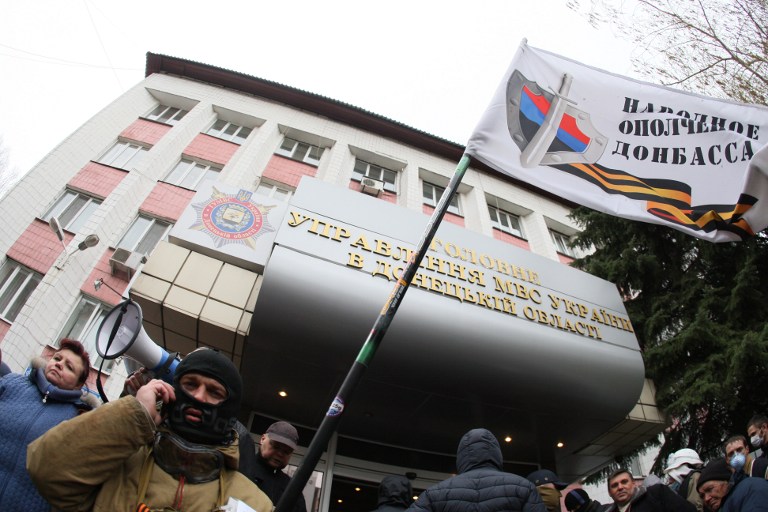
Ukrainian spokesman Lysenko said Thursday that hostilities have surged in Lugansk, one of two regions bordering Russia where separatists have been waging battle for six months. Government positions in the area have come under repeated rebel rocket and artillery attacks in the past day, he said.
Speaking to The Times of Israel last weekend, Rybnikova said the situation in her hometown, which is very close to the Russian border, is “terrible.” Defining herself as a Ukrainian Jew, Rybnikova said that before the conflict erupted, she had believed one could be a Russian speaker — as many residents of Lugansk, particularly those born in Soviet times, are — and still be Ukrainian. But the first pro-Russian demonstrations in the city, she said, had shocked her.
“I found it strange that they were trying to wave Russian flags in a country that is independent of Russia,” she told The Times of Israel. But that was only the beginning. Soon enough, tanks rolled into the city, ostensibly stolen by Ukrainian militants.
“Even if you are a Ukrainian partisan, where would you steal a tank from?” she asked, incredulous. “I didn’t see any Russian soldiers with my own eyes, but nobody tried to hide the fact that the other side is helping them and supplying them with weapons.”
After Malaysia Airlines Flight 17 was shot down over Donetsk Oblast, said Rybnikova, she was asked by the directors of Limmud to leave Lugansk. She said the organization helped her rent an apartment in a safe location elsewhere in Ukraine immediately upon her return from Israel, which at the time was rocked by the kidnapping of three yeshiva students in the Etzion Bloc, who were later found murdered.
“I arrived in Dnepropetrovsk with a suitcase full of summer clothes. I was certain that the city would be liberated soon, and then I would go home,” she continued. But the fighting in the streets of Lugansk continued, and her son moved from the city to Israel along with his wife and son after his studio was bombed. By the time the family traveled to Odessa to prepare for the move, the situation in Lugansk had become so dangerous that they had to leave for Ashdod, on which rockets fired from the Gaza Strip were raining, without going back for their belongings.
“They made aliya on July 10 with nothing,” Rybnikova said, days after war broke out in Israel, too. Of Lugansk’s 6,000-8,000 Jews, many others have left, either for Israel or other cities in Ukraine. But with both sides wanting to stay on good terms with Israel, Rybnikova said anti-Semitism hasn’t really reared its head in the city.
‘In my long life in Lugansk, I didn’t encounter any anti-Semitism. I encountered it for the first time at a pro-Russian rally in Lugansk’
“In my long life in Lugansk, I didn’t encounter any anti-Semitism. I encountered it for the first time at a pro-Russian rally in Lugansk. But officially, neither side expresses anti-Semitism in any way,” she explained.
“I believe neither side is interested in such phenomena [tainting its cause],” continued Rybnikova, wearing a necklace modeled on traditional Ukrainian embroidery and a bracelet bearing the word “Ukraine.”
She added that when the trouble began, many non-Jewish Ukrainians even began to identify with Israel and its struggle for secure borders.
“They realized that independence is not a given, that you have to fight for your independence and national identity,” she said. “Israel’s situation seems to them very similar to their own.”
Natalia Feduschak, of Ukrainian Jewish Encounter, an organization engaging Ukrainians of all faiths, told The Times of Israel that the instability in Ukraine has brought the Jews deeper into the Ukrainian fold, rather than increased anti-Semitism. She said that the deaths of a number of Jews at Maidan helped forge a stronger sense of kinship between Ukrainian Christians and their Jewish compatriots.
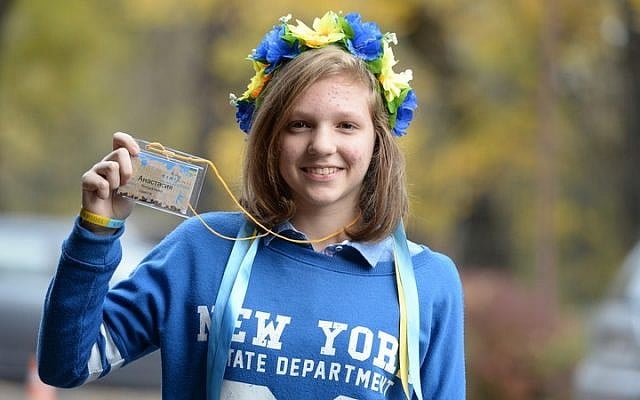
But according to Rybnikova, it is the Jews of Ukraine and Russia, along with the Joint Distribution Committee (JDC), who are extending a hand to their Jewish brethren to help them escape the violence by providing those fleeing the border towns with apartments, clothes and money and displaying the very same sense of (apolitical) community that Limmud FSU — which brings together Jewish participants from across eastern Europe, including both Ukraine and Russia — espouses. Here, they are all brothers.
— The Associated Press contributed to this report.






The Times of Israel Community.