

Branding liberal converts a demographic threat, Haredi campaigns get second wind
Israel’s religious conservatives have spent the week warning of nonexistent conversion drives among migrants and foreigners, while ignoring the conversion crisis closer to home

 Add ToI as a Preferred Source on Google
This week’s High Court of Justice ruling on non-Orthodox conversions has, it seems, given new life to the flailing campaigns of the Haredi parties Shas and United Torah Judaism.
Both parties are flagging in polls amid widespread anger among Haredi voters at the government’s handling of the pandemic, and especially at what many Haredi Israelis view as the government’s unfair singling out of their community for criticism over widespread social-distancing violations.
United Torah Judaism, which represents the Ashkenazi part of the Haredi community, has dropped in polls to six seats, down from seven and eight seats over the past three elections. Shas, UTJ’s Sephardi counterpart, has seen polls showing it at seven seats, down from the eight and nine it won in the last three races.
The drop in the polls probably reflects more than a statistical blip. A poll earlier this week for the Kol Hai radio station found that just 49 percent of self-described Haredi Israelis intended to vote for UTJ, down from 66% a year ago. Nearly a third, 30% of those who defined themselves as “Hasidic” said they’d vote instead for the far-right socially-conservative Religious Zionism party.
That’s a single poll, a data point that can’t stand on its own as evidence of a dramatic shift. But coupled with the drop in the major mainstream polls, it begins to paint a worrying picture for the Haredi parties.
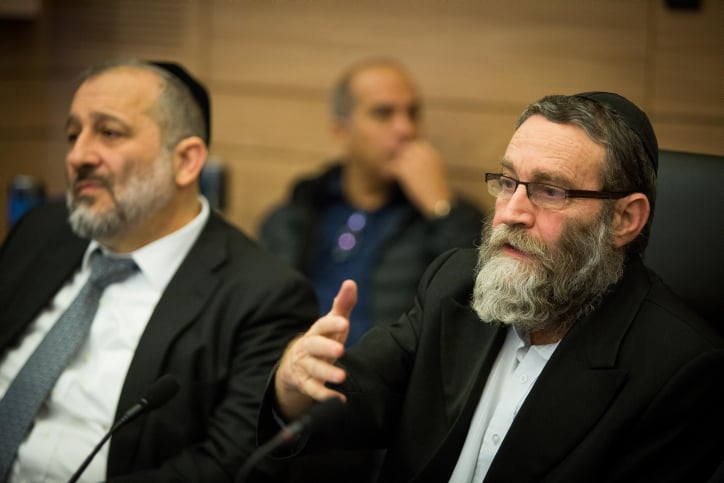
Haredi MKs, at any rate, believe the drop is real.
So it was that UTJ opened a Whatsapp group for political reporters this week – a first for the internet-shy party – to put out a campaign video that claimed that Reform Jewish communities think dogs are Jews.
Not to be outdone, Shas then issued campaign posters and offered interviews by party leaders in which they claimed that the Reform movement planned to convert tens of thousands of migrant workers and asylum seekers, granting them citizenship under Israel’s Law of Return.
UTJ upped the ante on Thursday, with chairman MK Moshe Gafni doubling down on the dog video and connecting it to the asylum seekers.
“If I had made the dogs video, I would have made it even worse,” he told an Army Radio interviewer who asked about the comparison of Reform Jews to dogs. “I would have filmed the Sudanese [asylum seekers] in south Tel Aviv explaining how the Reform are trying to convert them. You can’t hide the truth. The Reform who conduct bar mitzvahs for their dogs are the ones comparing people to dogs.”
The parties have taken every opportunity this week to raise the specter of mass-immigration from the third world that will allegedly result from Monday’s ruling, of Israel losing its Jewish character amid runaway “assimilation” — i.e., intermarriage — and of a High Court committed, in the words of one prominent activist, to turning Israel from a “Jewish state” into a “state of many nations.”
Migrants and asylum seekers
These Haredi reactions to Monday’s ruling are fascinating not only for the lies they contain (more on that in a moment), but for the truths they carefully avoid.
Key claims in the Haredi parties’ campaigns misrepresent the conversion decision.
One example: The warning that tens of thousands of asylum seekers are about to be converted en masse by the Reform and Conservative movement and will be granted Israeli citizenship.

As Chief Justice Esther Hayut wrote in her majority opinion, “One must emphasize again the rule that the Law of Return applies only to converts who resided in Israel legally before their conversion, and that is in order to prevent misuse of the right to status under [the Law of] Return.”
It must be said: The Reform and Conservative movements in Israel, in keeping with Jewish tradition and religious law, and as a matter of policy to avoid the accusation made in the latest Haredi campaign, do not convert those whom they believe are entering the conversion process solely for worldly gains. They do not, in fact, accept illegal migrants or asylum seekers to their conversion programs except in extremely rare circumstances.
But even if, as Shas and UTJ warn, the movements were to open the gates wide to such converts, Monday’s ruling would not grant them Israeli citizenship. In fact, it explicitly excludes them from it, and cites a string of past precedents that similarly excluded them on the same grounds.
The chorus
It wasn’t just the Haredi parties, to be sure. Close allies in Likud and Religious Zionism joined in the chorus of condemnation.
“The High Court decision is scandalous, it will bring a disaster down upon us!” declared Likud’s coalition chairman MK Miki Zohar on Monday. Zohar is not personally Haredi but sits on the party’s right flank on religious issues.
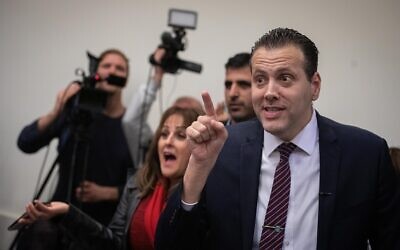
He claimed: “Anyone, anywhere in the world, will now go to a Reform rabbi and receive permission to immigrate to Israel within 30 days. It’s clear that in a short time Israel will no longer be Jewish and democratic.”
The same sentiments were uttered by Haredi MKs in interviews this week, and here, too, the misrepresentation is startling.
Reform and Conservative converts in the Diaspora have had the right Zohar is describing, to immigrate to Israel after their conversion, since a High Court decision on the question in 1989, fully 32 years ago.
Israeli religious conservatives would do well to pause for a moment and consider that point. Israeli citizenship was offered to non-Orthodox converts abroad — Zohar’s imagined hordes of non-Jews eager for fake conversions at the hands of unscrupulous “Reformim” — over three decades ago.
Where are the hordes?

A Haredi-led discourse so utterly ignorant about Diaspora Jews that it can publicly claim that it’s a normative experience in Reform Judaism to conduct dog bar mitzvahs, is also ignorant enough to believe that liberal Jewish converts in the West will inevitably attempt immigration fraud at sufficient scales to change Israel’s demographics. Thirty-two years of evidence to the contrary are irrelevant to the debate.
Fake converts and real converts
There’s nothing unusual or uniquely perfidious about an election campaign playing fast and loose with the truth. The point here is not merely to point to the misrepresentations, but to suggest that they are meaningful.
It’s no accident that the fears that have dominated the anti-Reform and anti-Conservative discourse in recent days concern African migrants obtaining citizenship or vast numbers of non-Jews abroad becoming Israeli.
In actual fact, there are almost no converts in the Diaspora who end up making aliyah, and almost no converts in Israel who are not already Israeli citizens.
And there’s the rub.
Liberal conversions in Israel have little to do with African migrants or non-Jewish foreigners. Those who convert with the liberal movements are often part of the Russian-speaking Israeli community. They’re already Israeli citizens, already close family members of halachic Jews, already serve in the Israeli military and already believe their lives are tied irrevocably to the Jewish people.
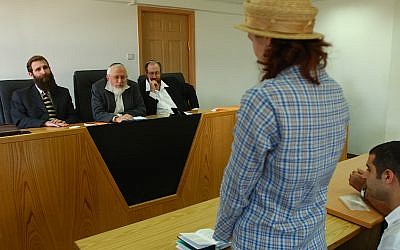
And they have no path to conversion in a country where religious institutions are increasingly dominated by the most stringent and Haredi-leaning rules and standards.
They are, that is, part of the base for the secularist, Russian-speaking Israel Beytenu party, a faction now running on an explicitly anti-Haredi platform and whose voters feel marginalized and insulted by Haredi leaders and religious institutions.
The Haredi parties needed a boost to their flagging campaigns, some ominous threat they could use to wave in front of wavering voters. But they needed a campaign that would not also mobilize the voters of Israel Beytenu.
And there’s Israel’s conversion debate in a nutshell: Invented threats, fake campaigns, and an endless dance around politically inconvenient truths.







The Times of Israel Community.