

Canada nabs Iranians with fake Israeli passports
Two adults and five children caught at Vancouver airport in possession of bogus travel documents
 Add ToI as a Preferred Source on Google
Stuart Winer is a breaking news editor at The Times of Israel.
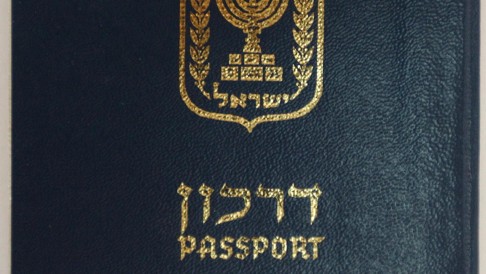
A group of seven Iranians were stopped as they tried to enter Canada using forged Israeli passports, apparently based on those belonging to a family living in the central Israeli town of Rehovot.
Two adults and five children were detained earlier this week at Vancouver International Airport after officials noticed that their passports, identifying them as the Solomons, were obvious fakes.
According to a Yedioth Ahronoth report on Thursday, the passports listed the adult travelers as Mona Solomons, 48, Tomer Solomons, 40, and the children as Nadine 15, Narin 11, Binyamin 9, Marin, 6, and Nermin, 5. It wasn’t clear whether “Mona” and “Tomer” presented themselves as husband and wife or brother and sister, or what their relationship to the children was supposed to be.
After discovering the ploy, Canadian authorities detained the Iranians, who had arrived indirectly from Tehran, and sent the forgeries to the head of the Israeli Population and Immigration Authority. The documents were apparently based on passports stolen from or lost by Israeli citizens.
“This isn’t the only time that foreign citizens have been running around with Israeli identities without the true owners of the identities knowing,” said the director general of the Population and Immigration Authority, Amnon Ben-Ami. “Nonetheless, this incident shows the need to introduce biometric passports that give a complete solution to stolen identities.”
While at first glance the passports looked authentic, closer inspection revealed several obvious clues to their invalidity. The forgers took great care that the English text be accurate, but slacked off somewhat on the Hebrew, according to Yedioth. The place of birth for Narin was listed in as Jerusalem but was misspelled in the corresponding Hebrew, and even the family name of “Solomons” was rendered almost unpronounceable in its Hebrew version. The passports also claimed to have been issued in Rehovot, but the Hebrew text put the United States as their origin.
The travelers were apparently trying to take advantage of the relaxed travel terms for Israelis, who unlike Iranians don’t require a visa to enter Canada. The true identity of the family is still not known, and they will likely apply for political asylum in Canada, the report said.
According to the report, forged Israeli passports can be purchased on the black market in Asian countries for a few hundred dollars but are sold in Iran for several times that amount.
Several reports of Iranians caught using forged Israeli travel documents have surfaced in recent years. In April an Iranian man was arrested in Nepal in possession of a fake Israeli passport, and last year two Iranians were busted entering Canada with similar documents.
Earlier this month a pilot program for a national biometric database got underway in the town of Rishon Lezion. The government will study the results of the voluntary program, searching out glitches and problems in the system before it becomes mandatory — according to plans, in two years.








The Times of Israel Community.