

Demanding recognition, Negev Bedouin march into Jerusalem
Joint Arab List presents president with plan to grant official status to nearly 40 villages, encompassing 100,000 citizens
 Add ToI as a Preferred Source on Google
Elhanan Miller is the former Arab affairs reporter for The Times of Israel
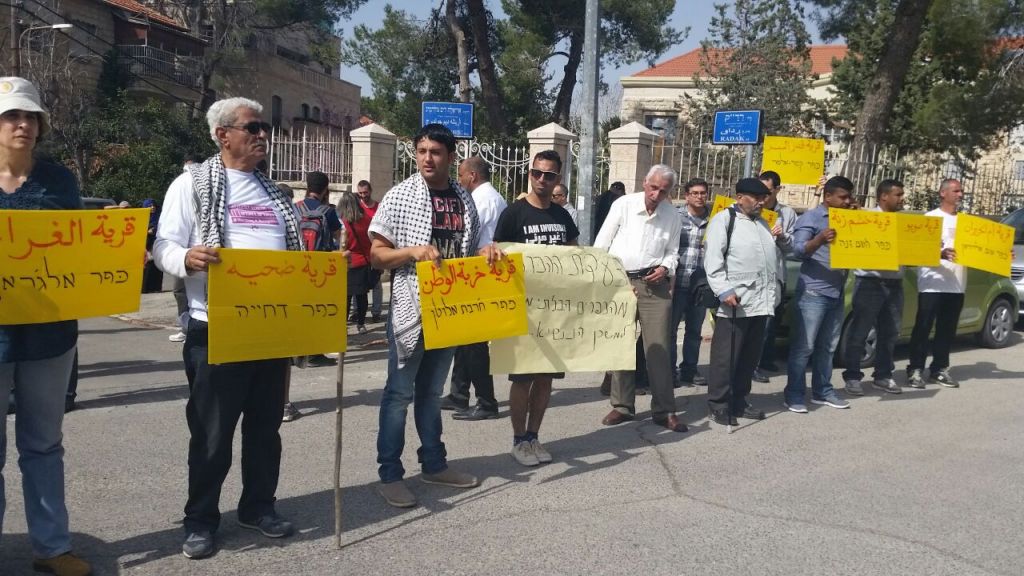
Representatives of the Joint List of Arab political factions presented a plan for government recognition of Bedouin villages in the Negev to the President’s Office on Sunday, as dozens of demonstrators protested outside Reuven Rivlin’s official residence demanding more equitable planning for some 100,000 Arab residents living in 36 villages in Israel’s south.
The demonstrators arrived in Jerusalem following a four-day march from the unrecognized village of Wadi Ni’m in the Negev, a distance of 130 kilometers (80 miles). They argued that the government-commissioned Prawer Plan — a costly five-year scheme prescribing the relocation of tens of thousands of Bedouins from their makeshift communities to recognized villages — is both unjust and incompatible with the residents’ pastoral lifestyle.
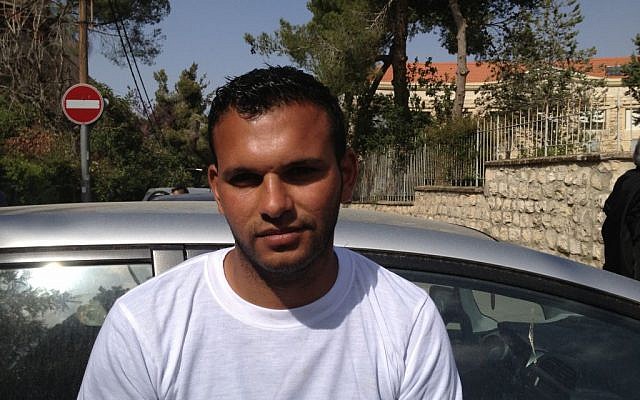
“My grandfather can’t live in a villa in [the Bedouin city of] Rahat,” said Mufid Abu Sweilem, a 30-year-old youth coordinator from Wadi Ni’m. “He needs a village with agriculture, where he can raise his sheep, where he can live with dignity.”
Abu Sweilem said that the community of 14,000, established before the State of Israel, lacked basic infrastructure such as water and electricity, and had no streets or clinics. It doesn’t exist on any official Israeli map, and the state periodically demolishes illegally built homes in Wadi Ni’m, uprooting wheat planted for the livestock.
“We don’t want to move to cities planned for us in offices in Jerusalem or Tel Aviv. They decide how we should live without consulting us. We want to be part of the solution, not part of the problem,” he said.
Ayman Odeh, head of the Joint List, Israel’s third-largest political faction, initiated the march together with local leaders from the Bedouin communities in the Negev. After presenting the “alternative recognition plan” — replacing Prawer’s relocation with de jure recognition of the situation on the ground — he told the press he had come to “give voice to 100,000 citizens who live under the worst conditions in the country, and not out of choice.”
“Recognizing the villages will do good to all residents of the Negev, Arabs and Jews alike,” he said. “Our plan gives practical solutions to a problem that should trouble all citizens of conscience.”
Rateb Abu Qreinat, 26, from the village of Abu Qreinat, told The Times of Israel that although his community of 5,000 was recognized by the state 13 years ago, it continues to lack all basic services, just like the unrecognized villages. He said the goal of the march was to “bring the issue of the Negev to Jerusalem.”
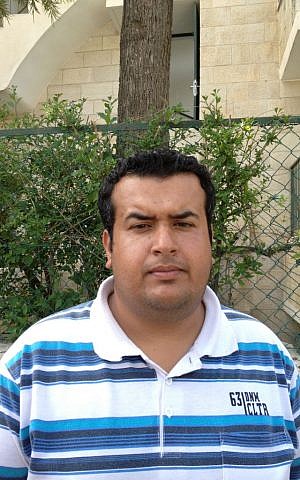
“People in these villages are very patient. They will continue struggling until they’re recognized,” he said.”We hope the president requests that the forthcoming government give the Negev more attention.”
Oren Yiftachel, a political geography professor at Ben-Gurion University in Beersheba, headed the planning committee of the alternative recognition scheme. At the demonstration, he said the plan aspired to equalize Arab and Jewish rural living in the Negev.
“The plan was formulated together with the communities in the villages, based on principles of Israeli rural planning, allowing recognition of all the communities while saving a considerable amount of money compared to the government plans,” Yiftachel said.
MK Taleb Abu Arar, a member of Islamic movement placed ninth on the Joint (Arab) List, told The Times of Israel that even recognized villages in the Negev, like his hometown of ‘Arara, suffered from neglect and underdevelopment compared to the Jewish communities in the area.
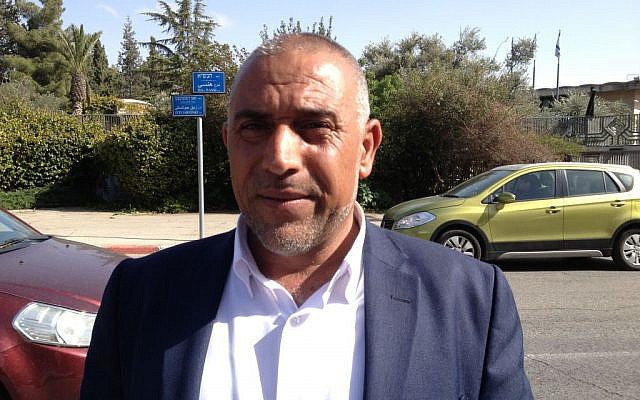
“Unemployment is sky high, there are no industrial zones, there are no rights. We enjoy no rights since the establishment of the state to this day,” Abu Arar told The Times of Israel. “I hope this government understands our demands for recognition, even though it is a right-wing government.”










The Times of Israel Community.