

Erdogan: Fatah must cooperate with Hamas for Mideast peace
Visiting Washington, Turkish prime minister slams Netanyahu government for oppposing Palestinian state, calls on Israel to ‘retreat to 1967 lines’
 Add ToI as a Preferred Source on Google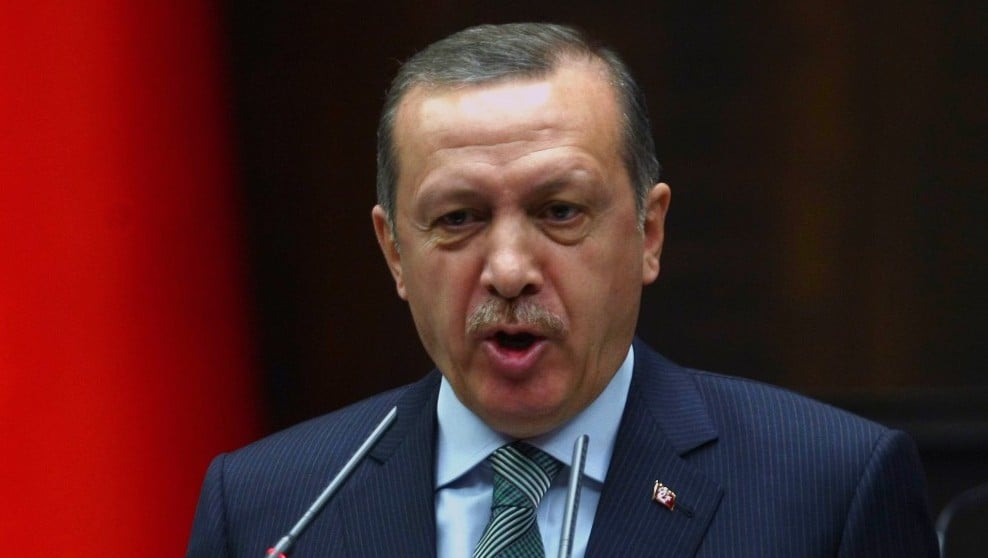
Without an internal Palestinian reunification deal, there is little chance Israeli-Palestinian peace talks can lead anywhere, Turkish Prime Minister Recep Tayyip Erdogan said Friday during a visit to the US.
Speaking to reporters at the Brookings Institution in Washington DC, Erdogan said, “There will be no negotiations without Hamas, therefore Fatah must cooperate with it.”
Palestinian unity talks stalled after the last set of meetings, held in Cairo in February, failed to mend the rift between Fatah and Hamas and send the Palestinians to parliamentary elections. The two parties signed a reconciliation deal in 2011, but it has yet to be implemented, and the particulars of the agreement remain undefined. The two parties were split on issues regarding the Palestine National Council, the PLO parliament, and legislative and presidential elections in the Palestinian territories. In recent days, Palestinian officials have again spoken of a possible unity deal within three months.
The Turkish prime minister also called on Israel to “retreat to the 1967 borders,” saying that former Israeli prime minister Ehud Olmert had been open to the move, but subsequent governments — led by Benjamin Netanyahu — have adopted a different approach. “Israel itself does not accept a Palestinian state. As long as it refuses to do so, there is little to discuss,” said Erdogan.
On Thursday, standing next to US President Barack Obama, Erdogan made clear that he intends to go through with a planned visit to the Gaza Strip next month, despite objections from the US, Israel, and the Palestinian Authority in the West Bank, which fears the move will bolster Hamas. Erdogan said he would also visit the West Bank. Egypt’s President Mohammed Morsi reportedly might join him in Gaza.
Shortly after the press conference, State Department spokeswoman Jen Psaki reiterated the administration’s opposition to engagement with the Gaza-based terror organization, telling reporters that the US continues to see Hamas as a “foreign terrorist organization which remains a destabilizing force in Gaza and the region.”
Erdogan’s comments came as Israel and Turkey are working on healing a three-year-long breakdown in ties. Relations between the two former allies, already under strain, took a drastic turn for the worse following Israel’s May 2010 commando raid on the blockade-busting Mavi Marmara ship. Nine Turkish citizens were killed during a skirmish that broke out after activists attacked Israeli troops that boarded the ship in an effort to stop it from reaching Gaza’s coast.
Israeli and Turkish delegations have met twice to hash out a deal to compensate the families of those killed, something Ankara set out as a condition for normalizing ties. The first condition was met when Prime Minister Netanyahu called Erdogan and apologized for operational errors during Israel’s raid, in the final moments of Obama’s visit to Israel in March.
US Secretary of State John Kerry has spent much of the time since Obama’s visit traveling back and forth between Jerusalem, Ramallah, and DC in an effort to bring Israel and the Palestinians back to the negotiation table after years of stalled talks.
In his address, Erdogan also called on the UN Security Council to impose a no-fly zone over Syria. In their joint press conference on Thursday, Erdogan and Obama did their best to present a united front against the Assad regime and its brutal crackdown on opposition forces.
“We’re going to keep increasing the pressure on the Assad regime and working with the Syrian opposition,” Obama said. “We both agree that Assad needs to go.”




The Times of Israel Community.