

Feuding Fatah officials meet as internal rifts risk poor showing in November election
After reconciliation attempt between Abbas and Dahlan fails to bear fruit, dominant PA party works to heal more bridgeable divisions, such as one between Hussein al-Sheikh and Jibril Rajoub

 Add ToI as a Preferred Source on Google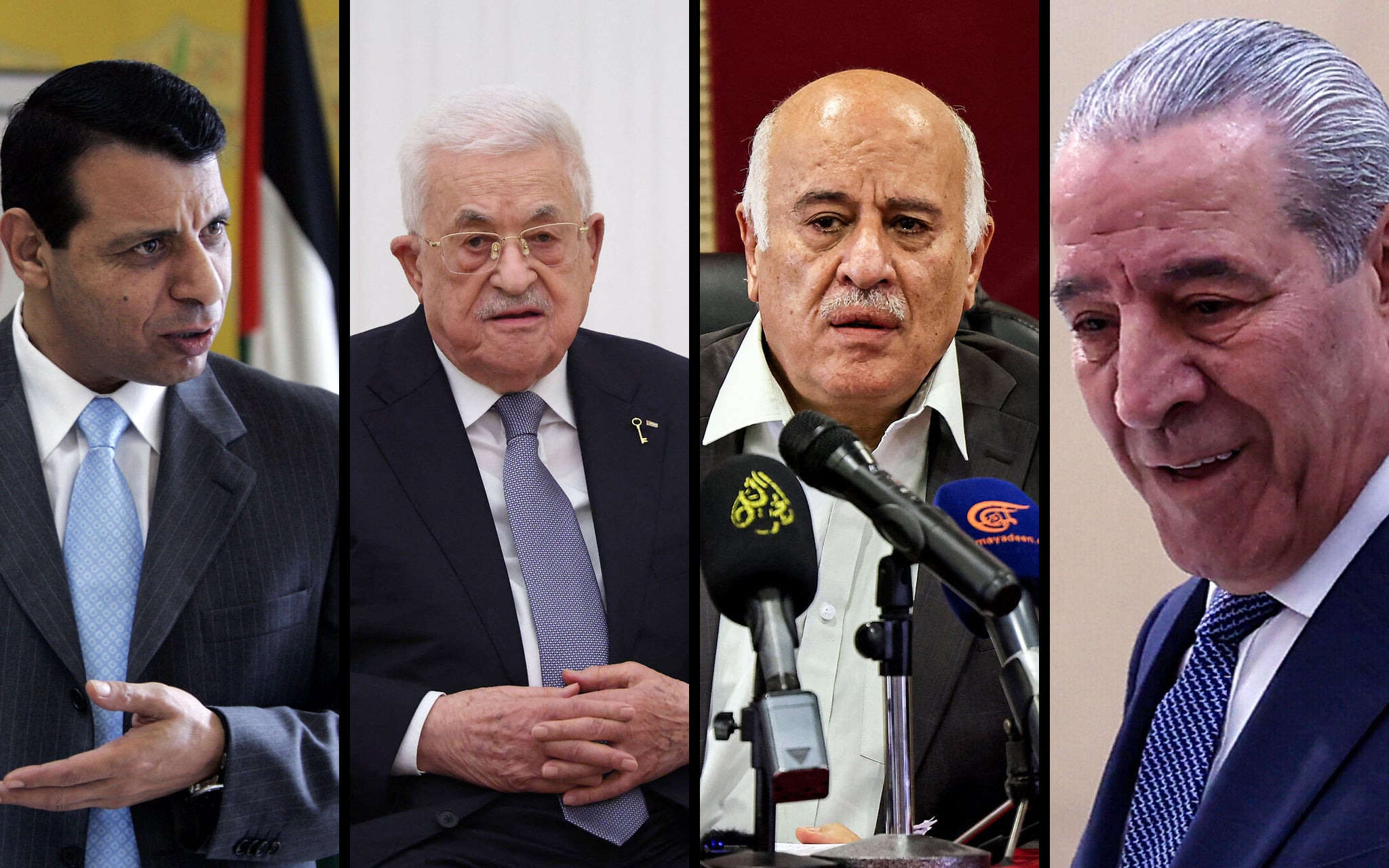
A meeting was held over the weekend between feuding senior Fatah officials Hussein al-Sheikh and Jibril Rajoub, as the West Bank’s dominant Palestinian political party seeks to limit internal divisions ahead of November 28 legislative elections, two sources familiar with the matter told The Times of Israel on Monday.
Rajoub has been boycotting Fatah meetings since June, when the party’s chief — Palestinian Authority President Mahmoud Abbas — named Sheikh as his deputy — despite the fact that Rajoub received more votes than Sheikh during internal Fatah elections in May.
Sheikh was already serving as vice president of the PA, and the decision to name him deputy Fatah chief appeared to be part of an effort by the 90-year-old Abbas to consolidate power ahead of what is certain to be a grueling succession battle.
Sheikh has offered Rajoub the ability to maintain the more junior role of Fatah secretary-general, but the veteran Palestinian official has thus far refrained from taking the offer, the two sources said.
Progress was made in bridging rifts during the meeting, and the pair are planning to appear in public in the coming days, one of the sources said.
No progress on bridging Abbas-Dahlan rift
The meeting between Rajoub and Sheikh came roughly a week after Rajoub held a meeting in Egypt with members of a breakaway Fatah faction headed by former PA Gaza security chief Mohammad Dahlan.
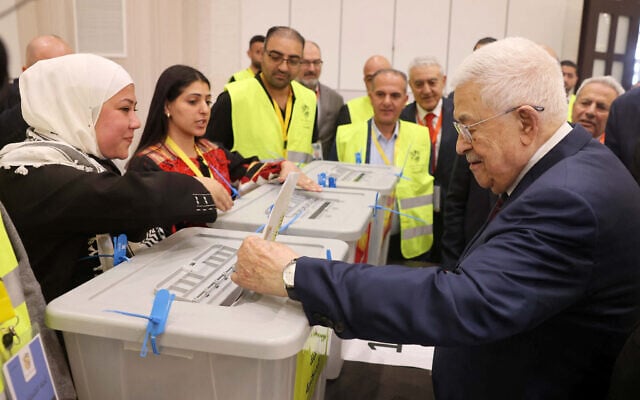
Dahlan had a falling out with Abbas over 15 years ago, leading him to live in exile in the United Arab Emirates. He serves as a top adviser to Emirati President Mohammed bin Zayed and has become a key power broker that the US-controlled Board of Peace has used to mediate between the various regional players involved in the postwar management of Gaza.
Dahlan’s Fatah faction has been seeking to return to the party, but Abbas has largely resisted efforts to reconcile with him unless stringent terms are met, and the meeting in Egypt did not lead to any progress toward that end, the sources said.
The Hamas meeting that never materialized
Sheikh was also slated to meet with a delegation of Hamas representatives while in Egypt to discuss the upcoming elections for the Palestinian Legislative Council (PLC) and the umbrella Palestine Liberation Organization’s separate parliamentary body, but the sit-down never materialized, a Palestinian official said.
Cooperation from Hamas will likely be required for PLC elections to be held in Gaza. While Hamas has agreed to cede governing powers in the Strip to a Board of Peace-overseen technocratic panel called the National Committee for the Administration of Gaza, that handover has been stalled amid Israel’s rejection of the Board of Peace’s disarmament plan; and the terror group is still seen as maintaining significant political sway in the coastal enclave.
Earlier this month, the PA submitted an official request to Israel’s Coordinator for Government Activities in the Territories (COGAT) to allow election materials into Gaza so balloting can be held there in November for the first time in over 20 years. However, Ramallah never received any response, the Palestinian official said. COGAT referred The Times of Israel to Prime Minister Benjamin Netanyahu’s office, which did not reply to requests for comment.
Israeli approval will also be needed to hold elections in East Jerusalem, though a Palestinian official said this obstacle can be overcome through mail-in or online voting.
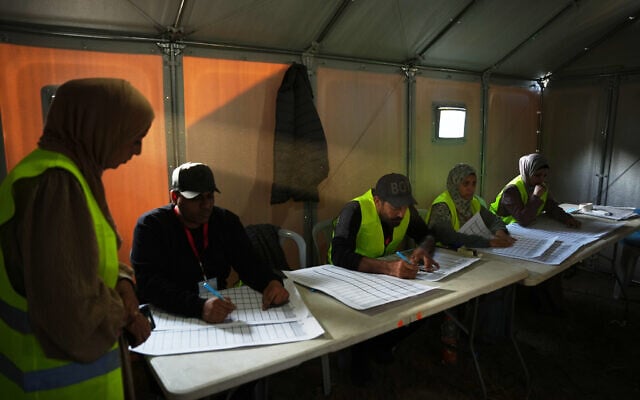
The official acknowledged, though, that Israel still has the ability to block Palestinian elections if it wants to, and a lot will depend on the results of the October 27 Knesset election.
While Hamas representatives did not meet with Sheikh in Egypt, they have been holding talks with Dahlan’s deputy Samir Masharawi about collaborating in the Palestinian legislative elections, according to two sources familiar with the matter.
Hamas would not be allowed to field candidates on the Dahlan-backed list, but would avoid coming out against it, the sources explained. Dahlan’s Fatah faction, known as the Democratic Reform Current, is also seeking similar collaboration with other Palestinian factions, such as the Popular Front for the Liberation of Palestine (PFLP) and the Democratic Front for the Liberation of Palestine (DFLP).
Fatah divisions amass
Given that its schisms with the Dahlan faction and Hamas appear insurmountable for the time being, Abbas’s circle is seeking to mend more manageable rifts, such as the one between Sheikh and Rajoub, one of the sources familiar with the weekend meeting between the pair said.
Fatah is already dealing with potential breakaways led by former PA ministers Nasser al-Qidwa and Qadura Fares.
Some supporters of former Fatah secretary general Marwan Barghouti — who is serving five life terms in Israeli prison for planning terror attacks that killed five people — want him to lead a separate breakaway faction. Barghouti’s condition is largely unknown, though, and he hadn’t been seen in years, until National Security Minister Itamar Ben Gvir posted a video berating the frail-looking prominent Palestinian prisoner in his cell. An international campaign of influencers is advocating for his release, but Israel is not likely to accede.

Barghouti sought to run from behind bars the last time a Palestinian presidential election was called by Abbas in 2021. That vote was canceled, with Abbas blaming Israeli restrictions on balloting in East Jerusalem, while critics said the real motivating factor behind the PA president’s decision was polling predicting significant Fatah losses.
Abbas in June announced that a presidential election would be held in 2027, but a date has not yet been set, and the various Fatah divisions have led to poor polling for the PA president and his party, as well as an increase in speculation that the November parliamentary elections will also be delayed.
Pledges to hold elections were essential in securing financial support from the European Union, so Abbas may have a hard time canceling the vote completely, as he did in 2021.
But while Brussels has taken an interest in Palestinian political reform, Washington’s attention has been elsewhere, which may give Abbas the ability to push off the legislative election for a short period of time with limited consequences in the international arena.





The Times of Israel Community.