

Forced to sign waiver to use ritual bath alone, some Jerusalem women fear coercion
The Supreme Court has ruled that making women immerse under supervision is an invasion of privacy, so why must they fill out ‘permission slips’ to dip?
 Add ToI as a Preferred Source on Google
Yaakov Schwartz is The Times of Israel's deputy Jewish World editor
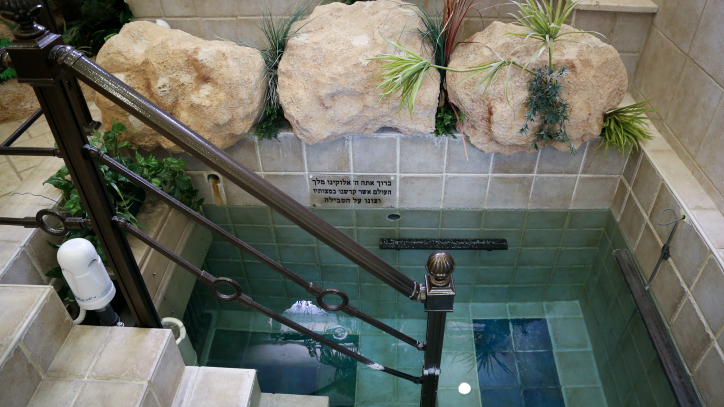
Lea was standing, clad only in a towel, when the attendant barred her way to the ritual bath, saying she must fill out a waiver before entering the water alone. Feeling vulnerable and unable to collect herself, Lea waited for the woman to go out and fetch the form, and, still clad only in a towel, wrote in her personal information and signed it.
“In any other condition, the religious feminist in me would have taken over and I would have protested,” Lea, 32, says. “But when you’re in the moment you’ll agree to anything they say.”
It’s a problem confronting an increasing number of women in the Jerusalem area since a Supreme Court ruling last year granted them the right to refuse the supervision of an attendant, known as a balanit, when immersing in the mikvah, or ritual bath. Until this ruling, the presence of the balanit during the immersion process was mandatory for women.
The issue of female ritual immersion is an extremely personal one: It revolves around the menstruation cycle and directly impacts whether a husband and wife are allowed to have sexual relations under halacha, or Jewish law. As such it is a subject that is referred to very delicately among religious circles, if at all. (While some men also choose to ritually purify themselves, male immersion in the mikvah does not usually carry the halachic urgency of female immersion.)
Ritual baths operating under the auspices of local religious councils throughout the country have, for the most part, been accommodating since the Supreme Court ruling. But the Jerusalem Religious Council, which tends toward stringency, requires women who enter the water alone to fill out a paper form with their name and personal identification number.
According to the Jerusalem council, the form absolves it of responsibility should anything happen when the woman is alone in the water. Councils in other municipalities do not require such a form.
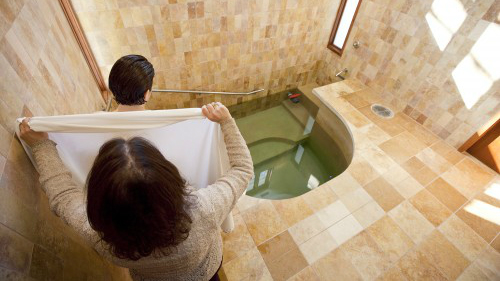
While it is technically permissible within the confines of halacha for a woman to dip alone, stringencies recommend that she do it in the presence of the balanit, who can ensure that she is entirely under the water. This has led some to feel that the waiver carries with it undertones of religious coercion.
“I told the balanit, ‘I understand that it’s now okay for me to do this without you, and I’d like to do it, so how does that work?’” says Lea. “And she was like, ‘No, what do you need to do that for, you know it’s better to dip with a balanit, it’s not halachic to do otherwise.’ And I replied, ‘Actually, I know the halacha and I’d like to do it this way.’ So she said okay, but that I needed to sign a form.”
A pending lawsuit initiated by ITIM, a nonprofit organization that assists and advocates for people navigating their way through religious bureaucracy in Israel, claims that not only are the waivers noncompliant with the Supreme Court’s ruling, they aren’t legally binding in the first place.
‘They do not understand that they must respect the dignity of women coming to immerse’
“The religious principles of modesty and kavod habriyot [respecting the needs of others] apply to all segments of Israeli society and this is not clear to the Jerusalem Religious Council,” says Rabbi Dr. Seth Farber, director of ITIM. “They do not understand that they must respect the dignity of women coming to immerse, their modesty, privacy and peace of mind. Mikvah immersion shouldn’t be fraught with tension but rather a positive and personal experience. This is how it is characterized in the halachic tradition.”
“Unfortunately,” Farber continues, “in some mikvahs in Israel, people are made to feel unwelcome. This will have to change. We will continue to support women’s rights in mikvahs and if necessary, turn to the legal system to force the issue.”

Asher Axelrod, an attorney who represents the Jerusalem Religious Council, says that the waivers are an issue of liability alone.
“How do you expect that someone should insist on entering the water unsupervised and the council should still be responsible?” he says. “This is a simple matter of responsibility for potential damages and not a halachic question at all.”
A spokesperson for the Religious Services Ministry sees where both parties are coming from.

“The ministry understands why the Jerusalem Religious Council feels the need for these forms,” says Shlomi Naki. “But given the decision of the Supreme Court, it is legally problematic. The ministry would like to see a solution that can accommodate both sides.”
Dr. Naomi Marmon Grumet, founder of the Eden Center in Jerusalem which trains female mikvah attendants, is more vocal in her opposition to the waivers.
“This is obviously something that is making women feel very uncomfortable. They are coming there out of their free will to use the mikvah, and now that she has the legal protection to use the mikvah without an attendant, there should be no reason whatsoever for a woman to sign a waiver,” she says.
‘I’ve never seen a waiver for a man who goes to the mikvah where there is no male attendant’
“What’s more,” Marmon Grumet continues, “I’ve never seen a waiver for a man who goes to the mikvah where there is no male attendant, so there should be no difference between a woman using a mikvah and a man using a mikvah without an attendant.”
It’s a discrimination claim Axelrod was prepared to defend preemptively.
“[The Supreme Court ruling] creates a problem that doesn’t exist for men — because the balan [male attendant] is always there and he is responsible. If a woman goes in without supervision, she takes responsibility upon herself in case something happens. But men never request this. If a man were to request such a thing, he would be required to sign the form – there is no scenario in which a man could enter the mikvah and immerse alone,” he says.
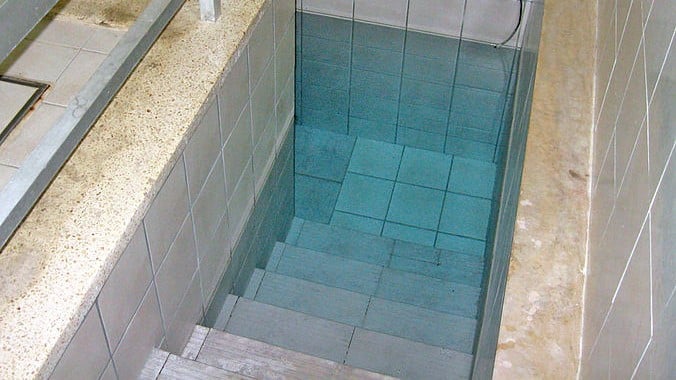
“I do not think that is the case,” says Marmon Grumet. “I don’t frequent men’s mikvahs. There is a balan – he’s not usually there when men come in. I don’t know if there are hours for the men’s mikvah, I believe you can just come in at any time. I’ve never seen or heard that there is a balan. I’m curious to go right now to the men’s mikvah and see if there’s a balan there.”
Several male mikvah-goers contacted for the purpose of this story say that they almost never encounter a balan during their aquatic excursions – though there are almost always other men there and it is not clear whether the mikvahs they frequent are under the jurisdiction of the Jerusalem Religious Council.
‘The women have a choice. Either they can dip with an attendant or they can fill out the form’
There are numerous private mikvahs utilized by men and women that are not subject to the regulations imposed on public ones, though they are more costly.
“The women have a choice,” says Axelrod. “Either they can dip with an attendant or they can fill out the form. It’s either one or the other. No one is forcing them to come to the mikvah in the first place.”
Because marriage in Israel is performed exclusively through the Chief Rabbinate, ceremonies for Jews of all denominations conform to Orthodox halacha. One of the prerequisites is that brides-to-be must visit a mikvah and provide written documentation to the effect that they immersed and are now ritually permissible to their future husbands.
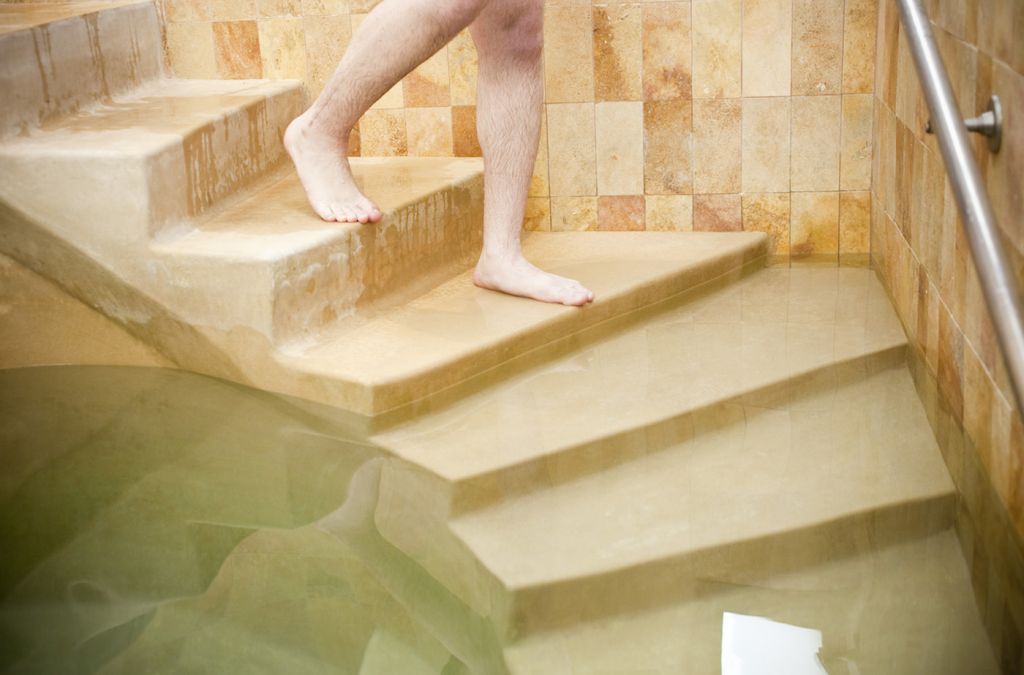
The Eden Center estimates that 30,000 women visit the mikvah regularly in the Jerusalem area, and that 750,000 go nationwide. Most of those who immerse each month are religious, though some less-observant women cherish the ritual as well and it has long been a symbol connecting families to Jewish tradition. For some, it is a choice they make to indulge their more religious partners.
Whatever their reasons for visiting the ritual bath, for many people, the exact halachic requirements are somewhat murky.
A telephone receptionist for the Religious Services Ministry was surprised that anyone would make the choice to enter the water in private, though she was more than happy to help find a ministry spokesperson.
“Why would someone want to do that? That sounds strange to me,” she volunteered, when informed of the purpose of the call. “The woman needs a balanit there to make sure her immersion was kosher.”










The Times of Israel Community.