

Generation Zip Tie: West Bank raids break night’s calm, but quietly
The Times of Israel joins the Artillery Corps’ Tiger Battalion in Qalqilya as it arrests 3 Palestinian teenagers on suspicion of throwing rocks, firebombs at soldiers
 Add ToI as a Preferred Source on Google
Judah Ari Gross is The Times of Israel's religions and Diaspora affairs correspondent.
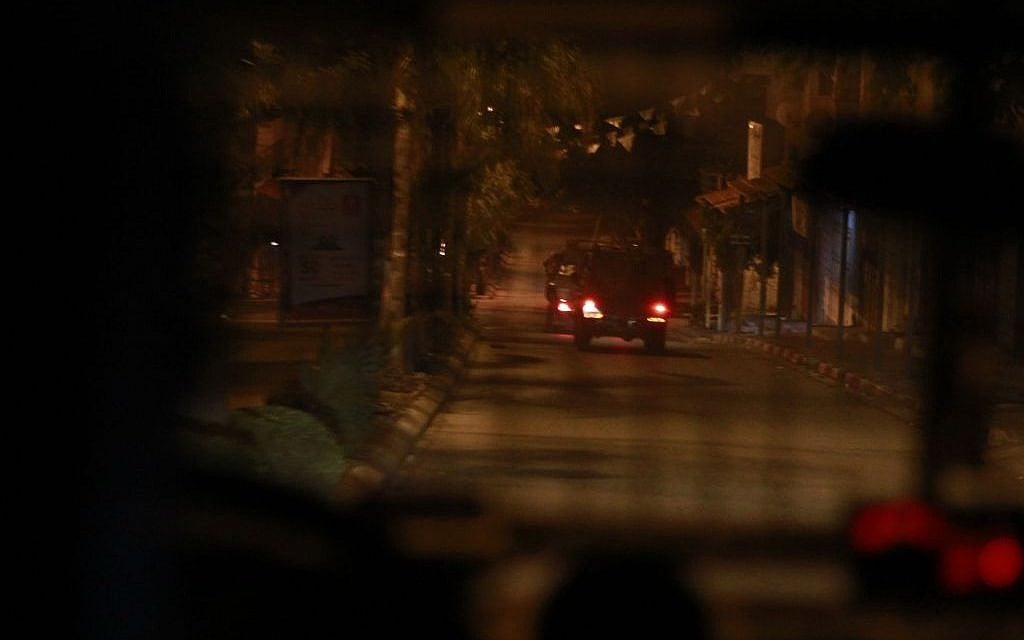
Every night, IDF troops enter cities and villages in the West Bank to pick up Palestinians suspected of throwing rocks and Molotov cocktails or belonging to a terrorist organization.
The Times of Israel accompanied the Artillery Corps’ Tiger Battalion as it entered the Palestinian city of Qalqilya, located just a five-minute drive from the Israeli city of Kfar Saba, to arrest four residents believed to have taken part in violent riots in their city.
The battalion, led by Lt. Col. Nimrod Cibulski, entered Qalqilya just after 2:00 a.m. on January 14.
This practice of late-night arrests that often wake up entire households is often denounced by critics of the IDF as a form of collective punishment.
But according to Cibulski, they have no other choice. “If I could, I’d make arrests at 10 o’clock in the morning,” he said.
Bringing in jeeps and armored vehicles into a city in the middle of the day would necessitate shutting down the streets where soldiers would be operating, and it would also increase the likelihood that residents would attack the soldiers by pelting them with rocks or bottles. Late-night arrests, though traumatic for the families whose sleep is wrecked, leave the majority of the population untouched, he said.
Before setting out, Cibulski, a father of two, reminded the officers under his command to be mindful of young children who may be in the homes of the suspects, and to try to not wake them with unnecessary commotion.
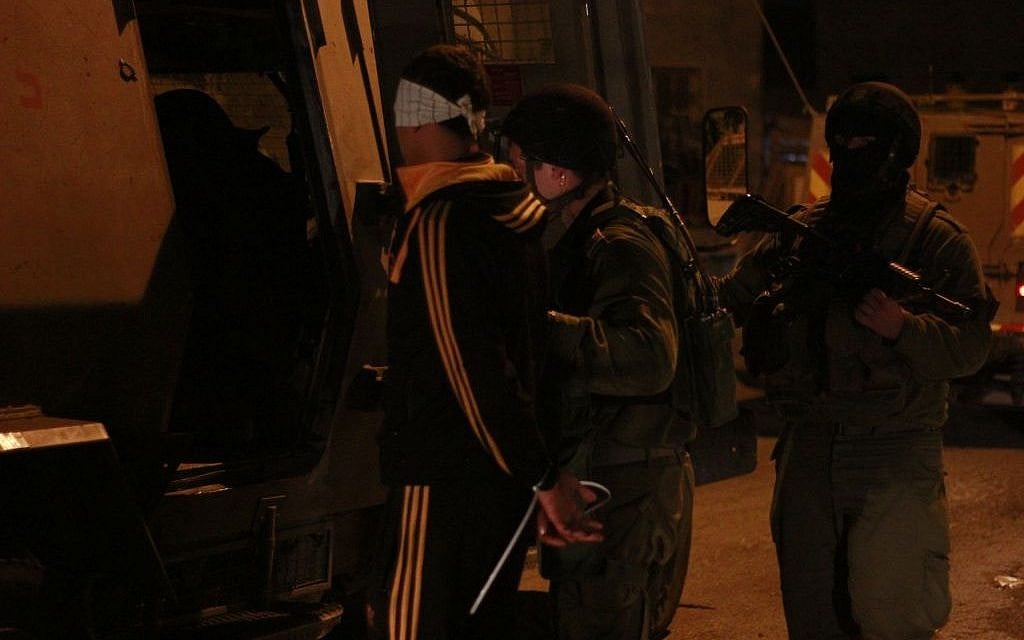
By the end of the night, the Tiger Battalion only arrested three suspects, as the fourth was not at home. The Palestinian teenagers had their hands bound with zip ties and had blindfolds placed over their eyes. Cibulski made a point of doing this away from the parents, to spare them the sight of their child in restraints, he said.
Cibulski had a photograph and file on each suspect as proof to show the families that their sons had taken part in violent riots, though most parents claimed the pictures “were photoshopped.”
Just before 4:00 a.m., the three suspects, all teenage boys, were brought back to the battalion’s base just outside of the Zufim settlement in the West Bank, where they would undergo a medical examination and have their identification information recorded before being handed over to law enforcement for further questioning.
-
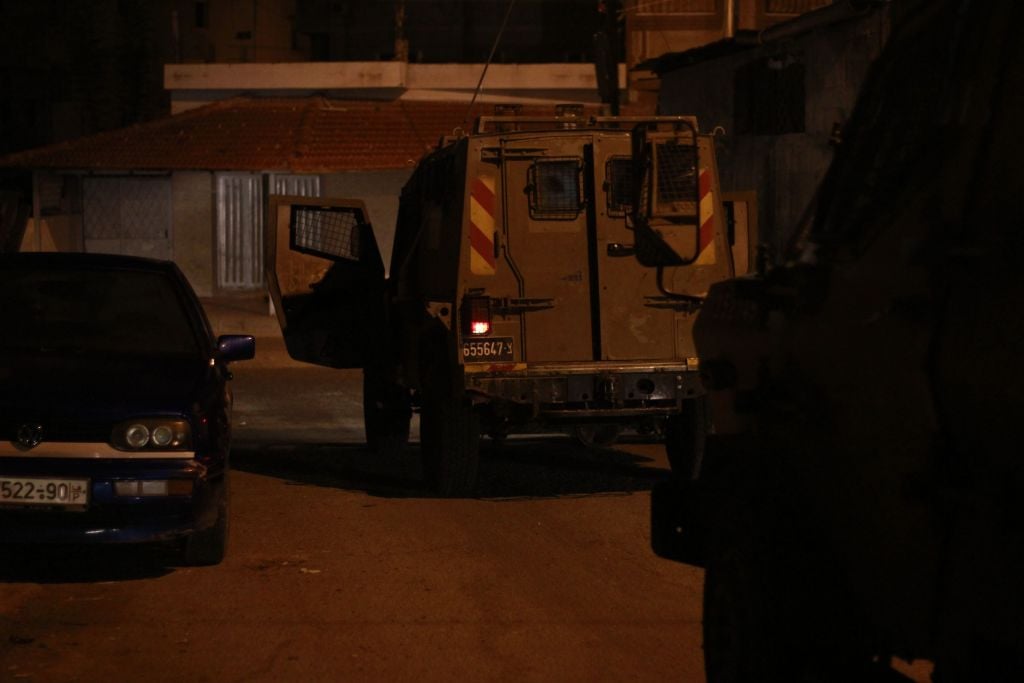
- An IDF jeep pulls up to the home of a Palestinian teenager accused of taking part in violent riots just after 2:30 a.m. in the city of Qalqilya on January 14, 2016. (Judah Ari Gross/Times of Israel)
-
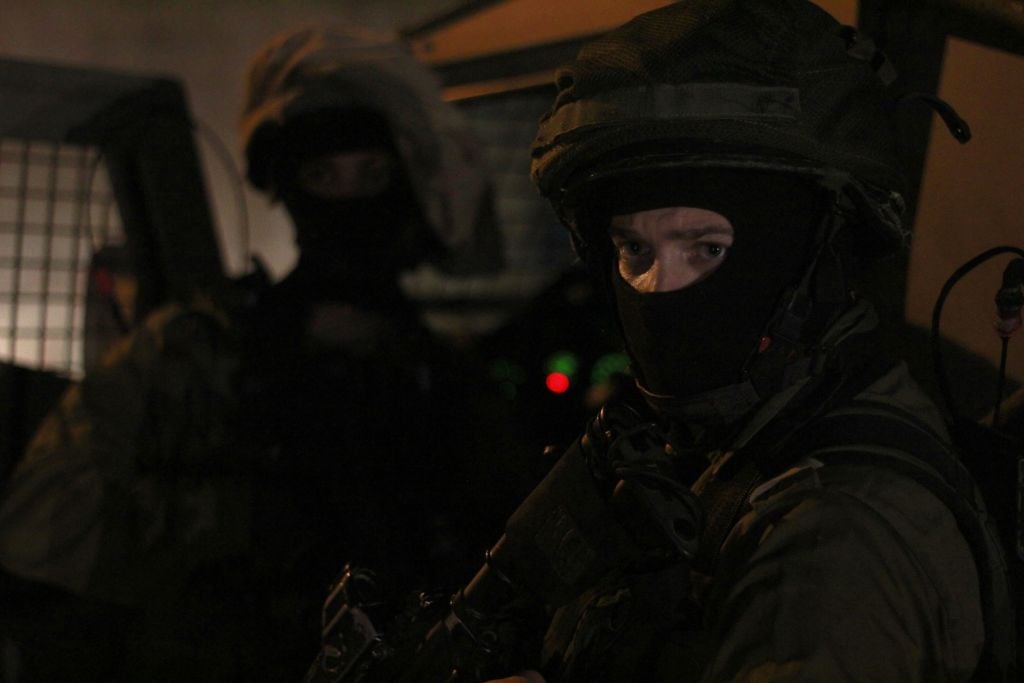
- Lt. Col. Nimrod Cibulski exits his jeep as his unit prepares to make an arrest in the West Bank city of Qalqilya on January 14, 2016. (Judah Ari Gross/Times of Israel)
-
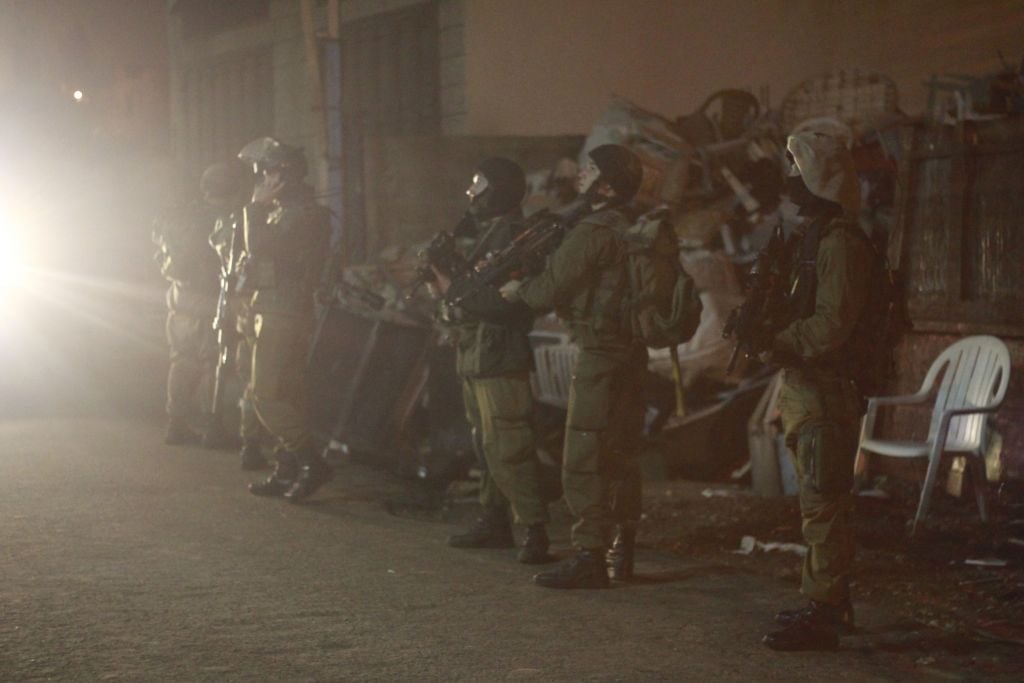
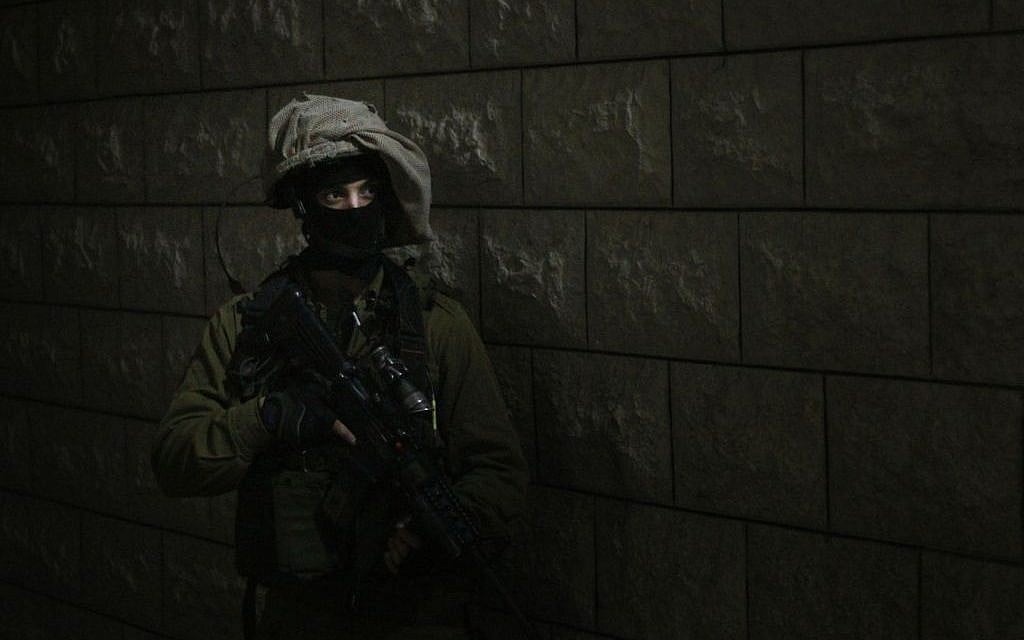
- Soldiers set up a perimeter around the house of a suspect, to provide cover and ensure he doesn’t escape. (Judah Ari Gross/Times of Israel)
-
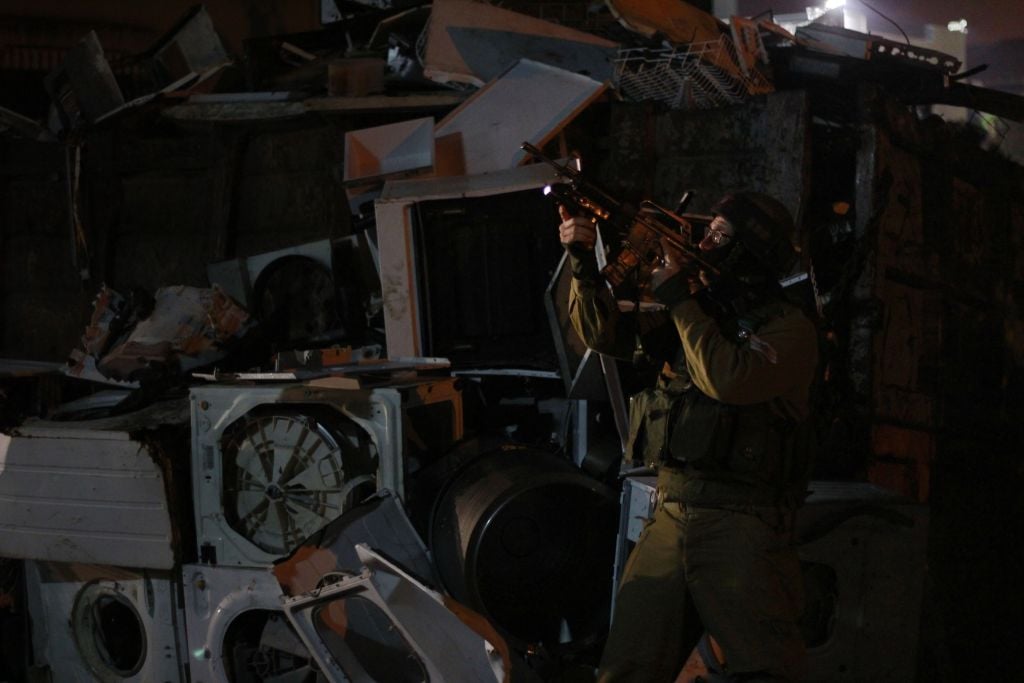
- A soldier provides cover to the team that entered the home of a suspect in the Palestinian city of Qalqilya on January 14, 2016. The family’s yard was filled with stacks of used appliances, including a five-foot high, 20-foot long wall of air conditioners, not seen. (Judah Ari Gross/Times of Israel)
-
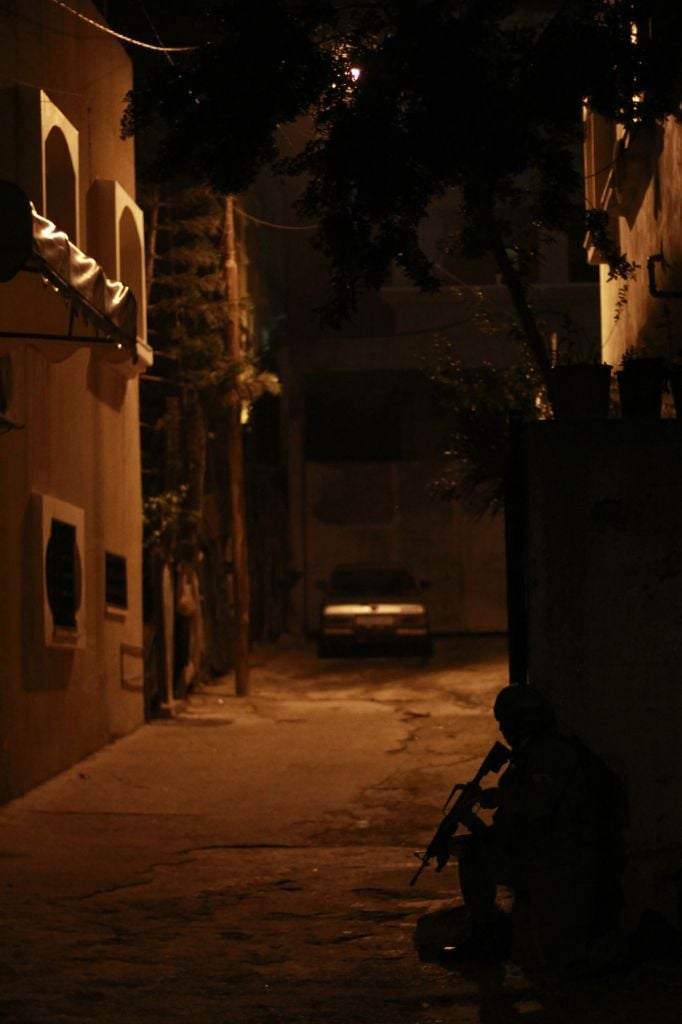
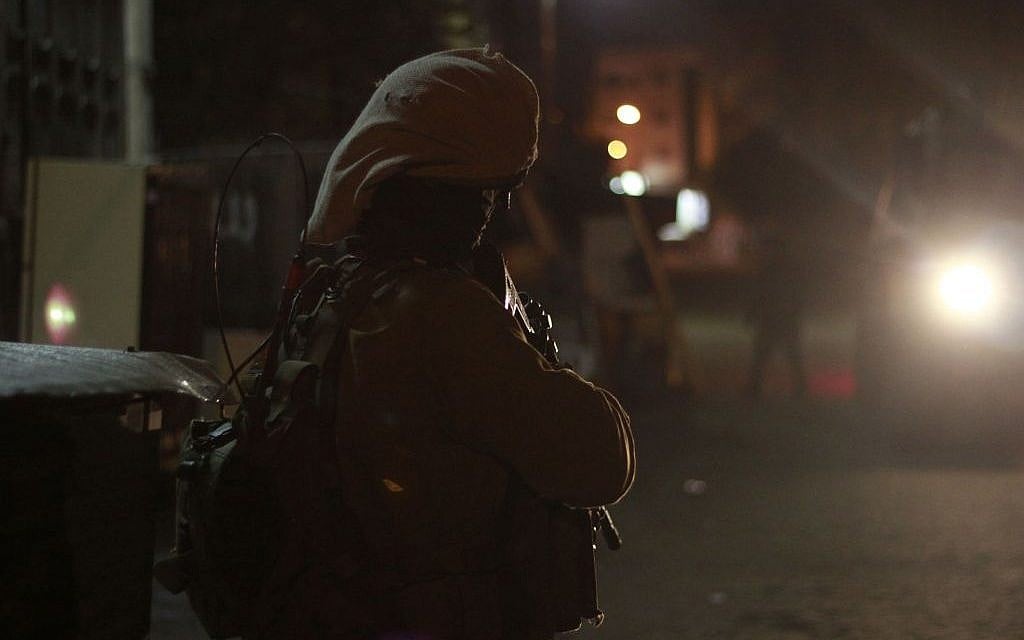
- A soldier crouches in the shadows outside the home of a suspect in the Palestinian city of Qalqilya on January 14, 2016. Though the late-night arrests ordinarily occur without incident, IDF soldiers have been attacked by local residents who at times violently protest the arrest of suspects. (Judah Ari Gross/Times of Israel)
-
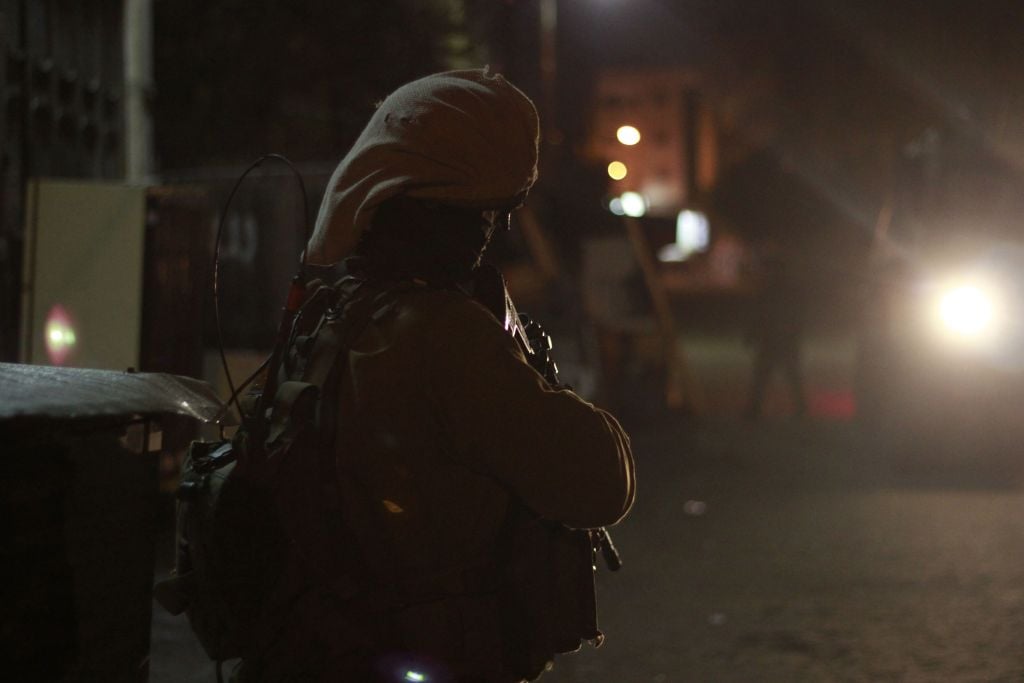
- A soldier stands guard in the light of an army jeep in Qalqilya on January 14, 2016. (Judah Ari Gross/Times of Israel/File)
-
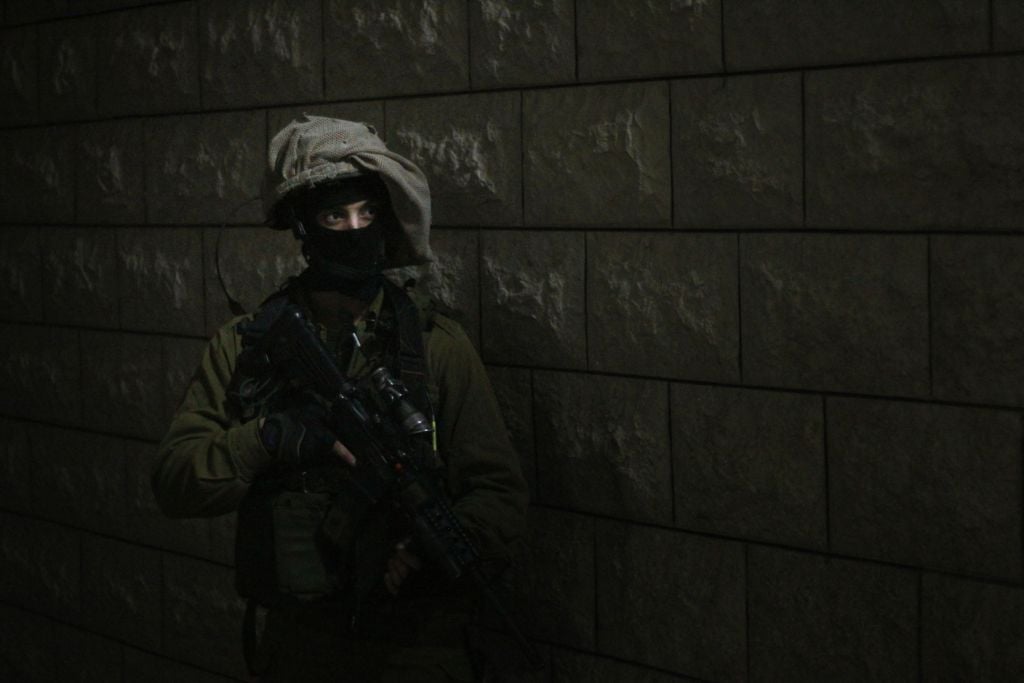
- A soldier prepares to enter the home of a Palestinian teenager accused of throwing rocks at IDF troops during a riot in Qalqilya. An advance team had already entered the home to wake up the family, who initially denied that their son was home, on January 14, 2016. (Judah Ari Gross/Times of Israel)
-
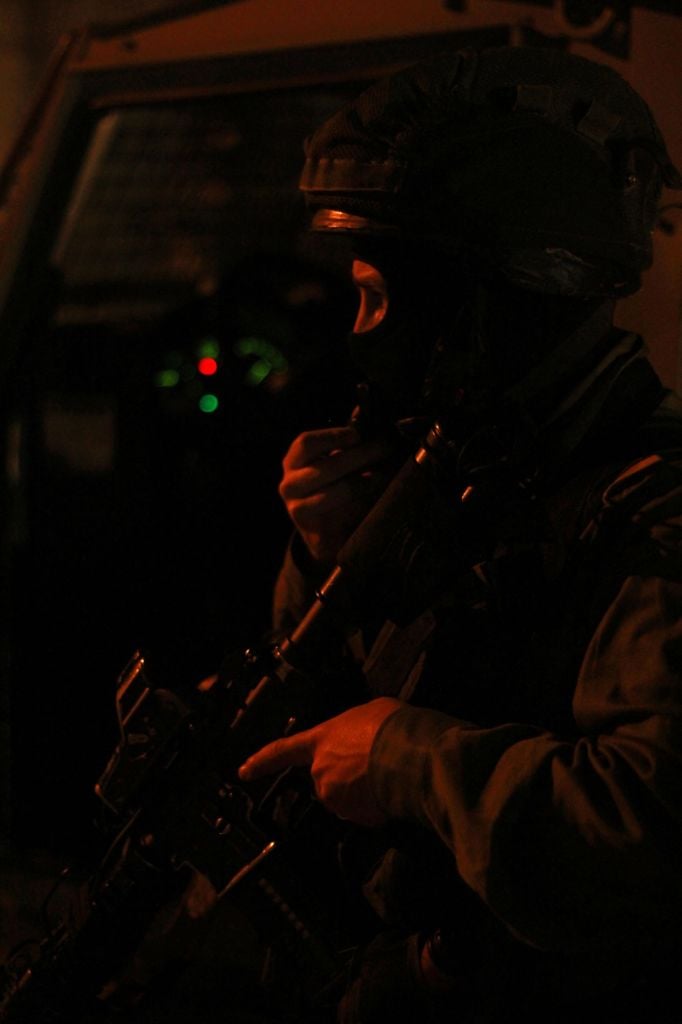
- Lt. Col. Nimrod Cibulski gives an order into his radio on January 14, 2016. Cibulski, who has served in the IDF since 1997, blames the current unrest in Qalqilya on outside groups inciting the local population through social media. Though the task of picking up stone throwers may seem never-ending, ‘You feel like you are doing things, accomplishing something,’ Cibulski says. (Judah Ari Gross/Times of Israel)
-
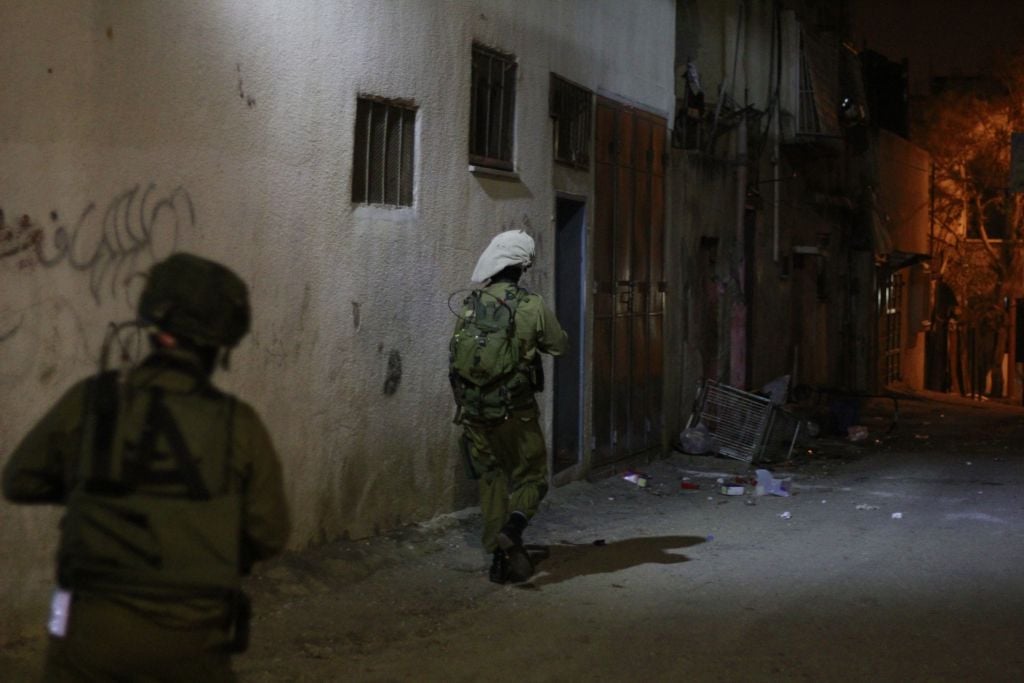
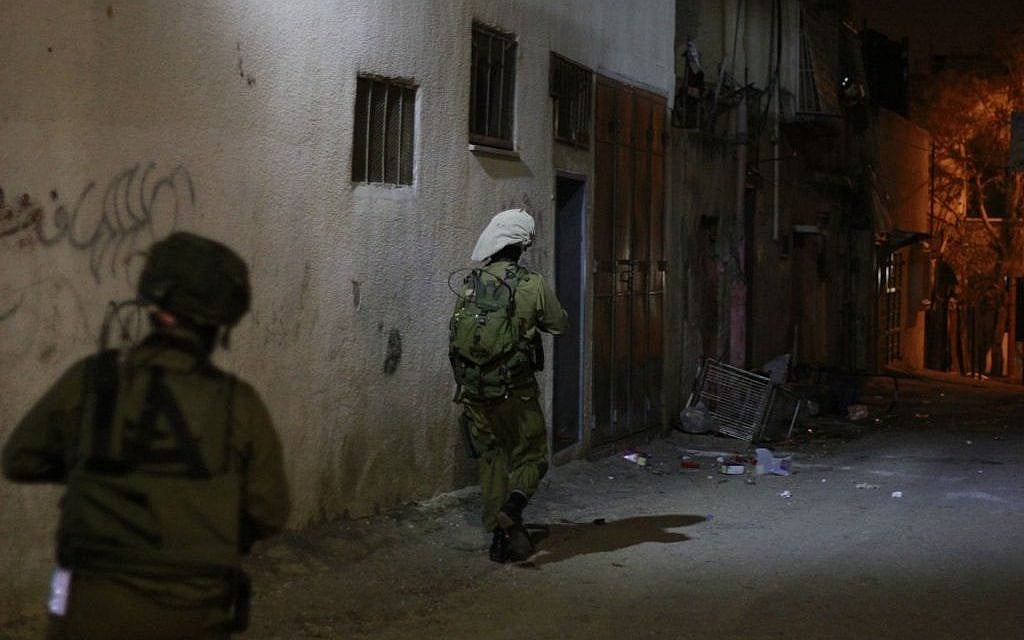
- IDF soldiers move toward the home of two Palestinian teenagers who are believed to have taken part in violent protests in Qalqilya. An Arabic-speaking representative of the Defense Ministry’s Coordinator of Government Activities in the Territories unit accompanies the battalion to facilitate conversation between the soldiers and the families of the accused on January 14, 2016. (Judah Ari Gross/Times of Israel)
-
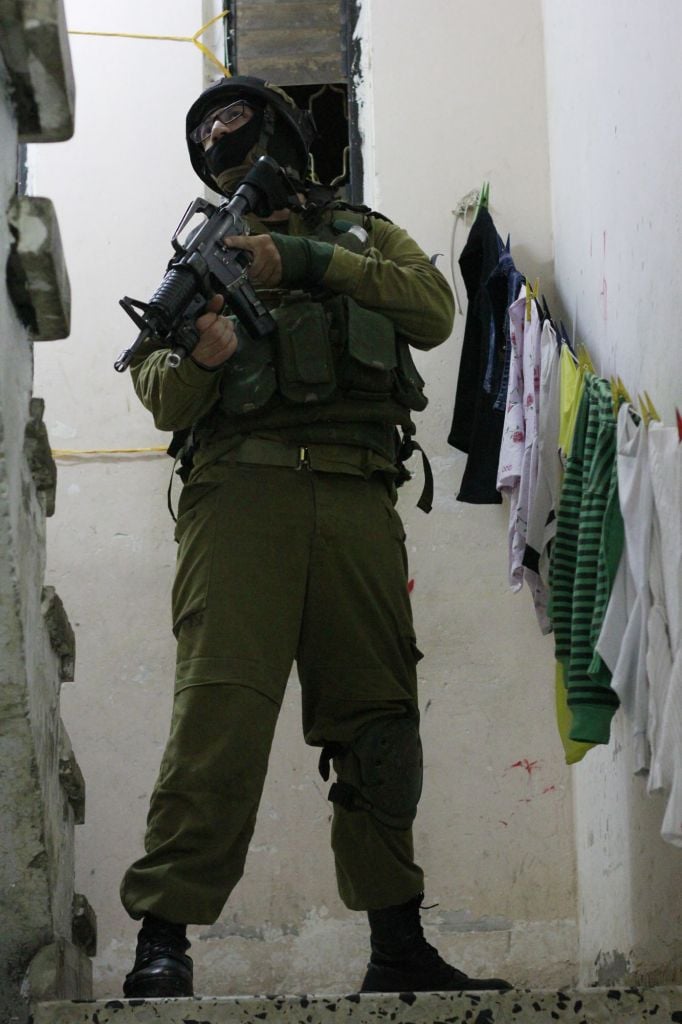
- A soldier stands guard in the stairwell as the other members of his unit enter the home of a Palestinian teenager suspected of having thrown rocks at IDF troops in Qalqilya, on January 14, 2016. The suspect was only 14 years old. Due to his young age, it was not clear how the IDF would proceed — if he would be arrested or merely given a warning. (Judah Ari Gross/Times of Israel)
-
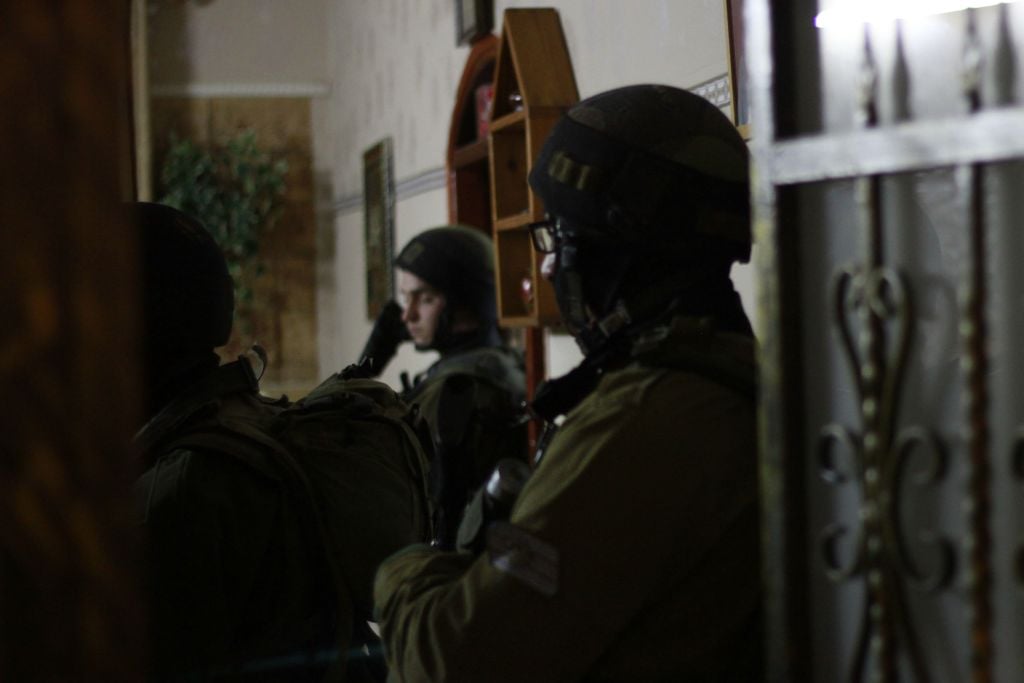
- Soldiers stand in the doorway of a Palestinian family whose son is accused of throwing rocks at IDF troops in the West Bank city of Qalqilya on January 14, 2016. According to the soldiers’ commander, Lt. Col. Nimrod Cibulski, their overall mission is to prevent the violence from spreading to the nearby settlement of Alfei Menashe or the city of Kfar Saba. (Judah Ari Gross/Times of Israel)
-
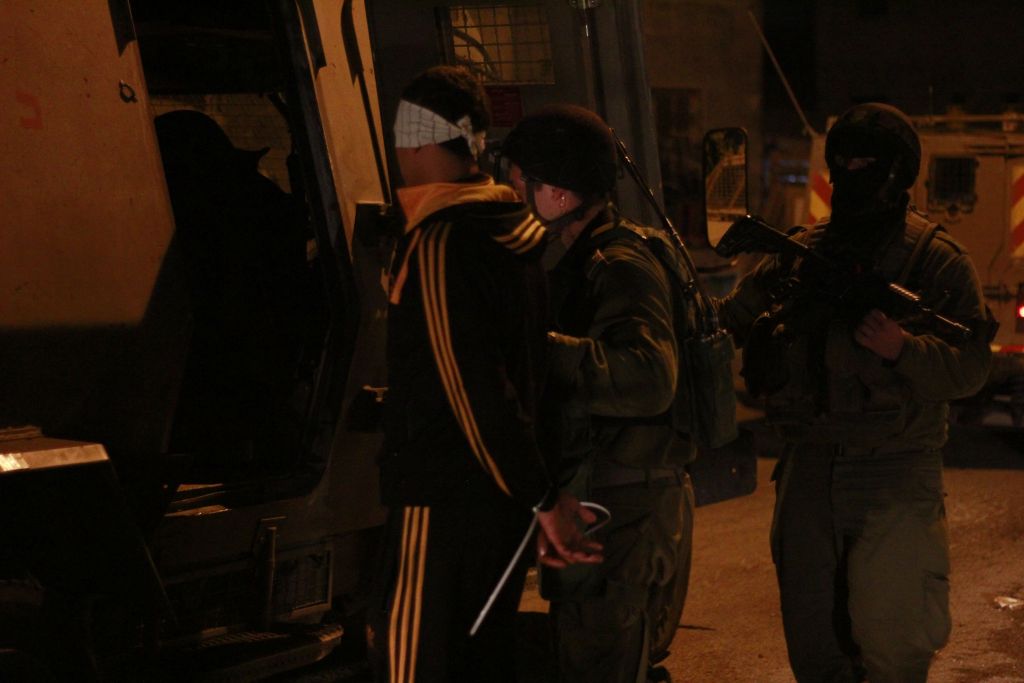
- Soldiers load one of the suspects into the back of a Ze’ev, a large armored personnel carrier, in Qalqilya on January 14, 2016. The soldiers’ commander, Lt. Col. Nimrod Cibulski, had them move the Palestinian teenager away from his family before blindfolding him and putting zip-ties on his wrists, in order to spare the suspect’s father the sight of his son in restraints, Cibulski said. (Judah Ari Gross/Times of Israel)
-
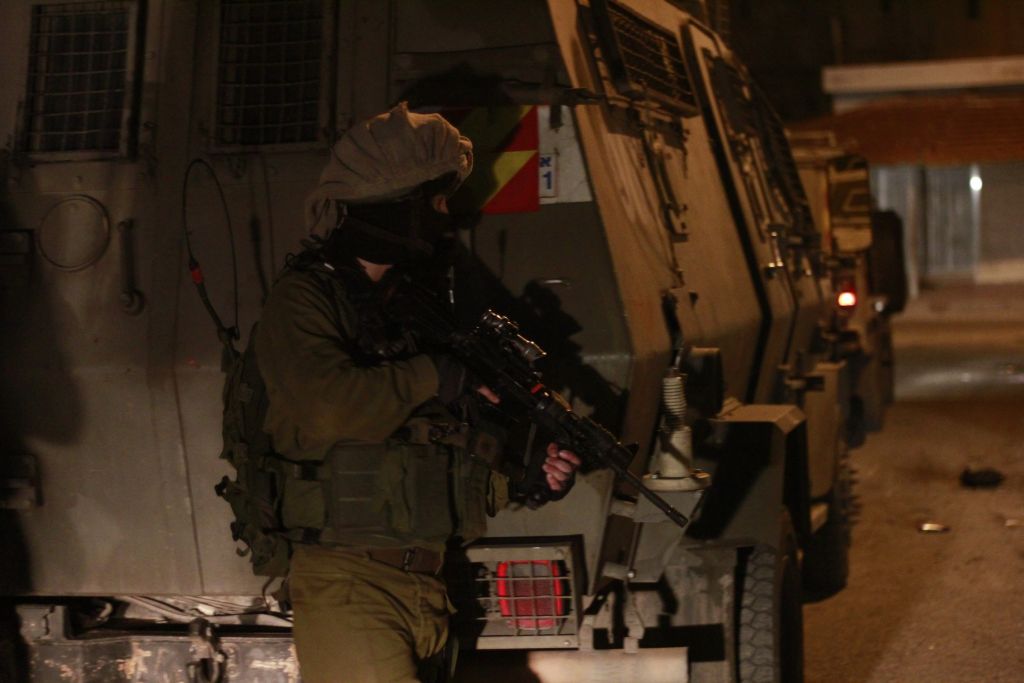
- A soldier stands guard outside of the Ze’ev, an armored vehicle, after a Palestinian teenager accused of throwing rocks at soldiers had been loaded into it in Qalqilya on January 14, 2016. The teenager’s father led a group of soldiers to a nearby house where he said his son’s ID was located. (Judah Ari Gross/Times of Israel)
-
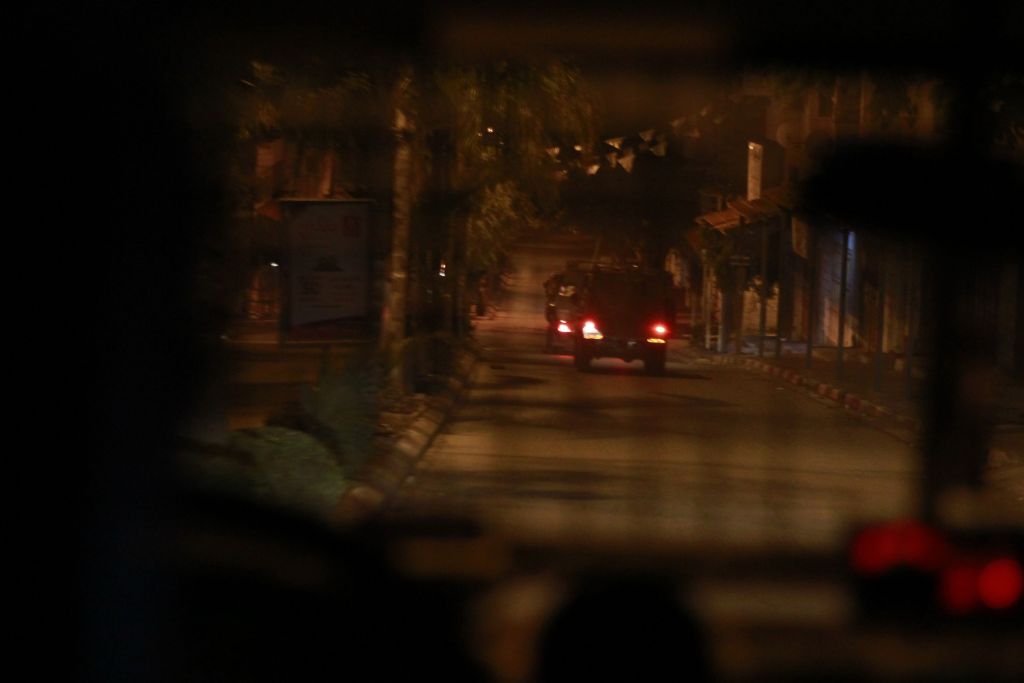
- An IDF jeep travels down a road in Qalqilya on January 14, 2016. As the army vehicles left the city, some residents threw stones at the jeeps, not causing any damage. The three suspects the Tiger Battalion arrested were handed over to law enforcement later that morning. (Judah Ari Gross/Times of Israel)
An audio report from Qalqilya:



The Times of Israel Community.