

Insects listen in on plants ‘talking,’ groundbreaking Israeli study is first to show
Tel Aviv University researchers find moths deciding where to lay eggs based on high frequency clicks emitted by plants, avoiding those that let out noisy distress signals
 Add ToI as a Preferred Source on Google
Sue Surkes is The Times of Israel's environment reporter
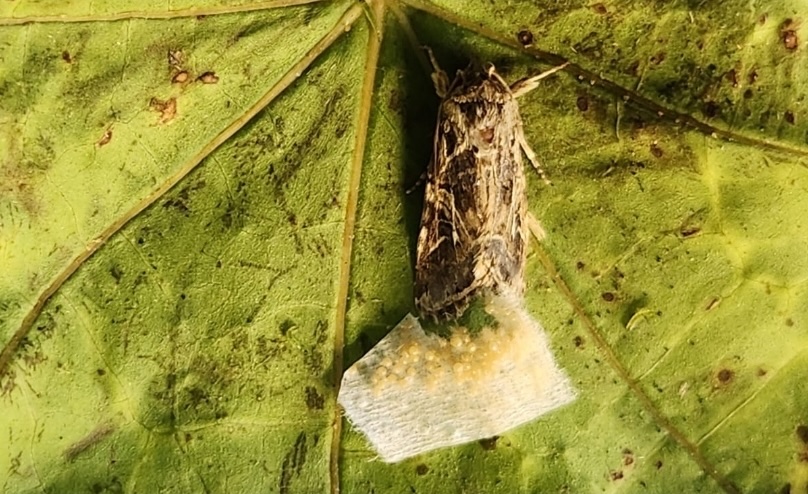
An ongoing collaboration between Tel Aviv University’s zoology and plant sciences departments has led to what is believed to be the first study in the world to demonstrate auditory communication between animals and plants, finding that insects both hear sounds made by plants and take them into account in decision-making.
Two years ago, Prof. Yossi Yovel from the School of Zoology and Prof. Lilach Hadany from the School of Plant Sciences and Food Security recorded plants ‘talking’ for the first time.
They were able to demonstrate that plants emit clicks similar to popcorn popping — one click per hour in the case of a healthy, well-watered plant, and dozens of clicks under conditions of stress, such as drying soil.
The next question was: Who might be listening?
It was already known that moths had the ability to hear ultrasonic sounds beyond the hearing range of the human ear. During mating, male moths emit such sounds at a frequency similar to plants.
In the latest research published in eLife, the teams demonstrated that female moths preferred quiet, healthy plants on which to lay their eggs, rather than noisy ones that emitted distress signals.
Students Rya Seltzer and Guy Zer Eshel led the experiments in Yovel and Hadany’s laboratories, in collaboration with scientists from the Plant Protection Institute at the Volcani Institute, a research organization affiliated with the Agriculture Ministry.
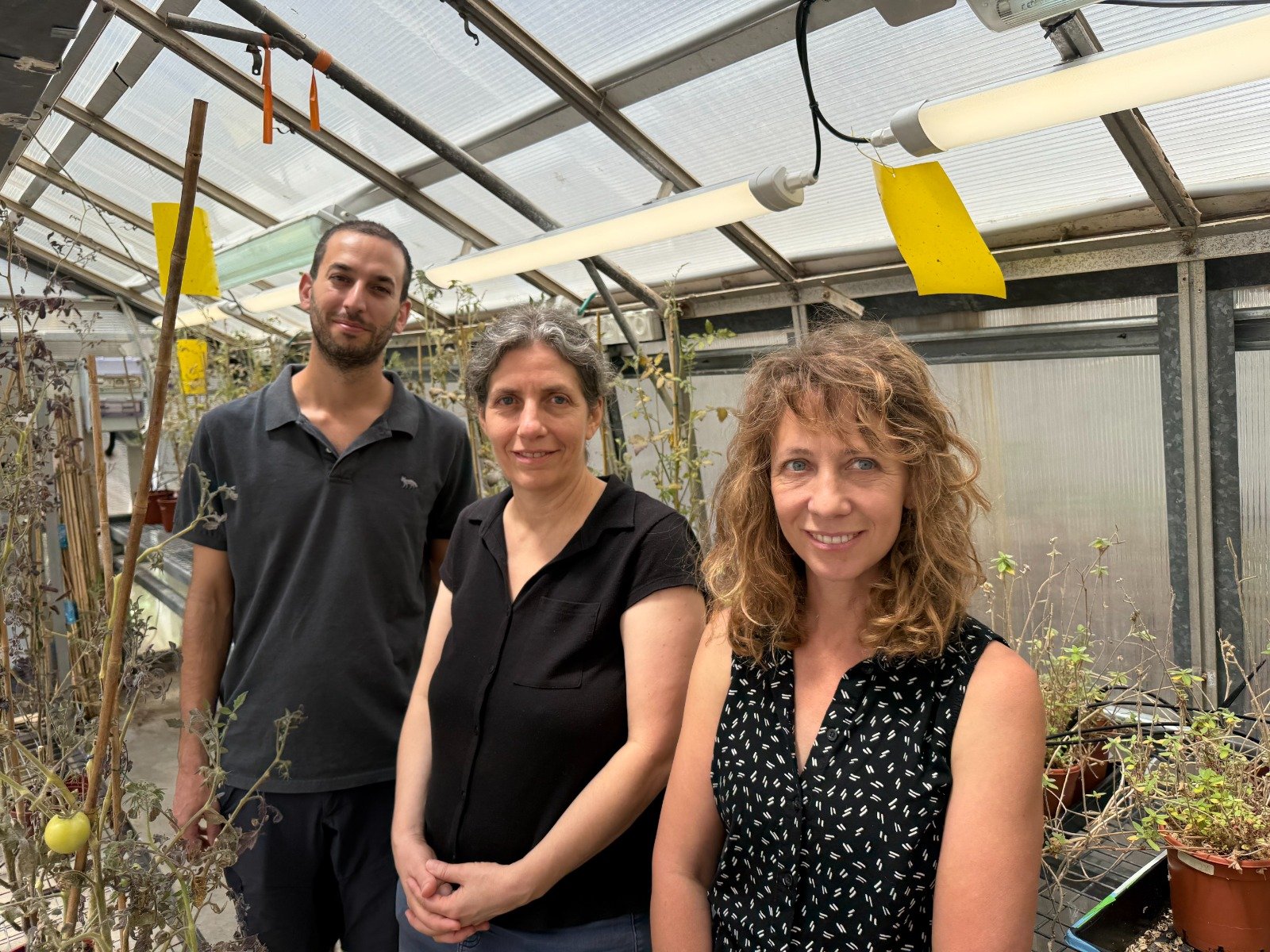
Prof. Yovel said, “After proving in the previous study that plants produce sounds, we hypothesized that animals capable of hearing these high-frequency sounds may respond to them and make decisions accordingly.”
Prof. Hadany added, “We chose to focus on female moths, which typically lay their eggs on plants so that the larvae can feed on them once hatched. We assumed the females would seek an optimal site to lay their eggs — a healthy plant that can properly nourish the larvae.”
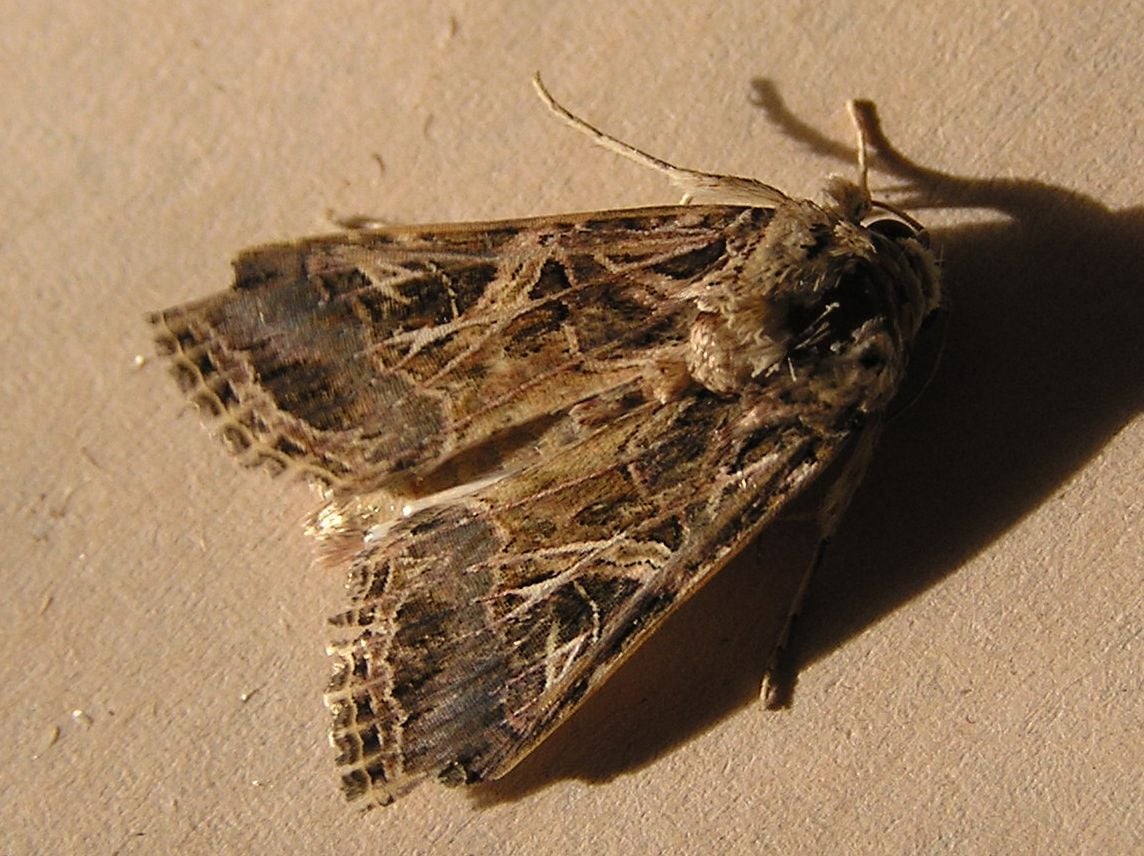
The first experiment placed females of the African cotton leafworm moth (Spodoptera littoralis) in a space with two tomato plants — one fresh, in damp soil, the other in soil that was drying out. In this case, the moths showed a marked preference for laying their eggs on the fresh plant.
The second experiment was carried out without any plants, but with a recording of sounds from a real plant in distress on one side. In this case, the moths chose to lay near the sound, apparently judging the sound to be evidence that there was a plant on that side.
The third step was to repeat the second experiment, but to remove the moths’ ability to hear. The moths showed no preference for where to lay their eggs, indicating that sound was a factor in their decision-making.
When two hydrated tomato plants were placed on either side of the space, and a speaker playing the clicks of a distressed plant was set on one side, the moths demonstrated preference for the silent, non-distressed plant, possibly picking up on other cues such as smell to confirm that a plant occupied the quiet side.
Finally, to assess whether the moths’ response was specific to plant sounds, the researchers introduced male moths, which also use ultrasonic clicks. The males were placed on one side, in a mesh box that prevented them from physical contact with the females. In this case, the females, which had to lay eggs somewhere, showed no preference, laying eggs on both sides of the space each night.

The research paper points out that, “The sounds emitted by drought-stressed plants are probably a cue rather than a signal, i.e., they did not evolve to convey information to insects. The interaction that we have demonstrated in this study, therefore, cannot be considered ‘communication’ according to the conservative definition of the term, which relies on signals that have evolved to convey a specific message.”
The researchers concluded, “In this study, we revealed the first evidence for acoustic interaction between a plant and an insect. We are convinced, however, that this is just the beginning. Acoustic interaction between plants and animals doubtless has many more forms and a wide range of roles. This is a vast, unexplored field — an entire world waiting to be discovered.”










The Times of Israel Community.