

Harsh exchanges on first day of Syria talks in Kazakhstan
Opposing sides in bloody conflict exchange accusations that opponents are terrorists, with few signs of common ground
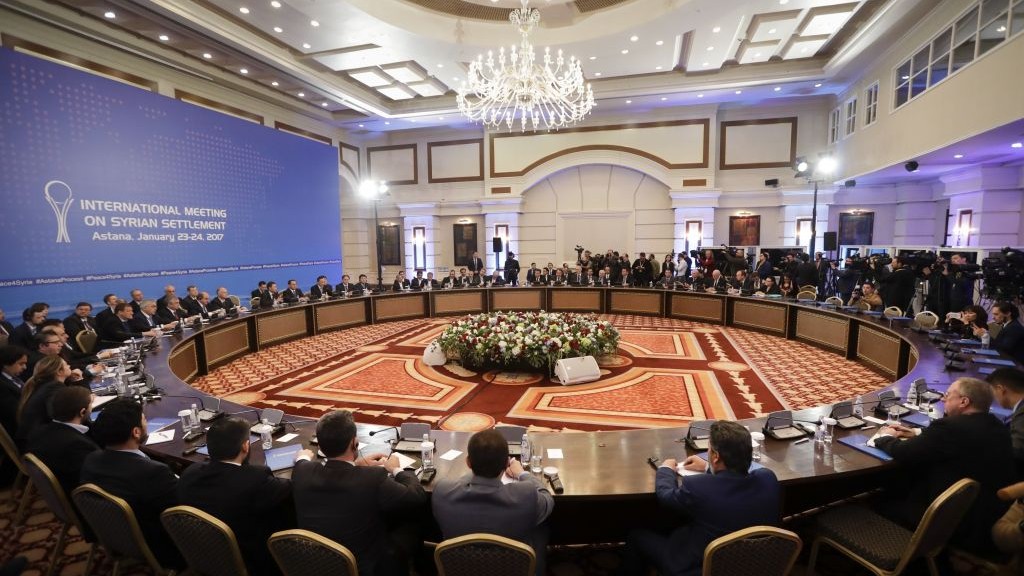
ASTANA, Kazakhstan (AP) — Syria’s government envoy and a rebel leader traded barbs as talks between the Mideast country’s warring sides got underway in Kazakhstan on Monday in the first face-to-face meeting between the Damascus government and rebel factions fighting to overthrow it.
The gathering in Astana, the Kazakh capital, is also the start of a new effort to end six years of carnage that has killed hundreds of thousands, displaced half of Syria’s population and sent millions of refugees to neighboring countries and Europe.
The UN envoy to Syria, Staffan de Mistura, is participating in the talks, which if successful, are expected to be followed by more political talks in February in Geneva.
The new US administration is not directly involved, because of the “immediate demands of the transition,” the State Department said on Saturday, but Washington is represented by the US ambassador to Kazakhstan, George Krol, who attended Monday’s opening session held at the luxury Rixos President Hotel in Astana.
After a one-hour closed session during which de Mistura mediated, the Damascus envoy came out to denounce to reporters a speech delivered by the head of the rebel factions attending the gathering as “provocative” and “insolent.”
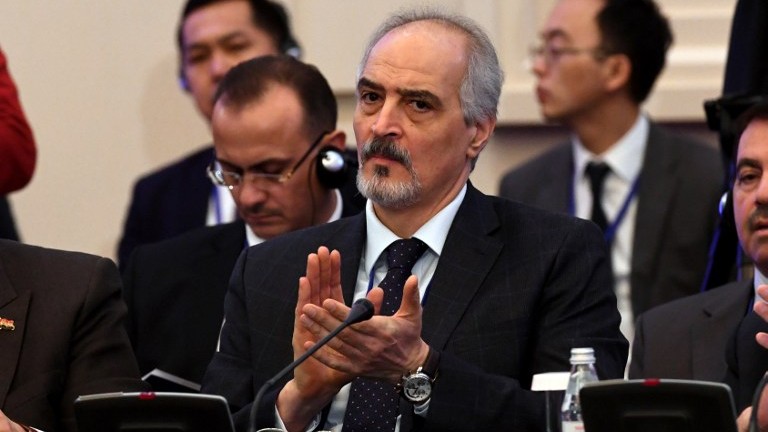
Bashar Jaafari, Syria’s UN ambassador, said rebel leader Mohammad Alloush’s speech in Astana did not rise to the level of the gathering of diplomats attending the conference.
Jaafari repeatedly referred to the rebel delegation as representatives of “terrorist armed groups” and said the final agenda for the talks is not ready yet.
“These provocative and belittling acts characterized the words and action of the armed terrorist groups meant to provoke the attendees,” he said, adding that Alloush’s opening speech was unsuitable for those who came to Astana.
Jaafari was referring to Alloush’s speech in which he described Syrian President Bashar Assad’s government as “terrorist” and called for placing armed groups fighting alongside the Syrian army, including Lebanon’s Hezbollah group, on a global list of terrorist organizations.
“The presence of foreign militias invited by the regime, most notably the Lebanese Hezbollah and the Iraqi Hezbollah … contributes to the continuation of bloodshed and obstructs any opportunity for a ceasefire,” Alloush said.
Assad’s forces and their allies are no different than the Islamic State group and should be designated as “terrorist groups,” he said.
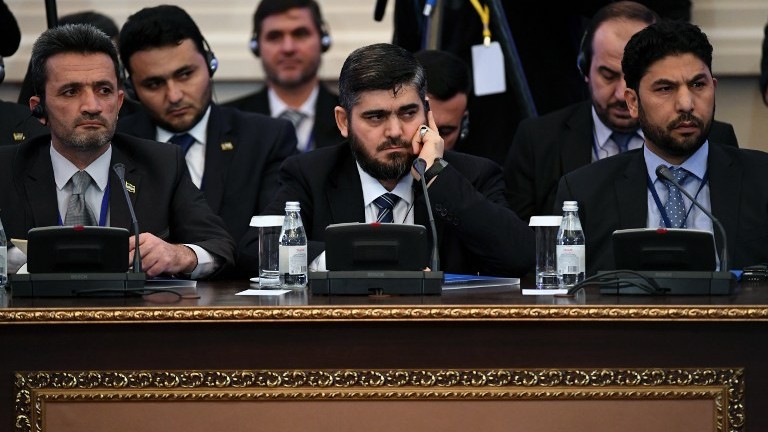
The harsh and uncompromising tone delivered by the two sides, so soon after the talks started with an opening ceremony and speeches by various representatives, was a bad omen for the gathering.
Earlier, Osama Abo Zayd, a rebel media representative to the talks, told The Associated Press that the scope of the negotiations is limited to strengthening the ceasefire.
“There’s no significance to negotiations if the people on whose behalf we are negotiating are being killed,” he said, adding that there has been absolutely no discussion about elections or Assad’s future.
Syria’s war is estimated to have killed about 400,000 people since March 2011. The conflict, which started as an uprising against Assad’s rule against the backdrop of Arab Spring movements, quickly descended into all-out civil war.
Ahead of the talks, delegates passed through the hotel’s soaring atrium, where songbirds are kept to chirp in cages, on their way to the conference room.
Reflecting persisting tensions, Arab TV stations said the rebel delegates stalled, entering the room a few minutes late to register their displeasure at being seated at the same oval-shaped table as the Iranian delegation. The hotel was closed off to all but a handful of representatives of the media.
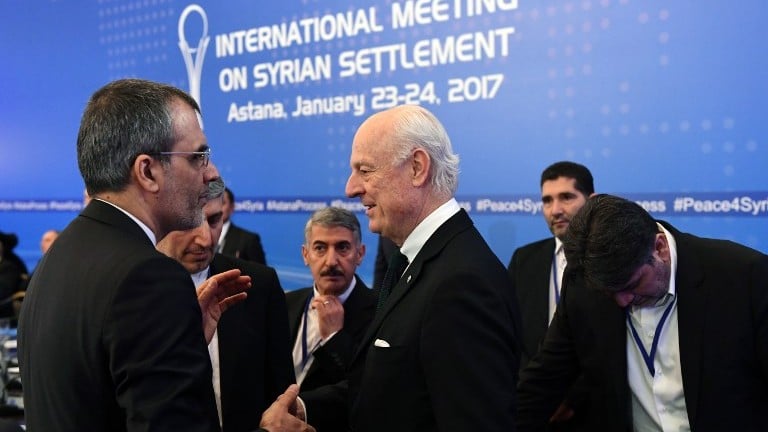
Russia, Turkish and Iranian delegates were all seated around the same table, along with de Mistura and the US ambassador.
After a short opening ceremony during which Kazakh Foreign Minister Kairat Abdrakhmanov spoke, the meeting went into closed session. It wasn’t immediately clear if there would be any direct talks between the rebels and Damascus representatives behind the closed doors.
At the top of the agenda is an effort to consolidate last month’s ceasefire brokered by Turkey and Russia. The truce, which excludes extremist groups such as the Islamic State group and the al-Qaeda affiliate in Syria, has reduced overall violence but fighting and violations continue on multiple fronts.
In Tehran, Iranian Foreign Ministry spokesman Bahram Ghasemi said that preserving the tenuous ceasefire will be “the most important issue” on Astana’s agenda and that Iran is hopeful the talks can also pave the way for the delivery of humanitarian aid.
Ghasemi suggested that discussions over a larger political settlement would have to wait, saying: “Let’s wait and see how the process can be continued based on conclusions that will be announced Tuesday.”
The talks, organized by Russia and Turkey, are the latest attempt to halt the nearly six-year conflict. Russia and Iran are the main backers of Syrian President Bashar Assad’s government, while Turkey supports the armed opposition trying to topple him.
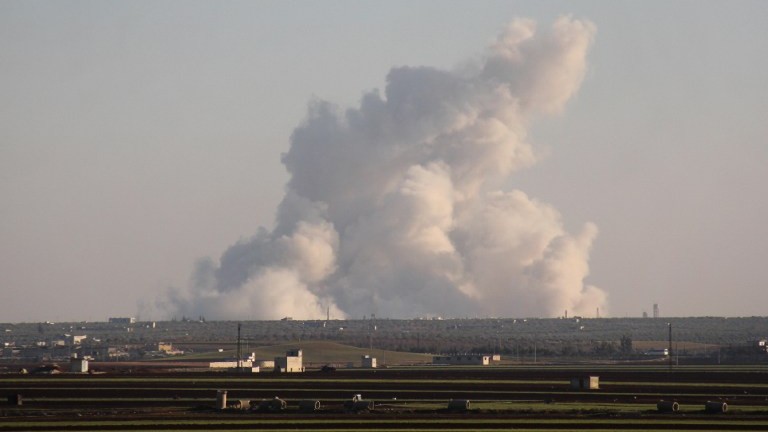
The two sides have traded blame for repeated violations of the December 30 ceasefire, which was also brokered by Russia and Turkey.
The Astana gathering is the first time Syrian government representatives are sitting down with an opposition delegation made up mainly of rebel factions. Previous face-to-face talks in Geneva included an opposition delegation made up mostly of political figures. During the last round of talks in Geneva in early 2016, de Mistura was shuffling between the delegations sitting in separate rooms.
Copyright 2017 The Associated Press



The Times of Israel Community.