

Hezbollah’s response will come, but where and when?
Shiite terrorist group cannot afford to ignore Israeli strike, but is constrained from launching full-fledged attack

 Add ToI as a Preferred Source on Google
Avi Issacharoff, The Times of Israel's Middle East analyst, fills the same role for Walla, the leading portal in Israel. He is also a guest commentator on many different radio shows and current affairs programs on television. Until 2012, he was a reporter and commentator on Arab affairs for the Haaretz newspaper. He also lectures on modern Palestinian history at Tel Aviv University, and is currently writing a script for an action-drama series for the Israeli satellite Television "YES." Born in Jerusalem, he graduated cum laude from Ben Gurion University with a B.A. in Middle Eastern studies and then earned his M.A. from Tel Aviv University on the same subject, also cum laude. A fluent Arabic speaker, Avi was the Middle East Affairs correspondent for Israeli Public Radio covering the Israeli-Palestinian conflict, the war in Iraq and the Arab countries between the years 2003-2006. Avi directed and edited short documentary films on Israeli television programs dealing with the Middle East. In 2002 he won the "best reporter" award for the "Israel Radio” for his coverage of the second intifada. In 2004, together with Amos Harel, he wrote "The Seventh War - How we won and why we lost the war with the Palestinians." A year later the book won an award from the Institute for Strategic Studies for containing the best research on security affairs in Israel. In 2008, Issacharoff and Harel published their second book, entitled "34 Days - The Story of the Second Lebanon War," which won the same prize.
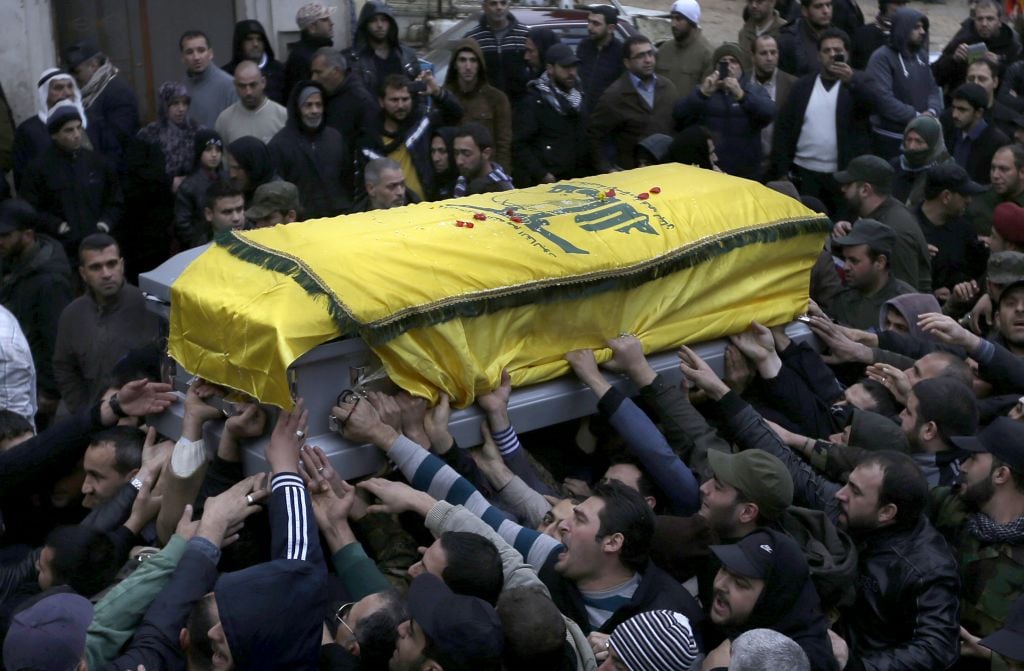
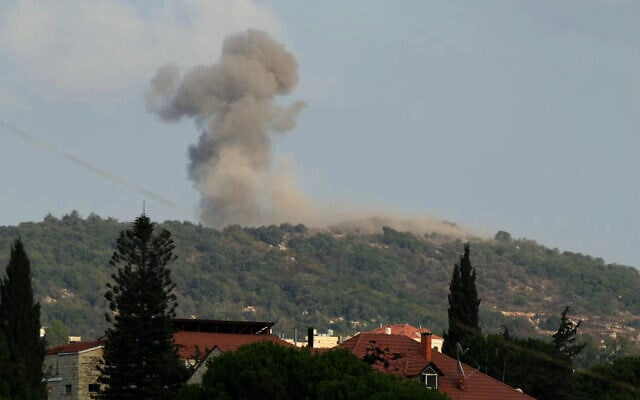
You can imagine what took place the day after Monday’s strike on a weapons convoy in Lebanon, when the leaders of Hezbollah met at a hideout in Beirut’s Dahiya quarter or some other secret location.
Secretary-General Hassan Nasrallah probably gave a few opening remarks, then let the other members in the room take the floor. Some might have pushed for restraint, and emphasized the need to hold back in face of the challenges ahead in Syria and Lebanon.
“We have strategic goals in Syria,” they would have told him. “Let’s not put them in danger now. A couple of Israeli missiles that caused little damage and did not result in significant loss of life, that’s just not something worth losing everything for.”
But others in the meeting may have been more aggressive.
“Look, Sayyid Hassan, this lawlessness cannot continue,” they might have said. “They killed Imad (Mughniyah) in 2008, they killed Hassan (al-Laqis) only three months ago, they bomb weapons convoys headed our way. They believe they can just do whatever they want, and if we don’t respond and clarify that there is a price for their actions, it will only continue.”
This, in essence, is the dilemma facing Hezbollah in recent days: What to do about Israel’s alleged military interventions, where to do it, and when?
At least one dilemma — Hezbollah’s public reaction to the bombing — was solved by the organization, after a little more than 36 hours. Here, too, the decision was anything but straightforward. Hezbollah admitted that the attack was carried out over Lebanese territory, and that will force the organization to respond, even if not immediately.
Ignoring the Israeli strike would emphasize Hezbollah’s vulnerability and weakness. As it is, Israeli and Lebanese media unaffiliated with Hezbollah reported extensively on the location of the attack and that assets belonging to the group were hit. The Israeli media’s almost celebratory reaction to the bombing may have even been exaggerated, as if trying to provoke the organization to react.
Thus far, Hezbollah has chosen the first option — to explicitly stress that, although it suffered this time, next time it will be the one to deliver the blow. This would seem to be a logical choice: Hezbollah maintains its credibility, is not portrayed as cowardly, and provides itself with unlimited time to respond.
And Hezbollah can now continue to focus on what it deems truly important. For the moment at least — as odd as it may seem — an Israeli attack on several trucks carrying missiles on the border between Syria and Lebanon is the least of the Shiite group’s worries.
Still, it seems that the organization, in contrast to its recent behavior, is unlikely to hold back and maintain its restraint in the medium-term. True, Hezbollah is currently fighting on two fronts — one in Syria, and another in Lebanon as it takes on radical Sunni terrorists. These conflicts exact a heavy toll on the organization’s military, economic, personnel and political assets. Almost every day, another attack against Hezbollah by a Sunni terrorist organization takes place, in Beirut and beyond. Every day Hezbollah suffers casualties in Syria as well. Hence a campaign against Israel is somewhat less urgent.
Yet — and this is a critical point — the strike earlier this week was the first time since the Second Lebanon War that Israel has attacked a Hezbollah target openly in Lebanon. It won’t be easy for the organization to keep silent. Revenge will come, it seems; the question is when and where.
The option of a general escalation that would drag the organization into a head-on collision with Israel may result in serious consequences not only for Hezbollah, but also for its entire axis, Iran and Syria. One can only assume that if Israeli forces were to enter Lebanon, Hezbollah would have to urgently bring back some of the thousands of its troops currently in Syria, where one third of its fighting force is deployed, abandoning Bashar Assad to the Syrian opposition. This would not be good news for the Syrian or the Iranian regimes.
But Hezbollah has changed its strategy with regard to its weaponry, which could pull it into open conflict with Israel. Until a year-and-a-half ago, Hezbollah missiles were primarily stationed on Syrian soil, but the civil war led it to realize that it had better move its arsenal back to Lebanon. That Israel cannot accept such a development is a major point of contention, despite the fact that both sides are not looking for a fight right now.
Therefore, Hezbollah may choose an indirect response. It has a desire for revenge against Israel, but will not risk action that can be traced back to it. A massive rocket attack against Israel would not be a good option. On the other hand, an attack against Israeli tourists or embassies abroad is another story. This week, Haaretz’s Amos Harel reported that Israel expects Hezbollah will try to harm Israeli officials. If Hezbollah could strike at an Israeli official, the group would consider that a tremendous achievement. An eye for an eye (Imad Mughniyeh), a tooth for a tooth (Hassan al-Laqis).
The organization has another option. One of the most significant events regarding the tension between Hezbollah and Israel took place in June 2012. Drug dealers from the village of Ghajar, on the border between Israel and Lebanon, smuggled 21 kg of explosives into Israel. The ammunition made its way to Nazareth, where it was captured by security forces. An investigation revealed that Hezbollah was behind the smuggling. Defense officials believe that the organization is interested in trying something similarly unexpected now — perhaps having Palestinian or Israeli Arabs messengers carry out its revenge attack.



The Times of Israel Community.