

How far-right outcast Moshe Feiglin resurrected his political career
After years on the political fringes, the fundamentalist whom Netanyahu once pushed out of Likud has secured spot No. 2 on Smotrich’s slate, putting a senior ministerial post well within his reach
 Add ToI as a Preferred Source on Google
Shalom Yerushalmi is the political analyst for Zman Israel, The Times of Israel’s Hebrew current affairs website
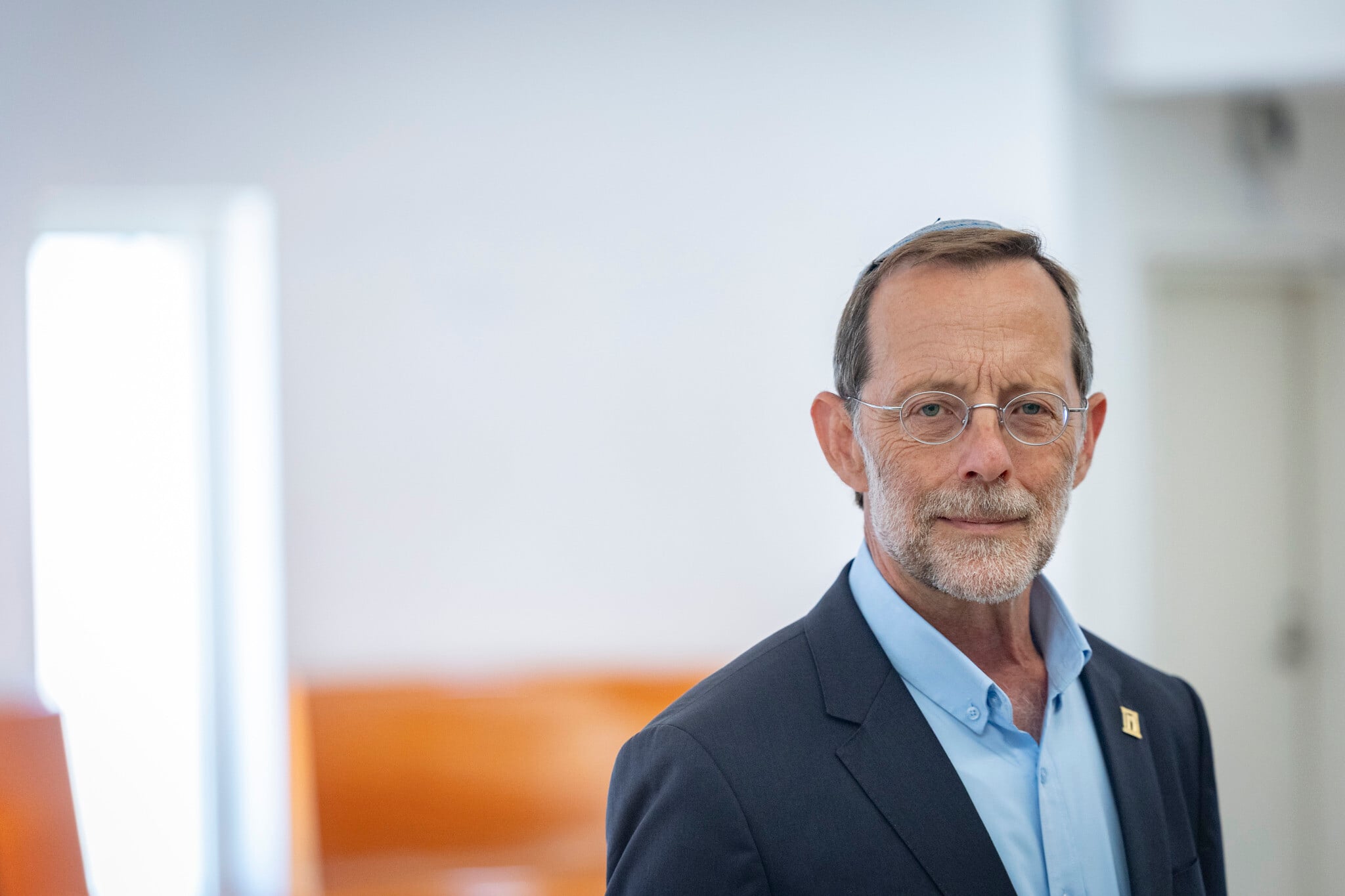
Of all the figures navigating the current chaos on the Israeli right — a fractured landscape where veterans and newcomers alike are frantically forming new parties and seeking alliances to ensure their political survival — the only one to have registered a tangible victory is the unlikeliest of them all: Moshe Feiglin.
While a crowded field of hopefuls — including former IDF general Ofer Winter, former ambassador to the UN Gilad Erdan, MK Avi Maoz, former communications minister Yoaz Hendel, former deputy foreign minister Sharren Haskel and others — are groping in the dark and hovering dangerously close to the electoral threshold or far below it, Feiglin has struck gold.
Previously stuck in that same zone of desperation, Feiglin now finds himself sitting comfortably in second place on a joint slate with Finance Minister Bezalel Smotrich’s Religious Zionism party.
Their new alliance clears the electoral threshold in almost every poll. If Prime Minister Benjamin Netanyahu’s right-wing bloc forms the next government, this pact promises Feiglin a major cabinet portfolio and a seat in the high-level security cabinet.
It is the kind of achievement he has dreamed of his entire life, on his quest for the premiership — an office he has fantasized about since the 1990s. That was when he founded the extremist Zo Artzenu (This is Our Land) movement, blocking highways and paralyzing national infrastructure in mass civil disobedience against the Oslo Accords. Now, he is already demanding the defense portfolio, declaring: “If Netanyahu has no choice, he’ll give it to me.”
Feiglin, 64, is one of the most extreme figures on the Israeli right, as well as one of the most stubborn. For 30 years he has risen and fallen: tangling with the law, being convicted of sedition and sentenced to prison, founding political movements and ever-changing alliances, joining Likud, being expelled, and joining again.
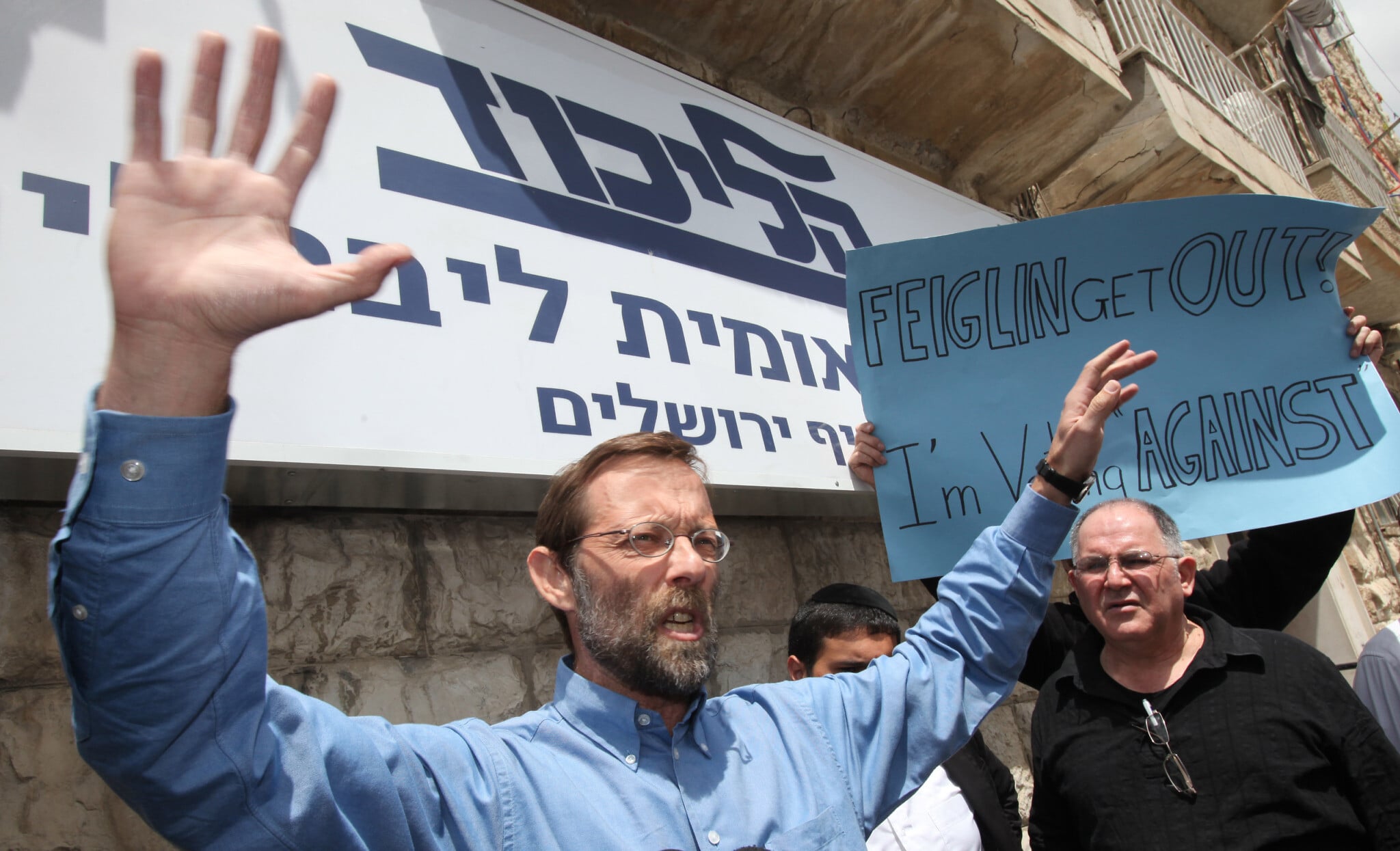
He has run against Netanyahu three times for the Likud party leadership and penned innumerable books and manifestos.
In recent years, he successfully masked his fundamentalism behind a libertarian facade, waging a vocal campaign for personal freedom and the legalization of soft drugs. This somewhat neutralized his fanatical image, drawing in new audiences with whom he hoped to forge a Jewish political connection.
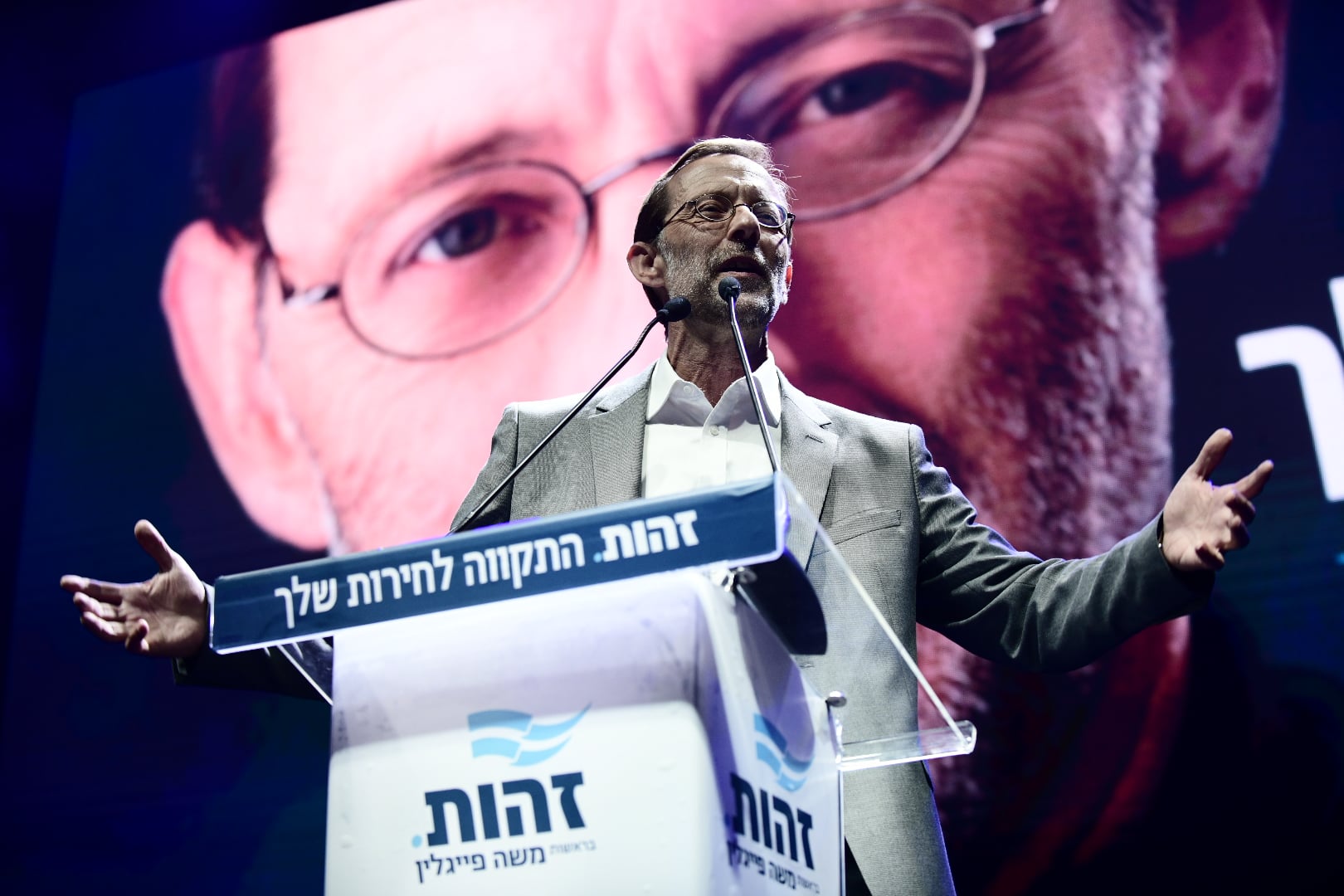
In his current incarnation, Feiglin serves as chairman of the Zehut party, which he founded a decade ago (though he briefly departed it). Today, he is the political partner of Smotrich, who cannot stand him but reluctantly accepted him as No. 2 on his Religious Zionism slate.
Fundamentalist ideology
Throughout all his political upheavals, Feiglin has maintained an uncompromising ideology. He was, and remains, a messianic fanatic, a vocal advocate of Palestinian population transfer and expulsion, a self-styled leader, and a devotee of a faith-based revolution intended to replace Zionism, which he believes has completed its historic and democratic mission.
Feiglin’s supreme goal is the establishment of “a Jewish state and a proper Hebrew regime” centered on the rebuilding of the biblical Temple in Jerusalem. Without it, he argues, the people and Torah of Israel are incomplete. As Moti Karpel, Feiglin’s longtime ideologue and mentor, wrote in his book The Faith Revolution, without the Temple, “our lives are not lives.”
Feiglin was convicted and handed a six-month suspended prison sentence in 2000 after attempting to enter the Temple Mount without authorization. In 2019, Netanyahu personally intervened to prevent him from entering the flashpoint holy site.
Today, Feiglin ascends the Temple Mount on the 19th day of every Hebrew month, a custom he vows he will not break even if appointed a minister.
Feiglin and his associates have not strayed from the worldview expressed in Karpel’s book: “In the heart of our capital, in central Jerusalem, the Arabs hold in their hands the focal point of Israeli existence, the site of the Temple. Needless to say, this intolerable situation must not continue. Restoring the Mount to our hands is a mission of the highest order.”
Naturally, Feiglin and his camp view the West Bank and Gaza as inseparable parts of Israel over which Jewish sovereignty must be immediately imposed. In the wake of the October 7, 2023, Hamas invasion and massacre, Feiglin has sharpened his doctrine of population transfer, unabashedly advocating for the mass removal of Gaza’s residents by any means possible, and telling Channel 12 in 2024: “We can’t live in this land if one Islamo-Nazi remains in Gaza.”
“In any territory of our Promised Land from which we are attacked and which consequently falls into our hands, the enemy will be expelled and full Israeli sovereignty will be applied,” his Zehut party manifesto states.
The diplomatic roadmap promoted by Feiglin and his allies also calls for the conquest of the East Bank — parts of modern-day Jordan that they regard as sovereign Israeli territory.
Arabs who are not expelled or who do not emigrate voluntarily would be offered residency status, according to Feiglin’s doctrine, but only on the condition that they swear allegiance to the Jewish state, after which they would be drafted into the military or national service.
“One of the first tasks of the faith-based leadership regarding peace is simply to erase it from our diplomatic lexicon,” Karpel wrote. Feiglin frequently echoes this thesis, adding that Israel must reject its generous US military aid. In his view, the funding amounts to “bribe money, one of the United States’ main tools for perpetuating our dependence on it.”
Devoted believer in conspiracy theories
Feiglin is also a devoted believer in a variety of conspiracy theories. He remains convinced that the assassination of prime minister Yitzhak Rabin in 1995 was orchestrated by the Shin Bet to tarnish the image of the religious Zionist right.
Like many others on the fringes of the right, Feiglin also believes the Shin Bet knew in advance about Hamas’s October 7, 2023, invasion but deliberately did nothing to stop it in order to hasten Netanyahu’s downfall, only for the events to spiral completely out of the security agency’s control.
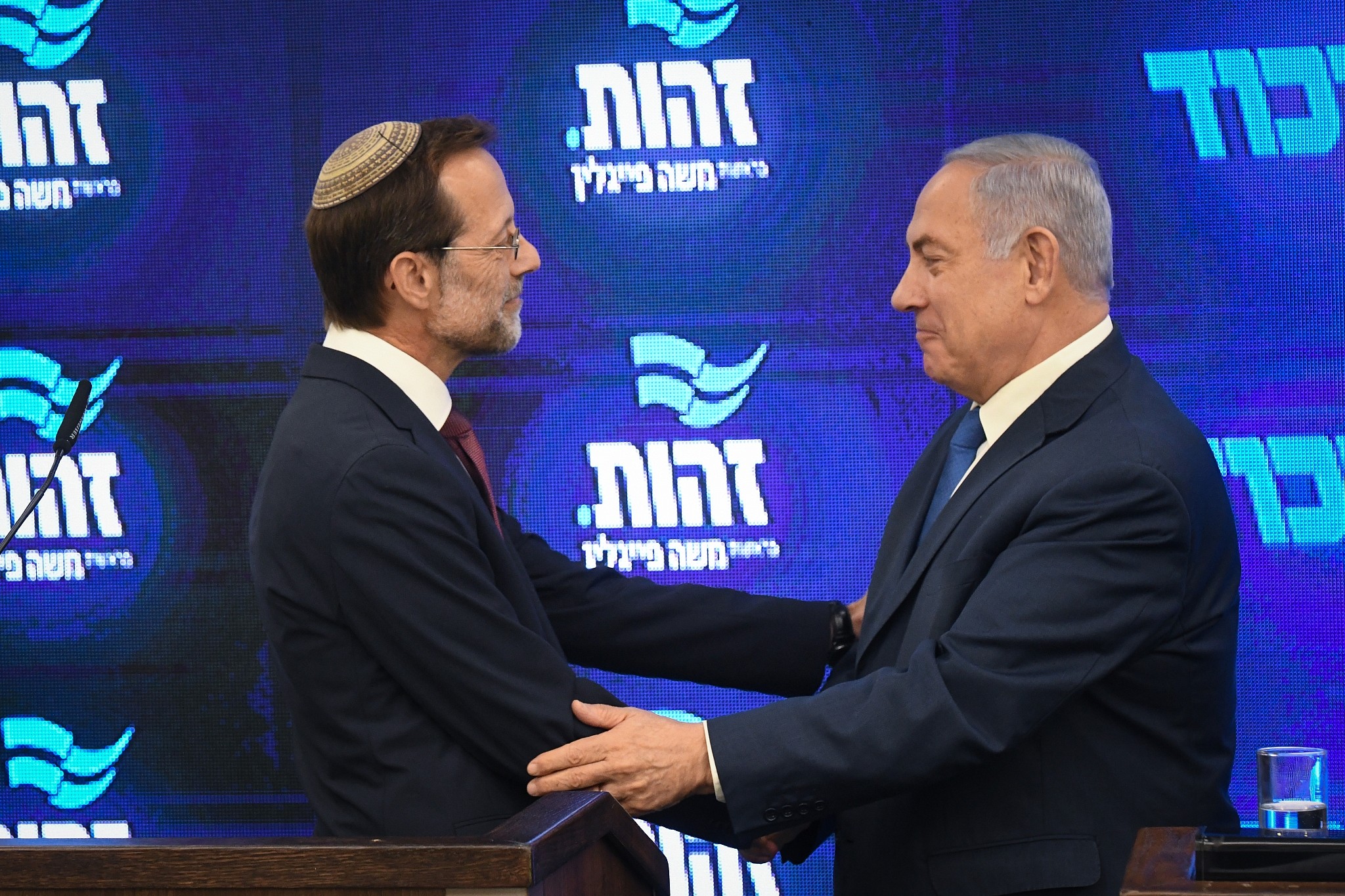
These radical positions and ambitions have historically deterred many on the right, including Netanyahu himself. Years ago, Feiglin signed up thousands of people as Likud members, established the “Jewish Leadership” faction within the party, and attempted a hostile takeover from within. Netanyahu initially welcomed the mass membership drive, but quickly realized who he was dealing with and systematically forced Feiglin out.
To purge him from Likud, Netanyahu resorted to every backroom political maneuver available, famously burying Feiglin deep down the party slate despite him being duly elected in primaries to the 17th spot. Feiglin refused to give up and remained politically active.
Incidentally, Feiglin currently sits in 54th place on Likud’s Knesset slate. It is quite a leap from that irrelevant slot to the potential status of a senior cabinet minister via the merger with the Religious Zionism party.
Religious Zionism, too, initially wanted nothing to do with Feiglin. Over the past year, he attempted to contact Smotrich dozens of times, but the finance minister simply refused to answer his calls. The alliance was ultimately brokered by Shay Malka, Feiglin’s right-hand man, via Religious Zionism activists in the West Bank settlements.
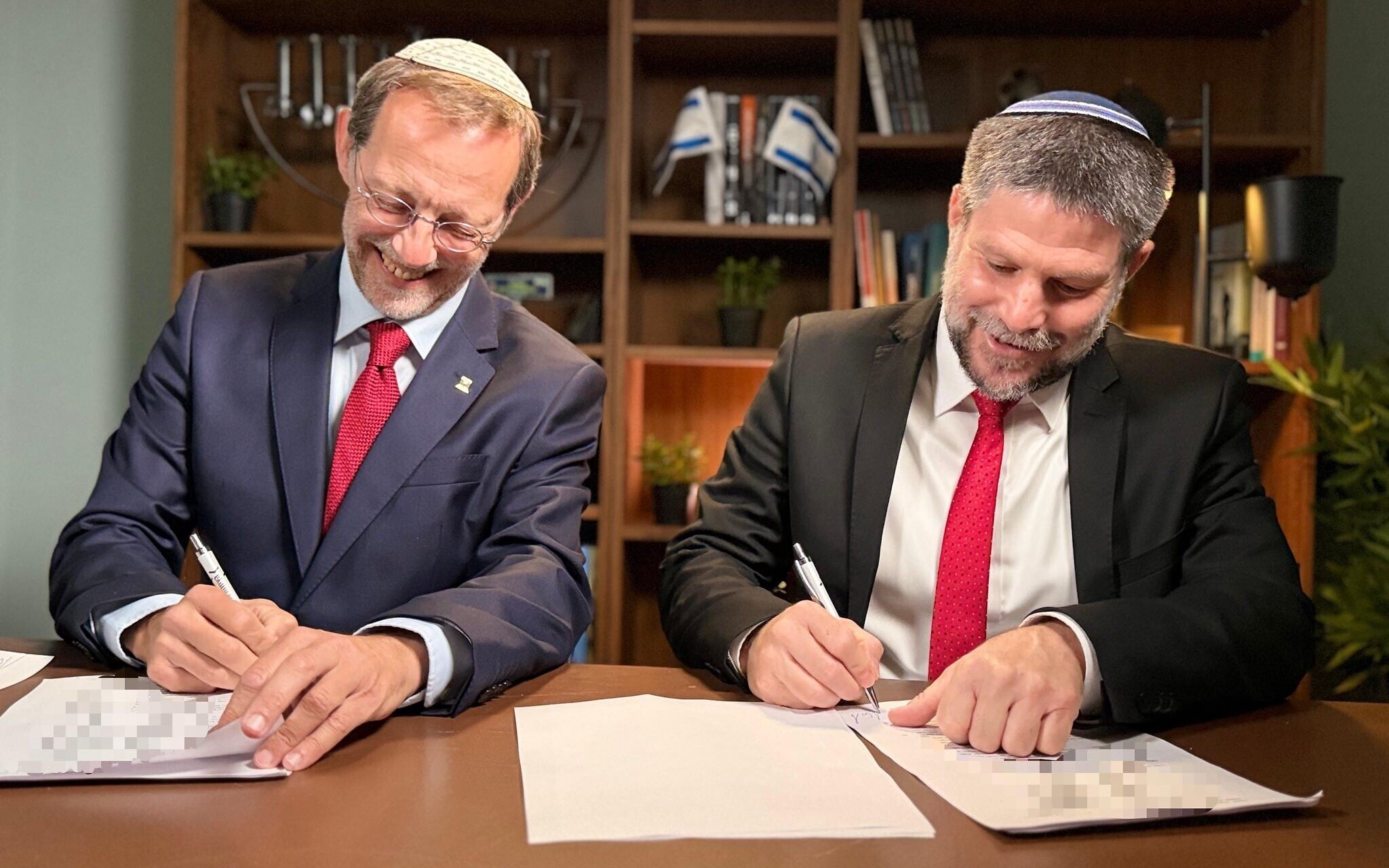
Smotrich was buckling under the pressure of dismal polling that showed his party dipping below the 3.25 percent electoral threshold. Falling short would mean trashing thousands of right-wing votes — a nightmare scenario for Netanyahu. The prime minister desperately tried to force Smotrich into an alliance with Winter, but the former IDF general and political newcomer refused to entertain the idea.
In the end, Malka’s initiative to unite Smotrich and Feiglin succeeded. The polls rebounded, and Netanyahu finally relaxed. In recent interviews, the prime minister has praised and congratulated Feiglin on the merger.
Years ago, Netanyahu maneuvered endlessly just to keep Feiglin from being an ordinary Likud backbencher. If Netanyahu wins in October, he may end up welcoming Feiglin to the cabinet table.





The Times of Israel Community.