

High Court annuls Haredi draft-dodger arrest ban as unconstitutional violation of equality
Law passed by the government in July ‘flagrantly violates state’s obligation to exercise coercive power equally,’ writes Judge Sohlberg
 Add ToI as a Preferred Source on Google
Jeremy Sharon is The Times of Israel’s legal affairs and settlements reporter
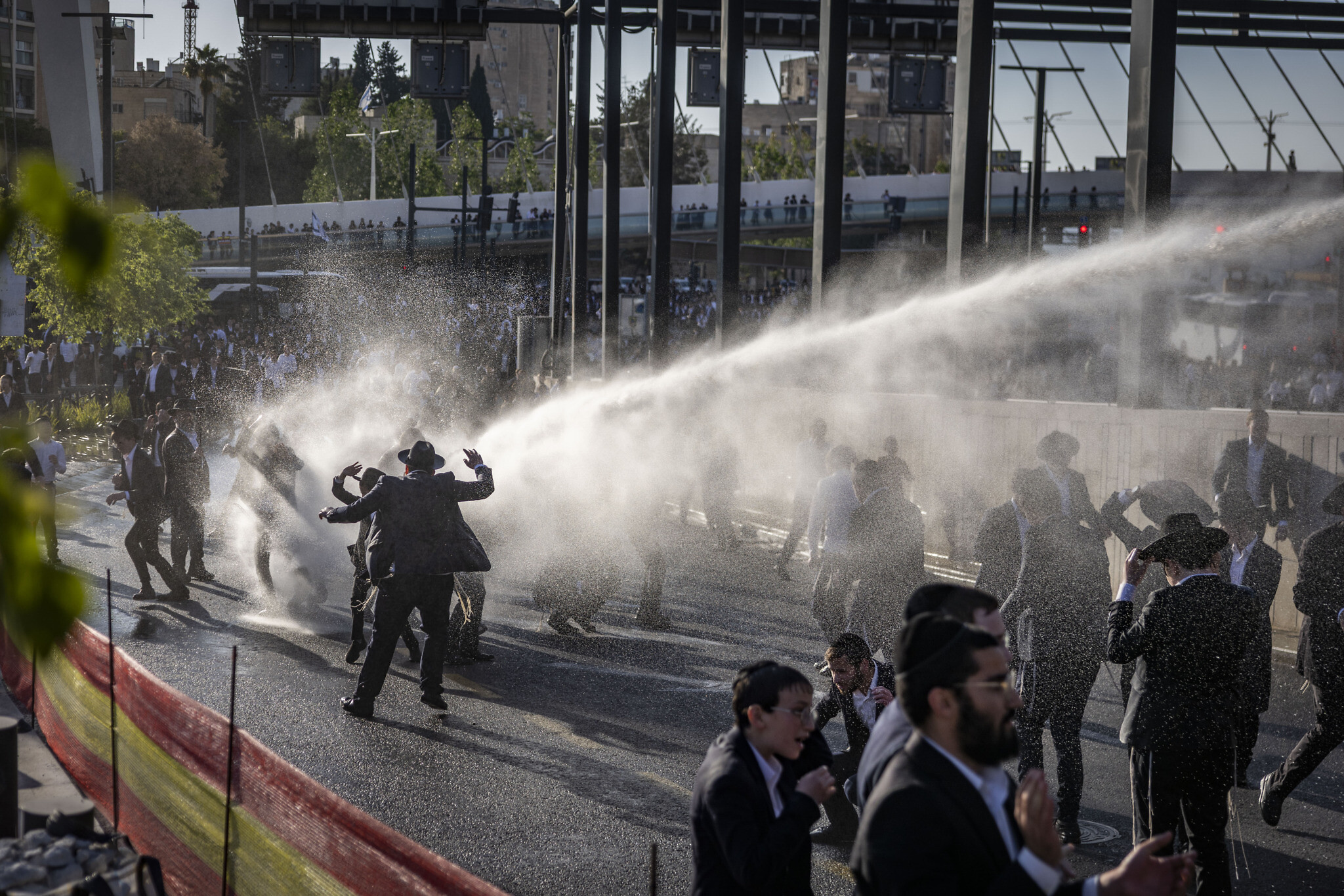
The High Court of Justice ruled unanimously on Thursday to annul a highly contentious law passed in July that banned the IDF and police from arresting ultra-Orthodox draft dodgers for a seven-month period.
All nine of the presiding judges ruled that the law was invalid on procedural grounds, while eight of those judges also found that the law was unconstitutional since it did severe harm to the principle of equality.
After failing to pass a law reinstating blanket military service exemptions for ultra-Orthodox yeshiva students, the government rammed through legislation banning the arrest of Haredi draft dodgers for a four month period, which due to legal reasons connected to the elections would have extended to seven months.
The government argued, without evidence, that the arrest of Haredi draft dodgers was creating societal unrest and reducing willingness in the community to enlist, contrary to the assertion of the IDF that enforcement against draft dodging was necessary and effective.
Opposition leaders welcomed the decision, with Yisrael Beytenu leader Avigdor Liberman, a longtime proponent of Haredi enlistment whose party petitioned against the law, praising the court for refusing to allow “distinction between one type of blood and another.”
Writing the principle opinion, Supreme Court Deputy President Noam Sohlberg highlighted the severe procedural flaw in the law’s passage in the Knesset, which all nine justices ruled was cause for annulling it.

As argued by the petitioners against the law, Sohlberg found that the version of the bill passed in its first reading provided for enforcement measures against ultra-Orthodox draft dodgers, as the legislation was originally designed by the government to resolve the issue of Haredi enlistment.
But the legislation passed in its final readings, designed by the government to appease the ultra-Orthodox parties, removed enforcement against ultra-Orthodox draft dodging, the exact opposite of the version passed in its first reading and a fundamental violation of Knesset regulations, which Sohlberg said justified annulling the law.
An eight to one majority of justices also determined that the law — which banned law enforcement agencies from arresting Haredi yeshiva students who failed to report for conscription, while non-Haredi draft dodgers were still subject to arrest — was unconstitutional since it did severe harm to the principle of equality.
The law, Sohlberg wrote, “constitutes clear discrimination in the enforcement of the law, based on sectoral-religious affiliation, which violates the state’s duty to treat all its citizens equally, in the most fundamental sense of the term.”
The deputy court president added: “It is clear that this constitutes a genuine infringement of the constitutional right to equality.”
“[The law] flagrantly violates one of the state’s deepest obligations toward its citizens: to exercise the coercive power entrusted to it—and to it alone—in a fair and equal manner, without determining that the blood of one group’s members is redder than that of others, or that the liberty of some is more valuable than that of others,” the judge declaimed.
He argued further that the implications of legitimizing the law could in the future lead a political party to demand that taxes or other laws not be enforced against members of the group it represents.
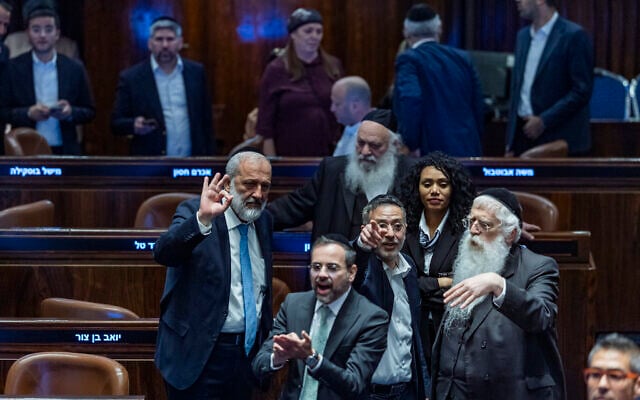
Sohlberg also stated that no evidence was brought to support the claim that the arrests of draft dodgers was decreasing motivation to enlist among the Haredi public, and noted that the actual number of Haredi draft dodgers arrested was tiny, standing at just 219 men since January 2025, or a mere 0.3% of Haredi men obligated to perform military service.
He further pointed out that the method devised by the legislation to determine when a draft-dodging Haredi yeshiva student was exempt from arrest had no oversight system and no enforceable sanctions, so the measure could not even be said to effectively promote Torah study as its authors claimed.
The legislation established, for a limited period, a situation in which Haredi yeshiva students “are permitted, perhaps even expressly and deliberately encouraged, to continue violating the law, knowing that no enforcement proceedings will be taken against them—and against them alone,” he said.










The Times of Israel Community.