

Hopeful Labor members see lifeline in youthful, progressive primary winners
With social protest leaders Itzik Shmuli and Stav Shaffir taking top spots, members want to believe the party can be saved from destruction and head back to former glory

 Add ToI as a Preferred Source on Google
Raoul Wootliff is a former Times of Israel political correspondent and Daily Briefing podcast producer.
In 2011, it took Itzik Shmuli and Stav Shaffir just three weeks to turn a small impromptu protest against the high rent in Tel Aviv into a mass nationwide movement of protesters and tent-cities that culminated in one of the biggest demonstrations the country has ever seen.
Seven and a half years later, after they won first and second place, respectively, in the Labor primary on Monday night, supporters are looking to the pair to generate the same momentum in the next 57 days for Israel’s venerable center-left party, as it faces one of its most serious challenges to date.
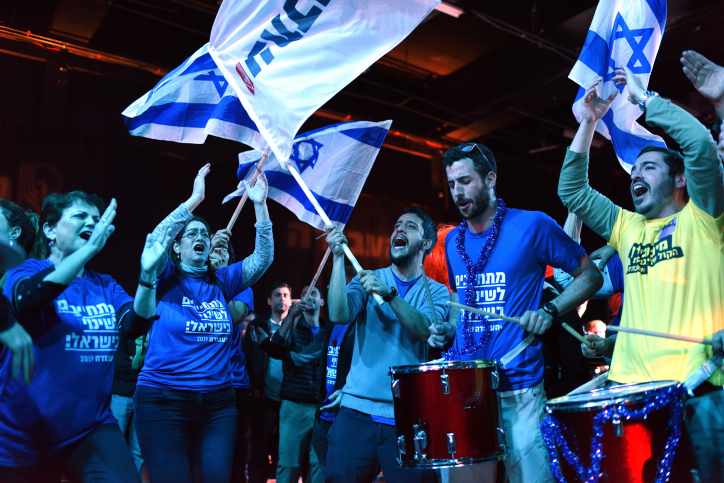
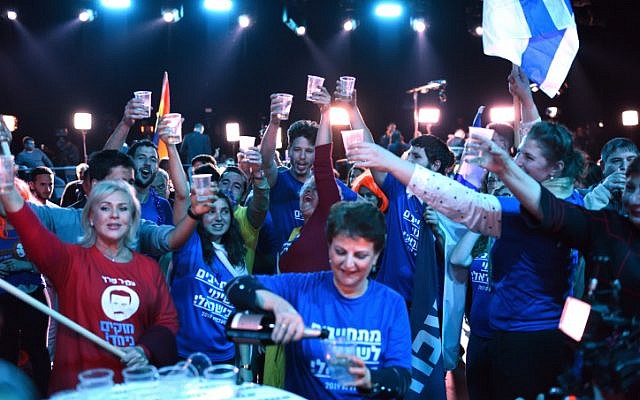
“This is is a victory for the party. This is where we turn things around,” said Yael Bigman as cheers eventually died down after the primary results came up on the large screen at the front of a hall in the Tel Aviv Convention Center late Monday.
“They are young, fresh and dynamic. They represent what this party can be,” said Bigman, 22, who volunteers for the party. “I have always been behind Stav and Shmuli.”
Labor has seen its fortunes tumble in recent years, hit by a rightward shift among Israeli voters, turmoil in the party, and the emergence of new political players that have eroded its base.
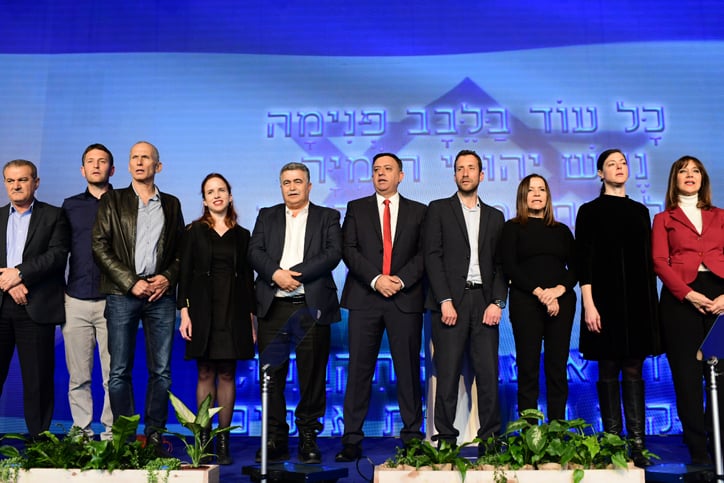
With polls giving Labor only between five and seven seats in April’s elections (sharply down from 24 in the outgoing Knesset, when it ran together with Tzipi Livni’s Hatnua), the primary is being seen by some in the party as a last chance to save it from oblivion. With the news that Shmuli, 38, and Shaffir, 33, had taken the top spots (behind Labor chairman Avi Gabbay), the largely younger crowd of party activists at the convention center cheered raucously — celebrating what felt like fresh hope that a younger, more progressive party could yet emerge and flourish.
“People have been too quick to eulogize us,” said Eran Hermoni from the central podium. Hermoni is the party’s director, who now automatically takes the 11th spot on Labor’s Knesset slate.
Voting took place in 84 polling stations across the country — opening at 10 a.m. and set to close at 9 p.m, but kept open a further half an hour due to “long lines” in several cities.
“You saw the enthusiasm for the party today. We will bring that to the whole country,” Hermoni promised.
While Hermoni is himself still a long way from a realistic spot to enter the Knesset, the crowd in the room agreed with his optimism.
“I know there is still a lot of work to do,” said Yoni Erlich, a member of the party’s youth wing, “but this could really start to change the direction.”
Erlich said he believed that the results, which placed former leaders Shelly Yachimovich and Amir Peretz in fourth and fifth place, represented “a real mix of experience and youthfulness” that will appeal to voters.
“But most of all, seeing that we have young leaders dedicated to change will bring a lot of people in,” he said.
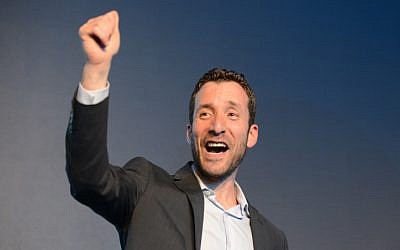
Shmuli and Shaffir entered the Knesset in 2013 after making names for themselves as leaders of the 2011 social protests. Both used their primary campaign to offer a youthful promise to return the party to prominence.
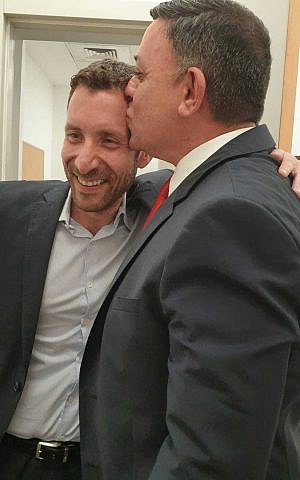
A former chair of the National Union of Israeli Students, Shmuli, 38, has recently risen within the party establishment by aligning himself with Gabbay despite fierce criticism of the incumbent leader from other directions. After Gabbay broke off his partnership with Hatnua chair Livni last month, Shmuli was appointed Labor faction leader and opposition whip, taking over the latter role from Hatnua MK Yoel Hasson.
As an MK, and in his brief role as faction leader, Shmuli has championed minority rights, disabled people’s rights and benefits for pensioners. After publicly coming out as gay following a deadly stabbing attack at the Jerusalem Gay Pride Parade in 2015, he has also become a key lawmaker in the battle for homosexual surrogacy rights.
Speaking to journalists as he entered the hall Monday night surrounded by fervent supporters, the soft-spoken Shmuli said the result was “the most amount of trust anyone has ever put in me.”
Dropping the key word that Labor voters know could define whether the victory of the youthful and progressive social protest leaders can make any difference to the struggling campaign, Shmuli said he was sure the party will regain “momentum.”
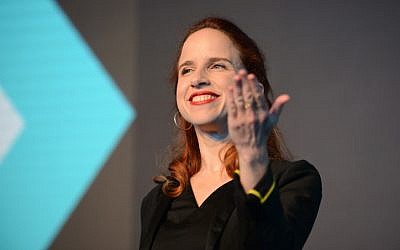
Having sat on the powerful Knesset Finance Committee and currently chairing the parliament’s Transparency Committee, Shaffir, 33, has established herself as an outspoken opponent of economic inequality and advocate of transparency in government.
Vehemently critical of the government’s ostensible failures to tackle socioeconomic inequality, to deal with the fate of tens of thousands of illegal immigrants, to advance a diplomatic process with the Arab world, and to prevent what she sees as Israel’s growing isolation, Shaffir has emerged as a key candidate to lead Labor in the future.
Surrounded by some of the over 500 supporters she says volunteered for her campaign, many wearing the orange wigs that have characterized her election day entourage in the past three primary elections, Shaffir told The Times of Israel she is convinced Labor is the best vehicle for bringing about change.
“We are here for the people who want to confront the status quo and want change,” she said over the pumping music in the nearly full hall. “We can lead the struggle for the future of the country.”
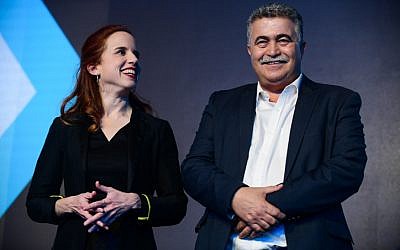
The Israeli Labor Party was formed in 1968 in a merger of three parties, one of them David Ben Gurion’s Mapai party, which was founded in 1930. In the years leading up to the establishment of the State of Israel in 1948, Mapai was the de facto leadership of the Jewish community and played a key role in the creation of the state.
But Labor has not ruled since Ehud Barak was defeated as the incumbent prime minister in 2001, following a failed attempt to reach peace with the Palestinians. The past 16 years have been a downward spiral for the party as the public has grown disillusioned with Labor’s moderate message of peace. The party has vacillated between meekly opposing a string of hawkish governments and serving as a junior partner to Prime Minister Benjamin Netanyahu’s Likud in what critics saw as a feeble attempt to cling to power.
Hinting at the desperate need to turn things around, Gabbay insisted the new party slate could bring down the government. “It is a day of hope — from tomorrow we all join hands and go forward together to realize that hope,” Gabbay vowed as he presented the top 15 candidates to the crowd. “Tonight we are embarking on a new path. A path that will end with governmental change.”
Launching its full election campaign at the results event, the party declared, almost ruefully, in its new campaign slogan, “No one will move us out of the way.”
Speaking to The Times of Israel after securing the number eight spot for himself, Yair Fink, former head of the community activist NGO “Good Neighbor” and a former chief of staff to party veteran Yachimovich, was upbeat.
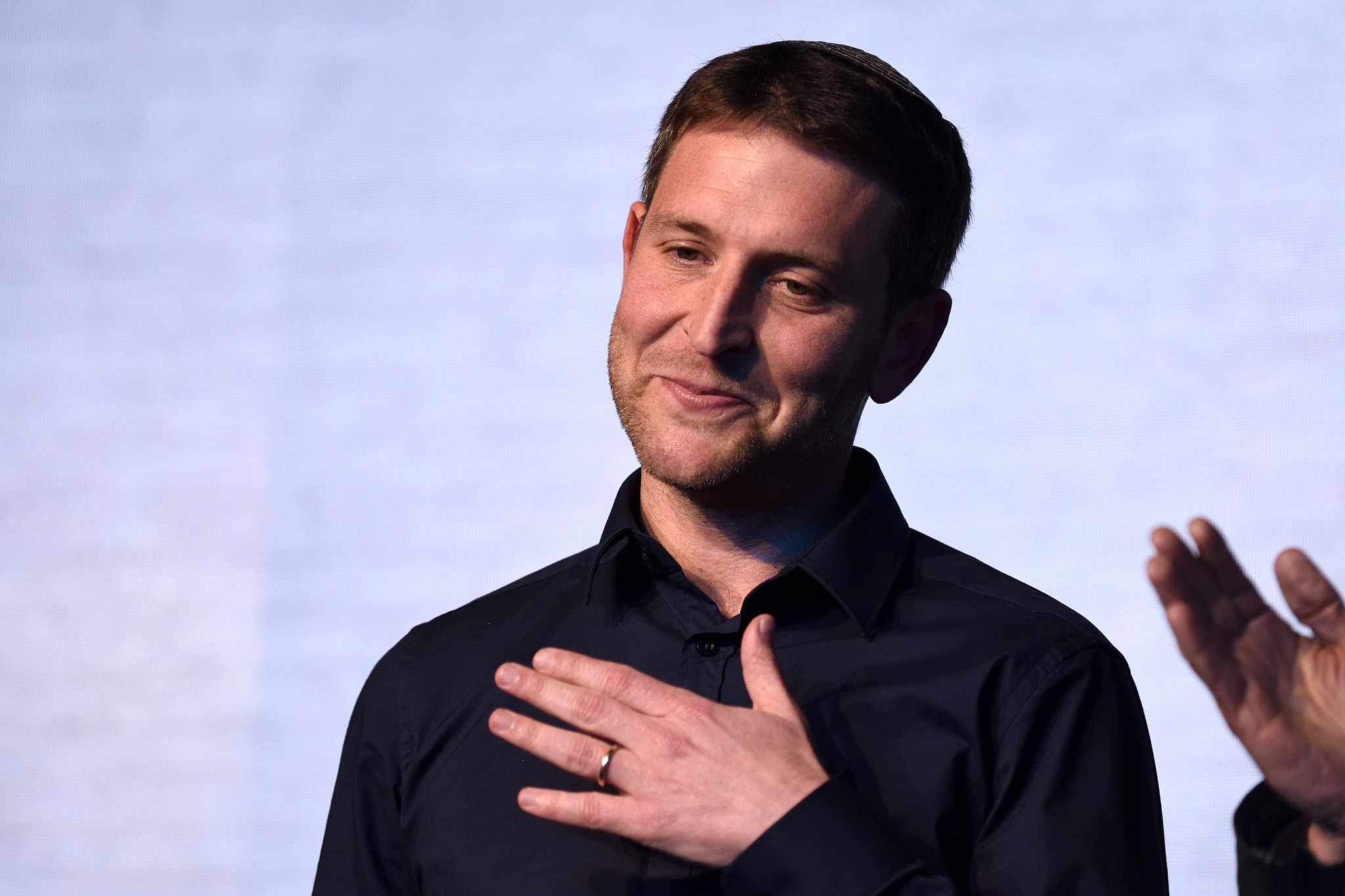
Together with “the fantastic list we have, especially with the people at the top of it,” Fink said, Labor could not just turn around its current dismal standing, but could once again lead Israel.
“From tomorrow we will start to go up in the polls,” Fink predicted. “This is certainly the start of something. It might take time, but we are on the way.”








The Times of Israel Community.