

How to lose friends and burn bridges: 9 things to know for June 3
Newspapers speculate whether Netanyahu’s firing of former allies Bennett and Shaked will backfire if/when he again attempts to form a right-wing coalition after September elections
 Add ToI as a Preferred Source on Google
Tamar Pileggi is a breaking news editor at The Times of Israel.
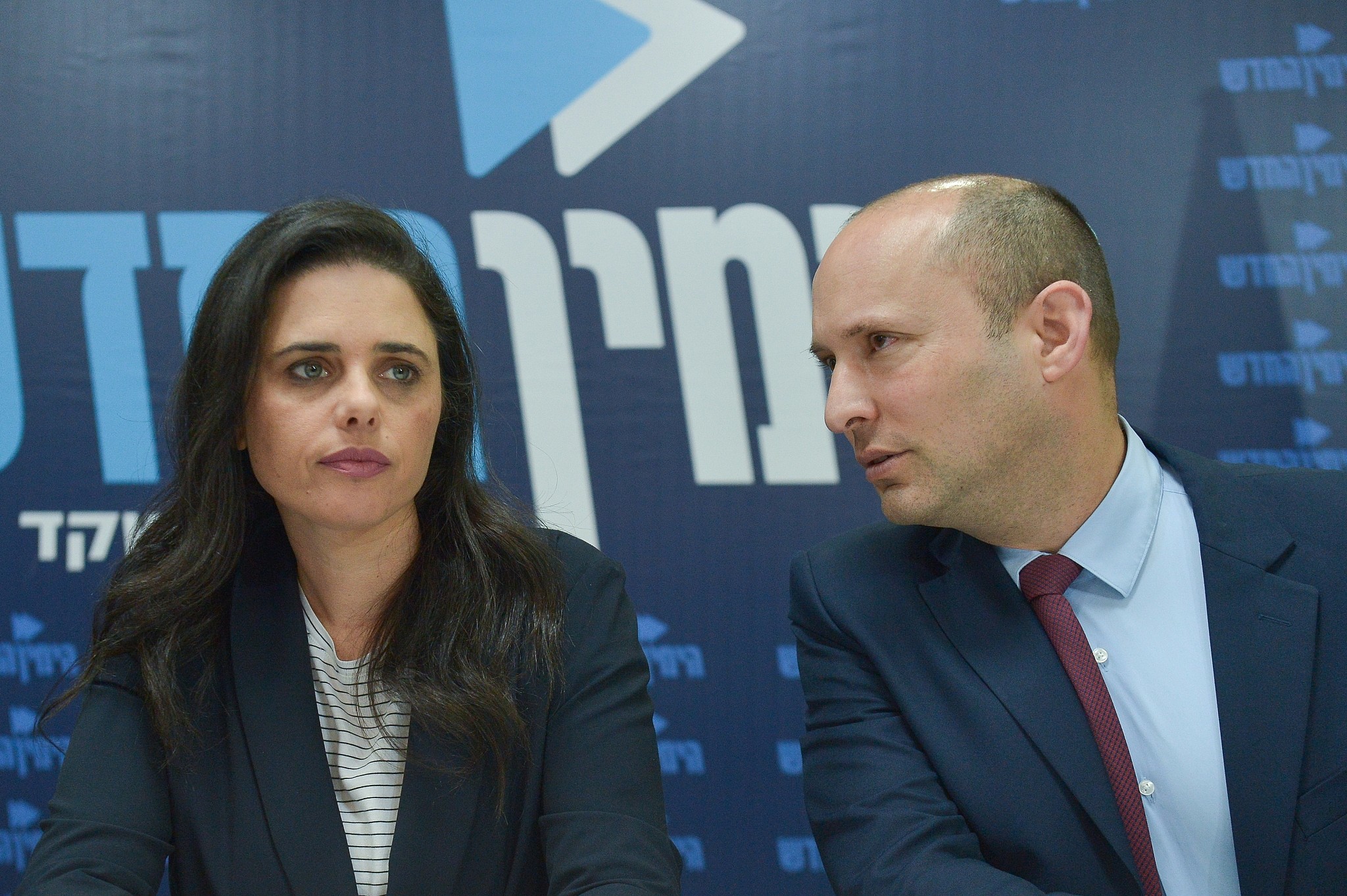
1. Prime Minister Benjamin Netanyahu’s dismissal of Education Minister Naftali Bennett and Ayelet Shaked from the interim government is the main story in Israeli newspapers on Monday, along with speculation on whether the move will backfire and again prevent the prime minister from forming a government.
- Shaked and Bennett’s New Right party failed to enter the Knesset in the April elections, but the two remained on the job pending the formation of a new government. Hours after they were fired, Bennett vowed to remain the leader of the New Right and run in the September 17 election. Shaked has not yet announced if she will run.
- No reason was given for yesterday’s dismissals, but newspapers on Monday offer plenty of takes on that question as well on whether Netanyahu firing his former allies will affect his ability to muster a right-wing majority government after the September 17 elections.
2. Yedioth quotes government sources as saying that Netanyahu fired the pair in a short phone call on Sunday to ensure they would not attend Tuesday’s coalition meeting. The sources said Netanyahu did not believe Bennett and Shaked should continue in their high-profile jobs after they were rejected by voters.
- Hebrew-language newspapers noted that the firings would also allow Netanyahu to use the vacated ministries for pre-election bargaining.
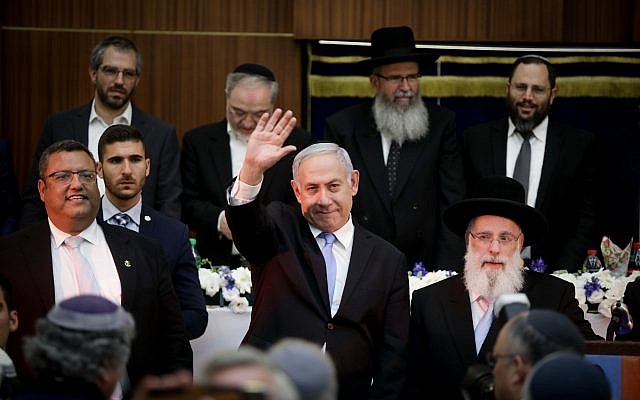
- There was speculation that Shaked would return to Likud, but Israel’s Channel 12 reported that Netanyahu has closed the door on that possibility, despite the objections of some senior party members.
- Meanwhile, other government sources told Yedioth that firing Bennett and Shaked was a vindictive move designed to end their political careers.
3. Yedioth columnist Sima Kadmon says that while Netanyahu’s decision was not unreasonable, it was shortsighted.
- “There is no real justification for them to continue to serve in such senior positions until September… Why should Netanyahu hand his rivals fantastic campaigning opportunities when they are fighting for the same electorate?”
- But Kadmon posits that Netanyahu could again find himself unable to form a coalition without the New Right if it makes it into the Knesset this election.
- “Netanyahu should have learned from the last elections what happens when you let your impulses determine your decisions,” Kadmon writes. “When you slam the door on someone, make sure your own finger isn’t in the way.”
4. Haaretz’s Yossi Verter makes a similar argument, saying that while Netanyahu definitely fired Shaked out of spite, he may need her New Right party to form a coalition after the September polls.
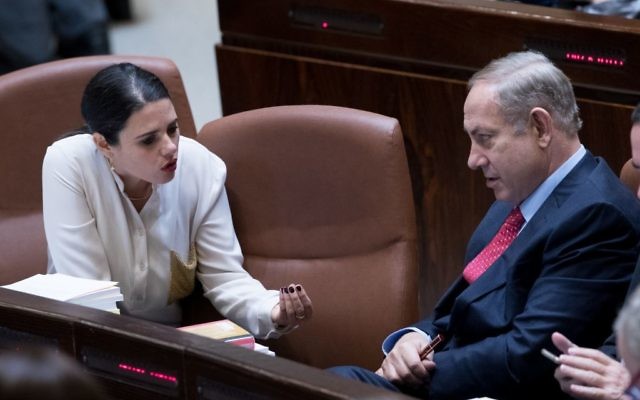
- He says that if the New Right can make it past the necessary 3.25 percent electoral threshold this time, Netanyahu (assuming that Liberman’s Yisrael Beytenu still refuses to join) won’t be able to form a government without Bennett and Shaked’s party.
- In that scenario, Verter says that Netanyahu “wouldn’t have any logical reason to slam the door in her face other than emotions, and anger and vengefulness isn’t a work plan.”
- “After the blow he took last week in the Knesset and ahead of an election campaign whose results may well determine his fate, it seems he hasn’t drawn the necessary conclusions,” he says.
5. Yedioth Ahronoth reports that senior Likud members were worried that right-wing MKs would not vote for Netanyahu’s pick for state comptroller at a Knesset vote later on Monday.

- But MKs voted in Netanyahu’s nominee, Matanyahu Englman, the CEO of the Council of Higher Education, defeating Blue and White’s candidate, Giora Romm, Israel’s former military attaché in the United States and former deputy commander of the Israeli Air Force.
- It will be the first time in 30 years the attorney general will not be a retired judge.
- Haaretz’s Tuesday editorial called on Likud and other right-wing MKs to vote for Romm, “especially now, when the prime minister’s personal interests are overshadowing the national interest.” The daily suggested the secret ballot was “a good opportunity to do the right thing without having to worry about vengeance from Netanyahu.”
6. With the political crisis in full swing, Israel’s second round of strikes on a Syrian airbase in less than 24 hours is not featured prominently in Monday’s papers.
- Syria accused Israel of targeting an airbase in Homs province, reportedly killing five people, just hours after carrying out retaliatory attacks on military and intelligence posts south of Damascus, killing 10. The strikes came in retaliation for two rockets fired at Mount Hermon from neighboring Syria late Saturday night.
- The Britain-based Syrian Observatory for Human Rights reports that five people were killed, including one Syrian soldier, and that a rocket warehouse was destroyed. The monitor says that in addition to the Syrian army, Iranian fighters and Hezbollah paramilitary forces are also stationed at the airbase.
- Haaretz makes no mention of the strikes on its front page, which is mostly dedicated to Israel’s political crisis. The daily doesn’t mention the overnight raids until page 7, where it reports the Israeli defense establishment was not sure who fired Saturday night’s rockets.
- “The usual explanation for these incidents – errant fire during exchanges between the forces of President Bashar Assad and the rebels – has not been relevant for a year now,” the paper says. Haaretz suggests possible reasons for the rocket attack on Mount Hermon, including to mark Al Quds Day, a show of force by Iran in the face of rising tensions with the US, or revenge by Syria for the Israeli strikes.

7. The Israel Hayom daily leads its Monday paper with (yet another) election poll. The survey indicates that Likud and and its right-wing allies (not including Avigdor Liberman’s Yisrael Beytenu party) would win 59 Knesset seats in September.
- The poll gives Likud 36 seats, Blue and White 34, Yisrael Beytenu 8, United Torah Judaism 7, Shas 7, Ta’al-Hadash 6, Ra’am-Balad 5 and the New Right 5.
- Barely making in the Knesset are the United Right, Labor and Meretz, were polling at 4 seats apiece.
- The results indicate that other than Yisrael Beytenu jumping from 5 to 8 seats, new elections will not significantly change the makeup of the Knesset. The paper notes the right-wing bloc without Yisrael Beytenu has 59 seats, 2 short of the 61 Netanyahu needs to form a majority government.
- Israel Hayom analyst Mati Tuchfeld says Netanyahu is facing “another significant challenge” in his reelection campaign. He says Netanyahu’s best chance to form a majority is for Likud and the United Right to run a joint ticket, though he admits the lawmakers would have to “overcome serious obstacles” for that to happen, mainly personal.
8. Remarks made by US Secretary of State Mike Pompeo are making the rounds in Hebrew-language media on Monday.
- A Washington Post report quoted Pompeo as telling a group of Jewish leaders in New York last Tuesday that the administration’s long-delayed plan may not “gain traction.”
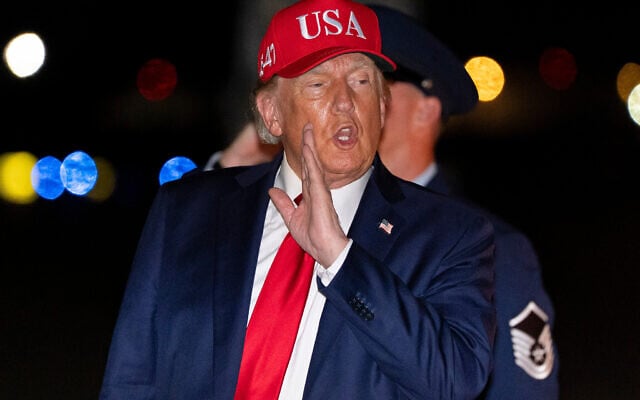
- On Monday, Trump told reporters that his forthcoming Mideast peace plan may not go anywhere because the political situation in Israel is “all messed up.”
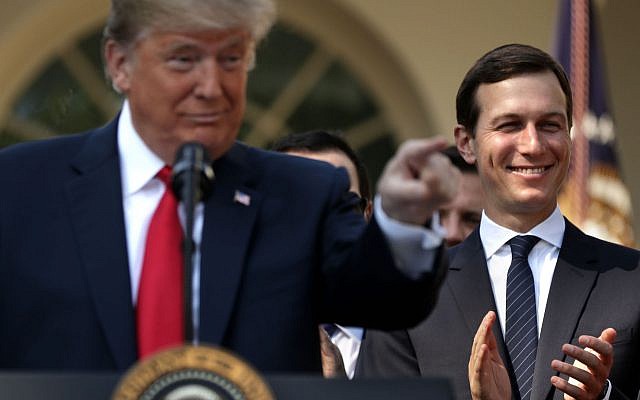
9. Meanwhile, Trump’s son-in-law and architect of the White House’s peace plan, Jared Kushner, suggests that Palestinians are not ready to govern themselves without Israeli interference.
- Speaking to US news site Axios ahead of the expected partial release of his peace plan later this month, Kushner says that “the hope is, is that over time, they can become capable of governing.”
- He says Palestinians “need to have a fair judicial system… freedom of press, freedom of expression, tolerance for all religions” before the Palestinian territories can become “investable.”
- Kushner tells Axios that the Palestinians “should have self-determination,” without saying whether that would mean an independent state or some lesser form of autonomy. He has previously hinted that his plan will not endorse creating a Palestinian state.







The Times of Israel Community.