

Is Jay Z’s ‘positive’ Jewish stereotype anti-Semitic?
Rapper’s new album, which includes a line about Jews owning ‘all the property’ in the US, draws mixed reactions from Jewish community
 Add ToI as a Preferred Source on Google
Yaakov Schwartz is The Times of Israel's deputy Jewish World editor
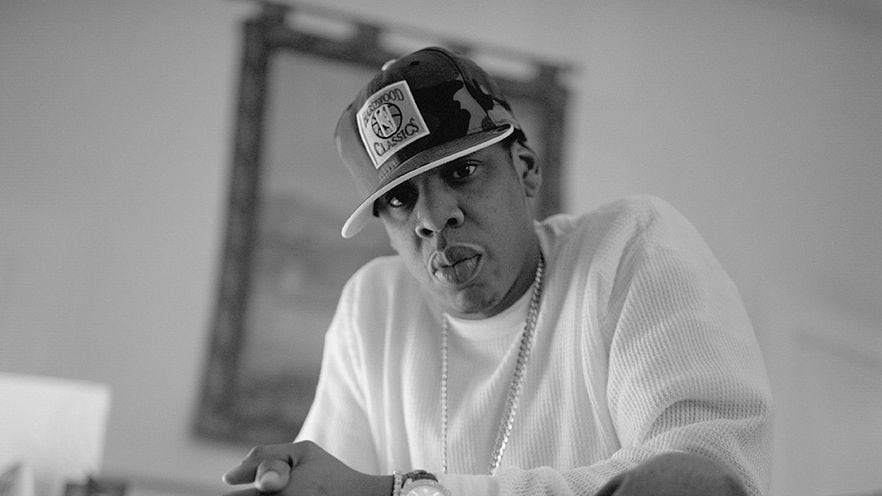
Since Jay Z released his 14th album on Friday, a frenzied fan base has been parsing the lyrics of the album’s title song, “4:44,” looking for insight amid rumors that he committed numerous infidelities within his marriage to pop icon Beyonce. In her 2016 album, “Lemonade,” the diva seemingly accused her husband of cheating on her and Friday’s release appears to contain a mea culpa, which, if genuine, must have been accepted, as the couple is still happily married.
Jewish listeners might be no less interested in the dynamics of the power couple’s marriage than other fans, but they also seem to be focused on a slightly less conspicuous track entitled “The Story of OJ” that contains lyrics portraying Jewish stereotypes.
Discussing a propensity to squander money unnecessarily, the song advises audiences:
“You wanna know what’s more important than throwin’ money away at a strip club? Credit. You ever wonder why Jewish people own all the property in America? This is how they did it.
Conforming to a less provocative stereotype, Jewish social media users have expressed an array of opinions regarding the expressed trope, which is particularly endemic to New York City – Jay Z’s hometown – where there is a perceived abundance of Jewish landowners.
As a non-property owner with bad credit who goes to strip clubs, I am offended by Jay Z's blatant antisemitism. #JayZ444
— Matt Lieb?? (@mattlieb) June 30, 2017
Israeli-born talent manager, writer and businessman Guy Oseary, who claims Madonna and U2 among his clients, says that Jay Z’s lyrics are being taken out of context.
“If you listen to the song in its entirety you will hear that the whole of the song is based on exaggerated stereotypes to make a point,” he writes on Instagram. “Hes [sic] attempting to use the Jewish people in an exaggerated way to showcase a community of people that are thought to have made wise business decisions.”
It can be noted that the reverse apologism is not a one-way street. In Judd Apatow’s 2009 movie “Funny People,” rapper RZA refers to a racist outburst live onstage by not-technically-Jewish comedian Michael Richards with the line, “Kramer gets a pass from me, cuz he’s my n***a.”
Jay Z’s history certainly does not paint him as an anti-Semite – at the inauguration of Brooklyn’s Barclays Center, in which he was an investor, Jay Z lit a menorah, a symbol which represents the re-dedication of the Second Temple after it was ransacked by the Syrian Greeks. He also appeared in a video decrying all forms of racism, and anti-Semitism specifically, alongside music producer Russell Simmons.
https://youtu.be/WY8mn_9JCy4
Still, the lyrics in “The Story of OJ” appear within a context of similar stereotypes less generous to Jews. Last month, a Democratic City Council candidate running for election in upper Manhattan released a YouTube video outlining his campaign platform, which involved combating the problem of “greedy Jewish landlords.”
In 2015, Shaquille O’Neal benignly described hiring a “beautiful little Jewish man” as a financial adviser, again playing into the “positive” Jewish stereotype.
And a shocking video compilation of references to Jewish lawyers in hip-hop, both positive and negative, racked up nearly 128,000 views on YouTube.
It appears that, like Jay Z’s music itself, the net beauty – or ugliness – in these generalities lies in the eye of the beholder.










The Times of Israel Community.