

Israelis more likely than Americans to support Palestinian state
Gallup poll shows 44% of American respondents favor the establishment of a Palestinian state, compared to 54% of Israelis
 Add ToI as a Preferred Source on Google
Haviv Rettig Gur is The Times of Israel's senior analyst.
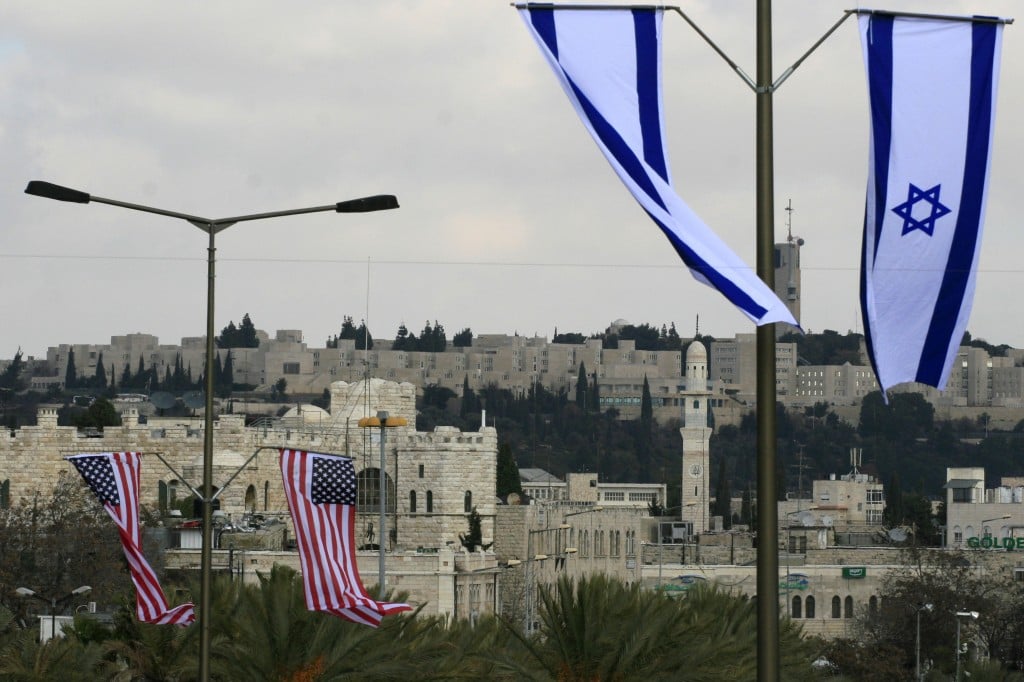
NEW YORK – Gallup figures suggest that Americans may be more skeptical of the need for a Palestinian state than Israelis.
According to figures gleaned from the early February Gallup World Affairs survey, released on Monday, 44 percent of Americans favor establishing a Palestinian state, while 37% oppose the idea.
Asked in January if they supported the establishment of a Palestinian state alongside Israel, Israelis supported the idea by 54% to 38%, an Israel Hayom poll found.
The 10-point gap is larger than the combined margin of error of the two polls, which is 3.4% for the Israeli poll and 4% for the Gallup survey, though the Gallup poll showed a higher percentage of undecideds among Americans (19%) than the Israel Hayom poll found among Israelis (8%).
The figures emerged as President Barack Obama headed to Israel, with one of the stated goals of his trip being to encourage moves toward a resumption of Israeli-Palestinian negotiations.
The poll of Israelis also found that while they support the establishment of a Palestinian state, a majority – 54% – said they thought a peace deal with the Palestinians was impossible.
Similarly, two polls of right-wing Israelis (voters for Likud-Beytenu and Jewish Home) conducted in December found that in the event a Palestinian state were demilitarized and Palestinian refugees could only return to the Palestinian state and not into Israel, fully 57% of Likud voters and 58% of Jewish Home voters would support the establishment of that state.
The Gallup survey of Americans, conducted February 7-10, found that Americans’ skepticism about Palestinian statehood extends to traditionally liberal-leaning demographic groups. Even among the two demographics most supportive of the idea, those with postgraduate degrees and self-described “liberals,” 21% and 25% respectively opposed Palestinian statehood. Opposition was highest among “conservatives” (51%), Republicans (54%) and high school graduates who did not pursue higher education degrees (45%).
The Gallup survey found indications that many Americans believe it is the Palestinian leadership, rather than the Israeli leadership, that has been the intransigent party in the stalled peace talks. The survey found that almost twice as many Americans (48%) want US pressure on the Palestinians to enter peace talks than the number (25%) who want US pressure on Israel to do the same.
Another 10% called for more pressure on both parties, while 18% either wanted no pressure on either side or had no opinion.
The number of Americans calling for pressure on the Palestinians has increased by 10 percentage points since 2007, when Gallup asked the same question, while the number calling for more pressure on Israel declined by 5 points in that period.
In releasing the findings, Gallup noted that the answers to the question on pressure were heavily dependent on political identification. Republicans were more likely to favor pressure on the Palestinians by a factor of 64% to 15%, a 49-point gap. Among independents, the figures were 48-22, a smaller though still sizable 26-point gap.
Among Democrats the tables turned, though only slightly, with 38% favoring increased pressure on Israel and a slightly lower 34% saying it should be directed at the Palestinians. Self-described “liberals” favored pressure on Israel even more, with 43% saying Israel and 30% the Palestinians.




The Times of Israel Community.