

Jewish shrine in West Bank defaced with swastikas
Samaria Regional Council head calls for condemnation, annexation of area after tomb of biblical Israelite spy Caleb vandalized
 Add ToI as a Preferred Source on Google
Michael Bachner is a news editor at The Times of Israel
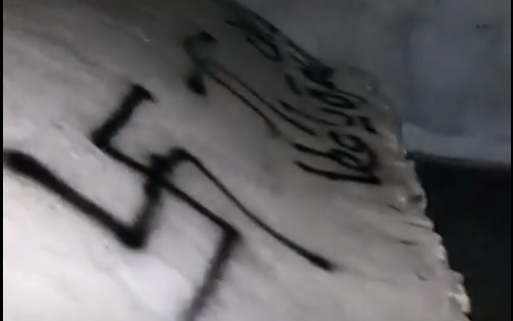
A Jewish holy site in the West Bank was found defaced with swastikas on Sunday morning, prompting local settler authorities to condemn it as “one of the most severe and blatant incidents of vandalism” of Jewish shrines.
Graffiti messages were also found at a site, which according to tradition contains the tomb of Caleb, son of Jephunneh, one of the 12 spies mentioned in the biblical Book of Numbers who were sent to report on the land of Canaan. It is located in the Palestinian village of Kifl Haris, northwest of the Ariel settlement.
The perpetrators were “probably Palestinian,” according to a statement by Minhelet Kever Yosef, a Jewish organization that administers holy sites in the northern West Bank region of Samaria.
Yossi Dagan, head of the Samaria Regional Council, called for “wall-to-wall” condemnation of the incident and said it proved the Palestinian Authority was “unable and unwilling” to protect Jewish holy sites.
“I expect a serious investigation of the matter, just like when Muslim or Christian holy sites are defaced,” Dagan said.
“I expect the government and the prime minister to condemn it and find a solution to the situation that will ensure that Jewish historical holy sites that were preserved for thousands of years are not damaged now that we are back in our land,” he added.
“The sovereign State of Israel should protect them,” Dagan said, “and if needed, sovereignty should be reinstated de facto in the area.”
Last month, roughly 1,000 Jewish worshipers found swastikas and graffiti spray-painted on the outer walls of the nearby tomb of another of those biblical spies, Joshua bin Nun, when they came to pray and study Jewish texts on what they believe to be the anniversary of the death of Moses, Joshua’s predecessor.
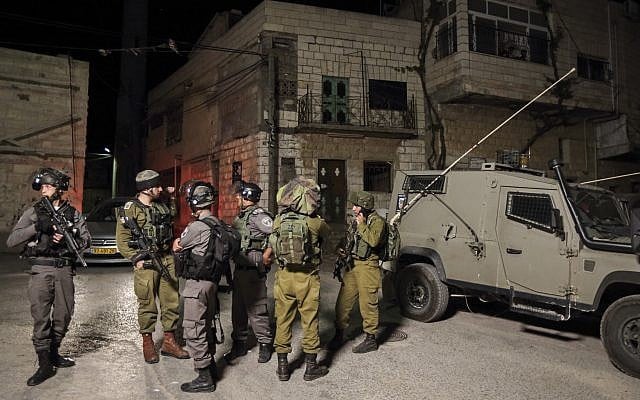
The tomb of Joshua bin Nun was the location of clashes between Palestinians and IDF troops, which took place when Jewish worshipers were last there in late December.
A statement from the army spokesman at the time said that soldiers were securing the area when Palestinians began hurling stones and Molotov cocktails at them. There were no reports of injuries, and prayers were completed without incident.
Jacob Magid contributed to this report.






The Times of Israel Community.