

Keep calm and carry goods: How Israel is keeping truck with Hamas
The protests over electricity in Gaza scared not only Hamas, but also Israel, which fears unrest in the Strip could lead to a new conflict

 Add ToI as a Preferred Source on Google
Avi Issacharoff, The Times of Israel's Middle East analyst, fills the same role for Walla, the leading portal in Israel. He is also a guest commentator on many different radio shows and current affairs programs on television. Until 2012, he was a reporter and commentator on Arab affairs for the Haaretz newspaper. He also lectures on modern Palestinian history at Tel Aviv University, and is currently writing a script for an action-drama series for the Israeli satellite Television "YES." Born in Jerusalem, he graduated cum laude from Ben Gurion University with a B.A. in Middle Eastern studies and then earned his M.A. from Tel Aviv University on the same subject, also cum laude. A fluent Arabic speaker, Avi was the Middle East Affairs correspondent for Israeli Public Radio covering the Israeli-Palestinian conflict, the war in Iraq and the Arab countries between the years 2003-2006. Avi directed and edited short documentary films on Israeli television programs dealing with the Middle East. In 2002 he won the "best reporter" award for the "Israel Radio” for his coverage of the second intifada. In 2004, together with Amos Harel, he wrote "The Seventh War - How we won and why we lost the war with the Palestinians." A year later the book won an award from the Institute for Strategic Studies for containing the best research on security affairs in Israel. In 2008, Issacharoff and Harel published their second book, entitled "34 Days - The Story of the Second Lebanon War," which won the same prize.

The trucks streamed through the Kerem Shalom border crossing between southern Gaza and Israel last Monday morning, carrying diesel fuel that, in a short while, would rescue the residents of the Gaza Strip from the prolonged power outages they had been suffering.
Aside from bringing electricity to the people, the Hamas terror group hoped the electricity would also save its regime from having to deal with mass demonstrations, thus ensuring its retention of power.
Qatar funded the purchase of the diesel fuel to operate Gaza’s sole power station, enabling the residents to have electricity for eight or so hours per day. In the previous two weeks, Gazans had to make do with only three hours of electricity a day, since Gaza’s power station was stricken by a severe fuel shortage.
It was a bureaucratic battle that had kept the fuel from reaching the power station: Both Hamas and the Palestinian Authority had refused to pay the excise tax on the fuel, which was purchased from Israel. Each side said that the other had to pay.
Despite the fact that Hamas collects tax on all goods, including fuel, that enter the Gaza Strip from the Kerem Shalom border crossing (or from the Rafah tunnels), it refused to pay the full price for the fuel that Gaza needs for its power station, and demanded the PA do so.
The PA, meanwhile, saw Hamas was making money from the money it was paying to get the fuel through and cut off the tap. And so Gaza was left in the dark, shivering and angry.
With temperatures dipping to four degrees Celsius at night (39 Fahrenheit) thousands came into the streets, which got some on the Israeli side to start talking about a “Gazan spring” or an “anti-Hamas intifada.”
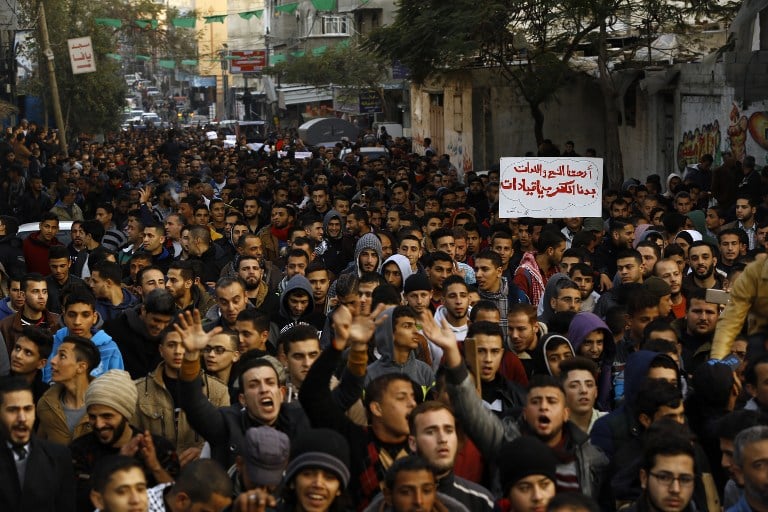
As usual, reality proved more complex. While most Gazans are not enthusiastic supporters of Hamas, no popular uprising will be taking place anytime soon. “The anger was against everybody,” a resident of Gaza City told The Times of Israel.
“The people who live here were angry mainly with Hamas and the PA. Each one, of course, was angry with the group that he opposes. Supporters of Fatah were furious with Hamas. Supporters of Hamas were angry with the Palestinian Authority. But it was no intifada or anything like one,” the Gazan said.
While the demonstrations against Hamas evaporated as the fuel transfers resumed last week, the episode left the terror group nervous.
It had seen thousands of people go out into the streets spontaneously, without any guidance from arch-rival Fatah. This was an expression of pure fury by the Strip’s denizens, who want their disgraceful standard of living to change.
While the spark that ignited the protest has been extinguished for the present thanks to Qatar’s generous assistance, it is only a matter of time before the next protest is ignited — over problems with electricity, water, or something else.
This doesn’t only concern Hamas, but Israel as well. When Qatar discovered its last fuel shipment, which until recently was sent through Egypt, had vanished somewhere in the Sinai Peninsula, Doha was quick to contact Jerusalem, which promised to work with it.
Qatar promised that it would transfer the money for the fuel, and these days the word of Mohammed al-Emadi, Qatar’s special envoy to Gaza, is worth quite a lot.
The Israeli government — yes, the same Israeli government that includes hawkish Defense Minister Avigdor Liberman, who has made statements threatening to assassinate Hamas leaders — is working just as hard as Qatar to keep the next protest from being ignited.
Hundreds of trucks a day
A visit to the Kerem Shalom border crossing provides unequivocal proof. Dozens of trucks are offloading goods at a dizzying pace.
Eight hundred trucks per day go through here on average, though the border crossing is equipped to handle close to a thousand. The cargo at the fuel terminal is pumped directly into Gaza through the pipelines, while ordinary goods are unloaded and reloaded onto “sterile” trucks, so called because they and their drivers have security approval.
Palestinian drivers drive these trucks into Gaza, where their goods are placed on Gazan trucks, which transport them to various destinations in the Gaza Strip.
Many tons of concrete wait in an open area of the border crossing to be loaded onto sterile trucks and taken into Gaza.
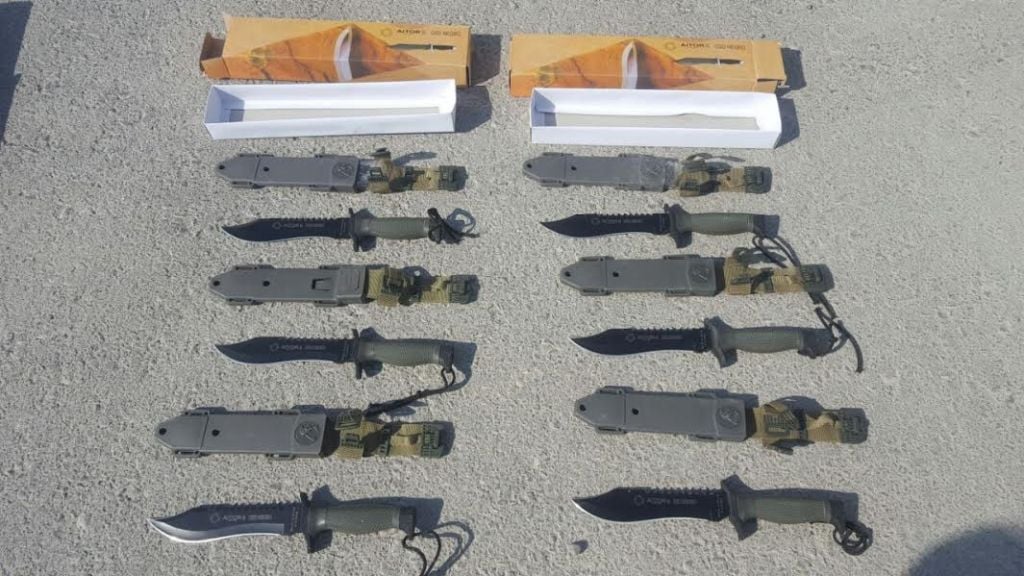
The concrete is intended for the reconstruction of residential buildings that were destroyed during Operation Protective Edge, but could also be used to build tunnels for attacking Israel.
Israel is hard at work building an impressive new terminal that will be used to transfer construction materials to the Gaza Strip with no need for multiple loading and unloading on different trucks.
At Kerem Shalom, Hamas is in charge of security on the Gazan side. Its positions around the border crossing are highly visible from the Israeli side, even with the unassisted eye. Hamas is responsible for inspecting the drivers and the trucks, and it is Hamas that prevents possible terror attacks from being carried out at the border crossing.
Therein lies the paradox that Israel is dealing with. On the one hand, Israel does not want the Gaza Strip to suffer too much. If that should happen, it is more than likely that Hamas will try to distract public opinion by starting a war with Israel. This is why Israel is trying to keep Gaza’s head above water and not let it drown.
On the other hand, the Kerem Shalom border crossing and the goods that pass through it are helping Hamas build up military strength to prepare for the next war with Israel.
There is a third side as well. For the present — and only the present — Hamas is doing everything possible to keep things quiet with Israel. It has no interest in a war, and it is demonstrating this to Israel in various ways.
A small army kept in check, for now
That restraint was on display last Sunday, when Israel responded militarily to shots fired at engineering vehicles at the border working to locate tunnels by shelling a Hamas position.
Israel’s message was that Hamas is responsible, even if it did not pull the trigger. But Hamas — or, more specifically, its military wing’s Rafah Brigade, commanded by Mohammed Shabaneh — refrained from responding.
At the same time, we need not be all that impressed by this restraint, since the moment that an incident with Israel takes place, Hamas personnel on the border are ordered to leave their positions until it blows over.
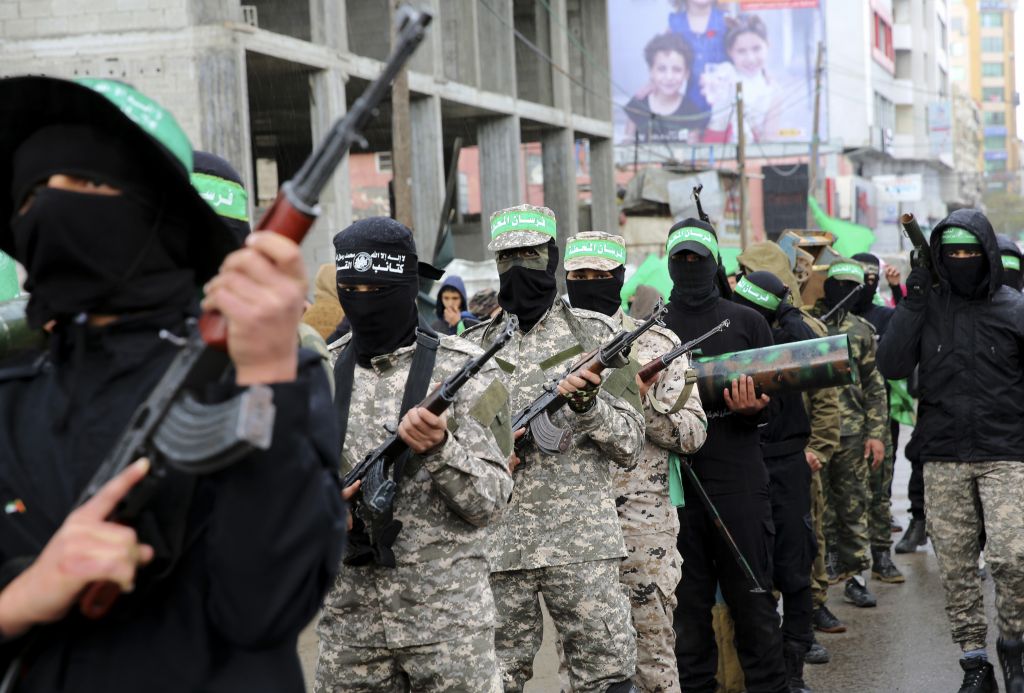
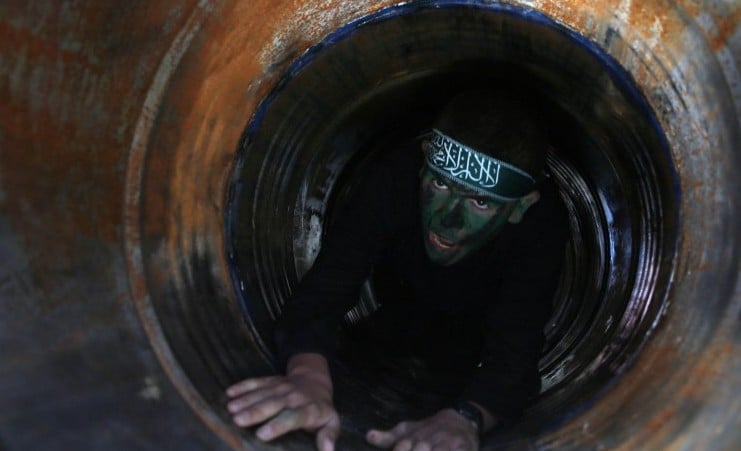
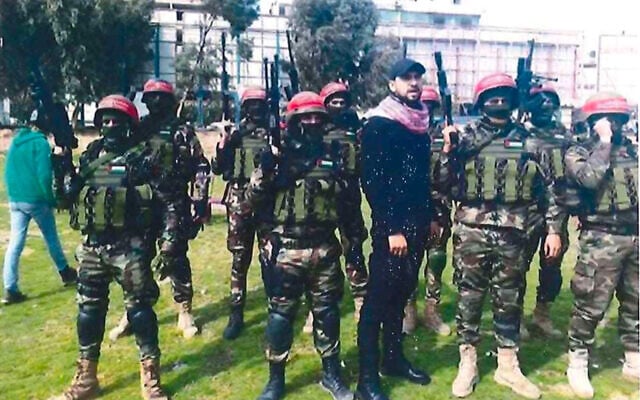
Hamas’s deployment in the area is relatively impressive. Its military wing, Izz ad-Din al-Qassam, has undergone a significant change in recent years. It is not just a terrorist organization anymore; it is a small army that is studying Israel and preparing for another confrontation with it. The military wing has divided the area into units of operation, with a specific brigade or battalion responsible for every cell on the ground.
Hamas troops on the border carry out patrols, have lookout points set up every several hundred meters, and contain reserves. They also have “special forces” such as the Nuhba unit, a naval commando unit, intelligence that uses various media from simple binoculars to model airplanes or gliders, tunnel units, and of course advanced weaponry such as anti-tank rockets and rockets of various ranges.
All these await a day of reckoning whose arrival time is unknown. All the parties involved — Hamas, Israel, and even Egypt and Islamic State’s Sinai Province — seem to be interested in keeping things calm between Gaza and Israel and between Sinai and Israel. Even members of Islamic State’s branch in Sinai avoid shooting at Israel, though they have the ability to do so, and suspect that Israel is involved in some of Egypt’s efforts against them.
But the calm won’t hold forever. Eventually, something will cause one of the sides to break the system of checks and balances that has developed on this three-way border. It could be Bedouin living in Sinai who attack Israel, or perhaps members of the jihadist groups in Gaza. Ambitious high-ranking members of Hamas, such as Yahya Sinwar and his supporters, could embark on an operation along the lines of the kidnapping of Gilad Shalit.
While such an act might improve their status within the organization, it would be disastrous for people who live in the Gaza Strip.






The Times of Israel Community.