

Law expanding gender segregation in academia passes; sponsor claims it will advance women
Coalition-backed law approved 52-43 over objections of academic representatives; allows institutions to offer segregated master’s, doctoral programs, expanding court-approved limited track for Haredi undergrads
 Add ToI as a Preferred Source on Google
Ariela Karmel is a political correspondent at The Times of Israel. She previously reported for Calcalist and Haaretz. She holds an MA in Middle Eastern and African History from Tel Aviv University and a BA in Political Science from the University of British Columbia.

The Knesset voted 52-43 early Thursday to pass a law to expand gender segregation in higher education by permitting universities and colleges to offer segregated master’s and doctoral degree programs subject to approval by the Council for Higher Education.
The law builds upon a 2021 High Court ruling that upheld the Council for Higher Education’s policy permitting limited and specific gender-segregated undergraduate programs aimed at integrating ultra-Orthodox students into higher education and, ultimately, the workforce.
The court stressed that the arrangement was specifically intended for the Haredi community and imposed safeguards, including limiting segregation to classrooms in mixed institutions and prohibiting discrimination against female lecturers.
The new legislation extends that framework to master’s and doctoral programs and makes it available to all students, not only the Haredi community, while a proposed amendment by Shas MK Yossi Taieb to expand segregation to additional areas of campuses was rejected.
Proponents frame the law as increasing educational opportunities for religious women, with the legislation’s sponsor Otzma Yehudit MK Limor Son Har-Melech arguing the legislation will “advance women from sectors that have not received the opportunities they deserve,” while committee chair and Religious Zionism Zvi Sukkot has said it would “expand freedom of choice.”
Opposition lawmakers and academic representatives, who campaigned intensely against the law’s passage, argue that it unnecessarily expands gender segregation beyond existing arrangements, prioritizing religious rights over the rights of female students and lecturers to equality, dignity and freedom of movement while harming academic freedom and the quality of teaching and research.
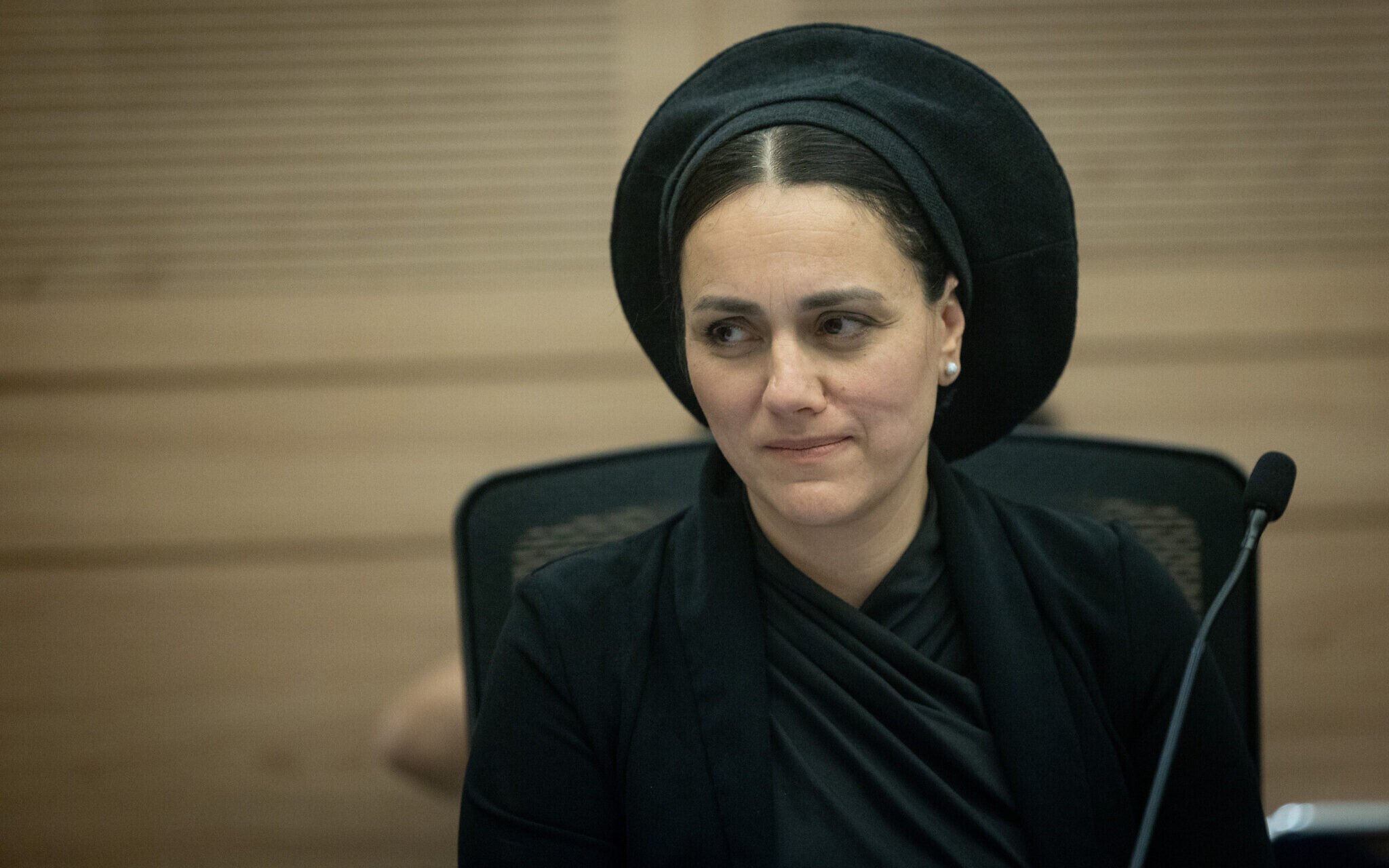
Following the vote, Zazim – Community in Action CEO Raluca Ganea, whose organization led a public campaign against the legislation joined by 68,700 people, said the law “was not enacted in a vacuum,” arguing that enshrining “discrimination against women in law is an integral part of the judicial overhaul and a deliberate strategy to strip us of our rights.”
Calling it “a fitting final chord for a Knesset that has trampled on women, LGBTQ people, and human and civil rights in Israel,” she vowed to continue fighting the measure, saying “losing is simply not an option.”

Democrats MK Naama Lazimi, who fought against the legislation on the Knesset’s Education Committee, likewise condemned the legislation, arguing that it signaled a preference for “a halachic state over a Jewish and democratic one.”
Rejecting supporters’ claims that the measure expands freedom of choice, she accused the coalition of seeking “not our freedom to choose or what is good for us, but to oppress us, erase us and restrict our freedom,” and vowed to repeal the law after the coming election.
The law was among a raft of coalition measures approved during the Knesset’s final legislative blitz before its dissolution on Friday ahead of elections in late October.
The ultra-Orthodox parties agreed to back the coalition’s remaining legislative agenda – including this law, another law passed on Wednesday weakening the role of the attorney general and Communications Minister Shlomo Karhi’s media overhaul – after securing passage earlier this week of their own priorities, including laws banning the arrests of ultra-Orthodox draft dodgers and declaring Torah study a foundational value of the state.









The Times of Israel Community.