

Knesset set for 9 p.m. showdown as panel votes on bill to prevent new election
Netanyahu to hold press conference at 8:30 p.m., a day before cliff edge and with no agreement yet between Likud and Blue and White; Finance Committee to vote on budget delay
 Add ToI as a Preferred Source on Google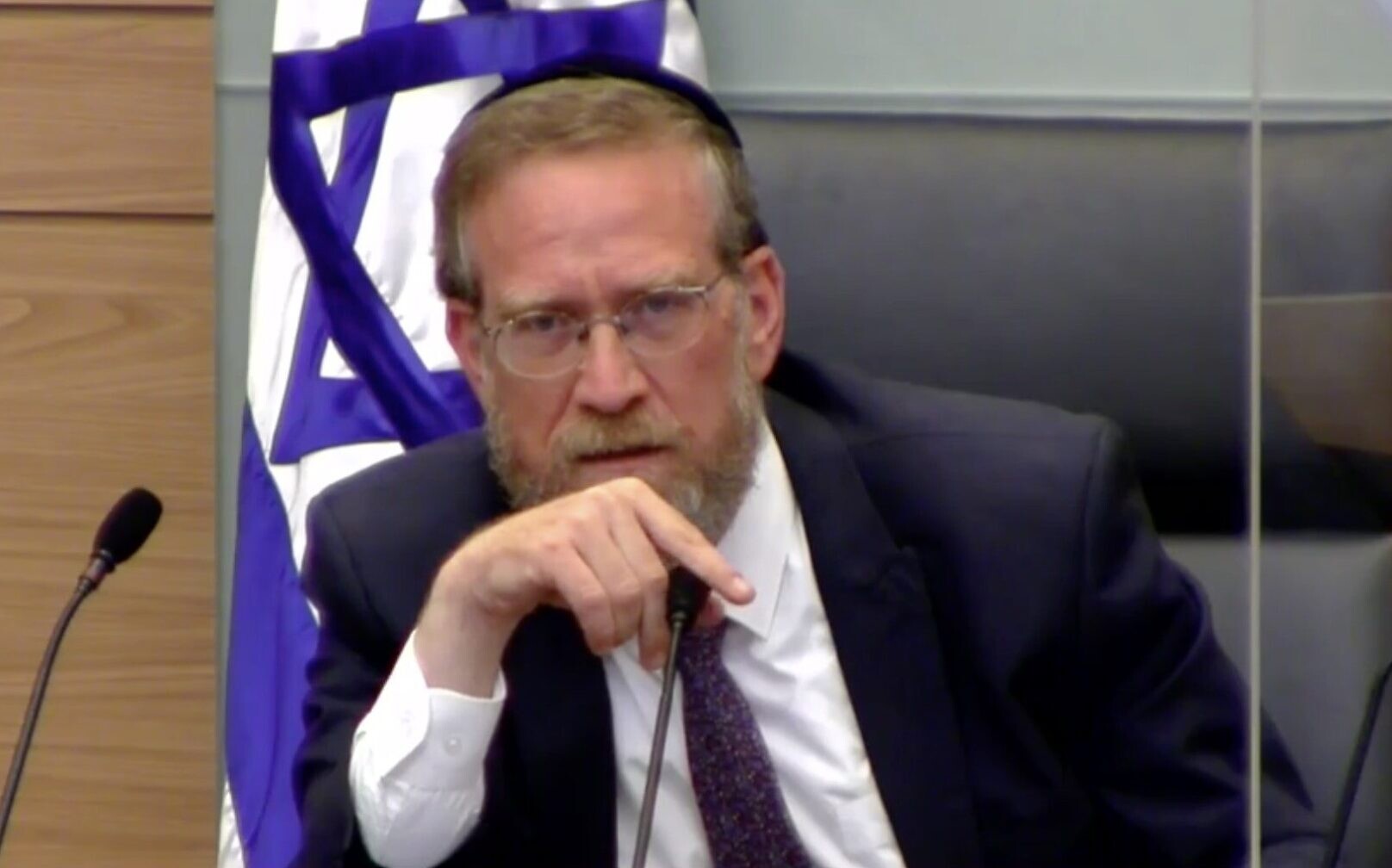
A Knesset committee pushed back until Sunday evening a vote on a bill to delay the deadline to pass the state budget, with the coalition’s warring Likud and Blue and White parties yet to agree on a compromise deal that would remove the immediate threat of new elections.
The Finance Committee vote, which is not the final step in passing the legislation, was set for 9 p.m., 27 hours before the government is to automatically fall and trigger new elections if an agreement is not reached.
Meanwhile Prime Minister Benjamin Netanyahu announced he would hold a press conference at 8:30 p.m., half an hour before the committee meets. It was not known what he intended to say.
If the bill clears the committee vote, it must then be approved in its second and third plenum readings to become law. If it does not get through the committee Sunday night — though a hurried breakthrough could still feasibly be reached Monday — the odds of an election will have hugely increased.
The Finance Committee convened in the afternoon to deliberate Derech Eretz MK Zvi Hauser’s bill to delay Monday night’s deadline to approve the state budget by 100 days. But United Torah Judaism MK Yitzhak Pindros, who chaired the meeting, delayed a vote on the proposed legislation until 9 p.m. to allow Netanyahu and Defense Minister Benny Gantz’s parties more time to negotiate.
“If Blue and White reach an agreement, there will be a vote with an agreement. If not, the vote will take place without an agreement and then maybe we’ll inform the people of Israel we’re going to elections,” Pindros said.
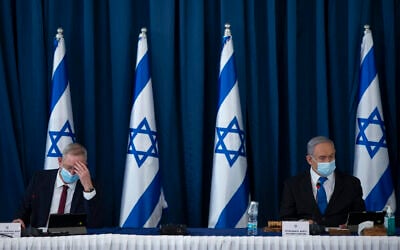
At the heart of the ongoing coalition crisis is whether the government should pass a budget that includes 2021, as stipulated in the coalition agreement and backed by Gantz, or a budget that only covers the rest of 2020, as Likud has insisted due to the uncertainty caused by the pandemic.
According to reports, Likud has sought a number of changes to the coalition agreement in exchange for backing the 100-day delay, including a say in the appointment of senior justice officials.
The coalition’s ultra-Orthodox parties, United Torah Judaism and Shas, said earlier Sunday they had agreed to support the bill delaying the budget deadline. According to Hebrew media reports, they demanded and received the approval of an extra NIS 400 million ($117 million) for ultra-Orthodox yeshivas, which have been starved of funds due to the lack of a budget.
The lack of a budget has meant that the government is operating according to the 2019 budget, limited to spending 1/12 of last year’s funds every month. Reports said the postponement law would include a clause mandating a 2.5 percent increase in funds for 2020 over 2019, part of which will go toward ultra-Orthodox seminaries.
Shas and UTJ claimed both Likud and Blue and White backed the compromise, but neither confirmed this.
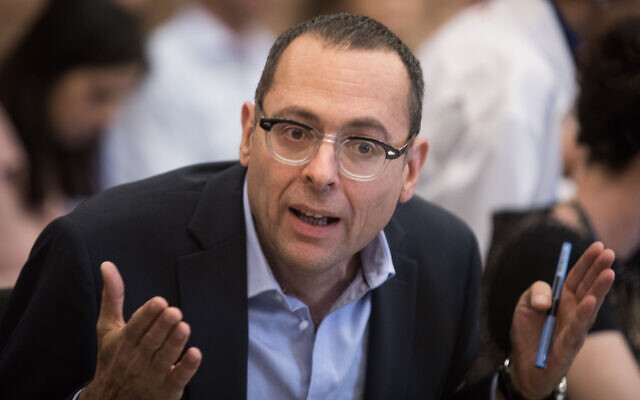
Hauser, the Derech Eretz MK who suggested the budget deadline delay as a temporary solution to the coalition crisis, told 103FM Radio on Sunday that he was optimistic that Likud and Blue and White would resolve their differences before Monday night.
Separately, in reports Sunday morning Likud sources and members of the Yamina and Derech Eretz parties all ruled out the option that a new, narrow right-wing government could be formed should the coalition fall, as an alternative to elections.
For the second time in three weeks, the cabinet did not convene Sunday for its regular weekly meeting, underlining the crisis between Likud and Blue and White.
Blue and White has accused Netanyahu of deliberately attempting to violate the coalition agreement with his sudden demand for a one-year budget in order to leave himself a future window during next year’s budget talks to dissolve the government. This would let him avoid having to hand over the prime minister post to Gantz in November 2021, as the coalition deal stipulates.
Netanyahu is also reportedly demanding greater power over senior appointments, including of top law enforcement officials, including the next state prosecutor, in contravention of previous agreements.
Foreign Minister Gabi Ashkenazi of Blue and White said Saturday that Netanyahu was pushing for elections for his “personal and legal reasons,” related to his trial, implying that the prime minister hopes a new, different Knesset might yield a majority of lawmakers willing to back legislation that could thwart the legal proceedings in the three graft cases against him.
Top economists say passing a budget that encompasses both 2020 and 2021 makes the most sense, as there would be little point for a 2020 budget just a few months before the year’s end. Netanyahu says uncertainty due to the pandemic makes it impossible to plan that far ahead.
President Reuven Rivlin has spoken in recent days with coalition party leaders with the goal of preventing another election. On Sunday, Rivlin said he had continued his round of talks to include Yisrael Beytenu party leader Avigdor Liberman, a member of the opposition.






The Times of Israel Community.