

Mammoth defense spending at risk of overburdening Israel, report warns
Think tank cautions that welfare expenditures could suffer unless economy revs back up and state invests in infrastructure and human capital; cost of living still sky-high
 Add ToI as a Preferred Source on Google
Sharon Wrobel is a tech reporter for The Times of Israel

Ballooning defense costs are placing heavy pressure on the country and putting the government’s ability to provide other services for its citizens at risk, a policy research institute in Jerusalem warned this week, while also expressing optimism that the stabilization of the security situation could help reenergize economic growth.
According to the Taub Center’s 2025 State of the Nation Report published Monday, the country’s economy is at a “highly sensitive point,” weighed down by a sharp rise in defense spending to meet security needs over the next decade, alongside deep-seated problems and long-term negative trends that do not stem from the war alone, chief among them low labor productivity and high price levels.
“Defense expenditures, which have risen dramatically due to the war, will remain high and impose a heavy economic burden on the economy,” said Prof. Benjamin Bental, chair of the Taub Center Economic Policy Program.
“Until now, the government has kept civilian spending in line with population growth,” Bental added. “However, in view of the expected rise in defense spending, only accelerated economic growth will allow this trend to continue and prevent severe harm to civilian services.”
The prolonged two-year war with Hamas, which broke out following the terror group’s onslaught in southern Israel on October 7, 2023, doubled defense spending, which in turn increased the government budget deficit, the level of debt relative to GDP, and the burden of debt interest payments, according to the report.
The war has been halted since October, but there remain concerns that fighting could resume in Gaza, against the Hezbollah terror group in Lebanon or against Iran.
The report found that high war costs lifted the ratio of public debt to GDP to almost 70 percent at the end of 2024, up from about 61% in 2023. Over the decade preceding the Hamas war, the debt burden had declined steadily, reducing its impact on the state budget and public finances.

Compared with defense expenditures, civilian expenditures have remained relatively stable when adjusted for population growth. Yet the war has heightened the need to support affected populations, including evacuees from communities near Gaza and the northern border and victims of Iranian and Hamas missile attacks.
Researchers in the report, led by Bental, warned that without government action, high defense spending may come at the expense of essential civilian expenditures on education, health and welfare, and harm public investment.
“High defense expenditures will crowd out not only civilian spending for citizens’ welfare but also essential public investments, creating a vicious cycle, whereby slower growth reduces budgetary resources and undermines Israel’s ability to finance its required defense spending for security needs in the long run,” Bental cautioned.
The good news, according to the report, is that the “relaxed security situation and the possibility of regional political arrangements offer hope that the economy will return to a path of rapid growth.”

“In light of political developments, there is room for optimism, especially regarding a return to the growth path the economy was on prior to the war,” said Bental. “If the optimistic scenario materializes, the economy will be able to meet the security challenge without harming the civilian services provided by the government.”
“But to ensure growth, the government must pursue growth-supportive policies, and in particular, it must invest in developing physical infrastructure and human capital in Arab society and in Haredi society in order to raise productivity in the economy,” he urged.
Both ultra-Orthodox and Arab communities have traditionally suffered low rates of integration into high-paying job sectors, especially tech.
A research report published by the Bank of Israel on Monday found that the share of Arabs among graduates with tech degrees increased from 4.6% to 9% over the past decade. However, Arabs made up only 3.7% of young employees working in the sector, roughly the same low rate as in 2014.
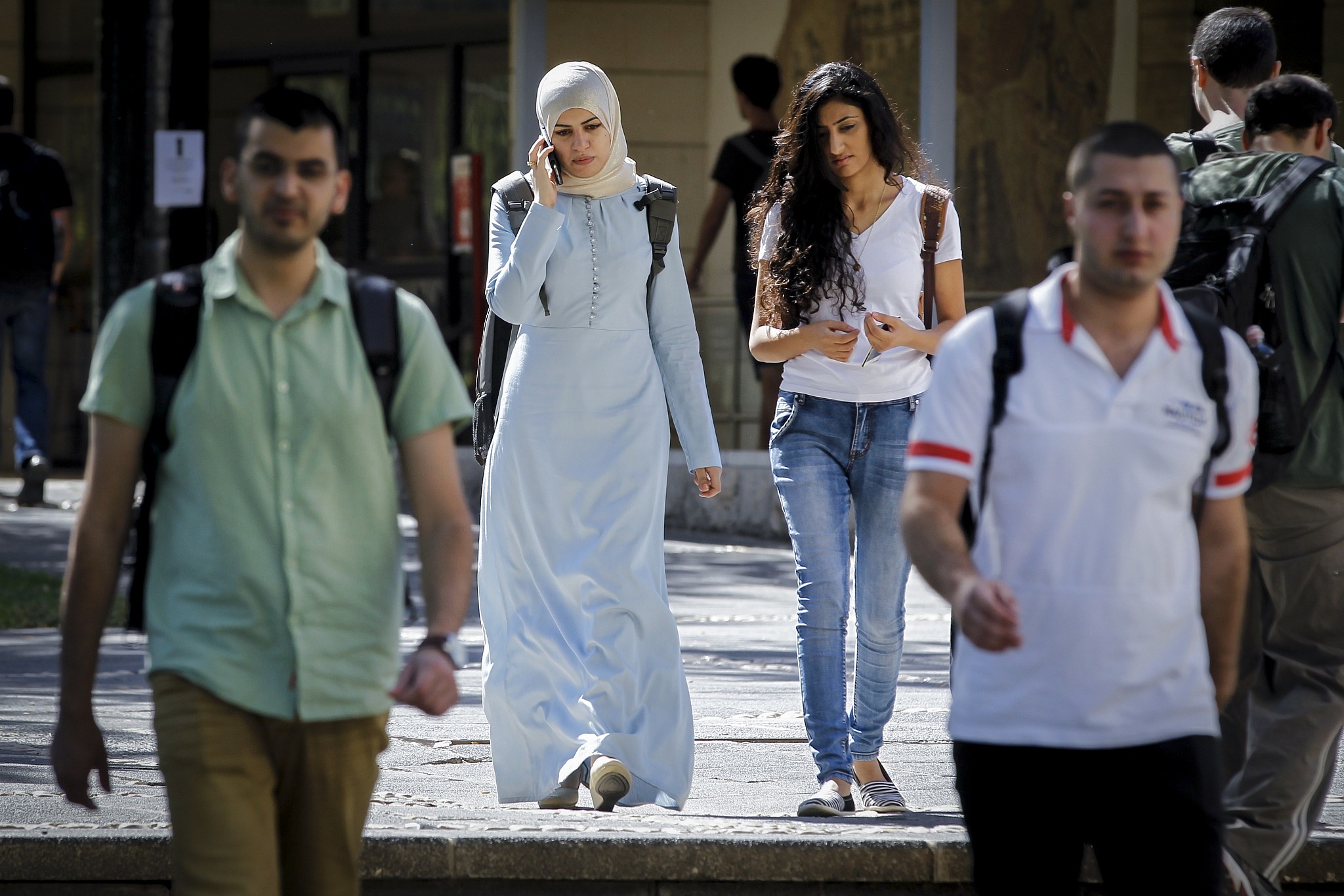
Rates for Haredi men working in the sector also remained low over the past decade, though the representation of ultra-Orthodox women in the tech sector increased over the past decade from 3% to 5.5%.
Bental called for the government to advance policies that raise labor productivity and encourage large-scale infrastructure investment, especially public transportation.
“Implementing such policies demands sustained governmental attention, which was lacking even before the war and is all the more lacking now,” Bental said.
Although Israel’s unemployment rate has remained stable, hovering around 3%, labor productivity — output per hour worked — continues to lag behind countries such as Austria, Denmark, Finland and Sweden, which are similar in population size and economic structure, according to the report.
Nonetheless, the productivity rate remains relatively high, buoyed by the tech sector.

“The high labor productivity in high-tech is reflected in the fact that average wages in high-tech are almost three times the average wage in the [rest of the] economy,” Bental said.
Israel’s tech sector employs about 10% of the national workforce, accounts for about 20% of GDP, and is responsible for about 60% of exports, according to the Israel Innovation Authority.
Paying the price
The report also found the cost of living in Israel soaring, with prices about 29% higher than the average among developed countries in the Organisation for Economic Co-operation and Development.
This is partly due to the ongoing appreciation of the shekel, which makes Israel more expensive relative to other countries.
“Prices in Israel are high — every Israeli who travels abroad feels this,” Bental said.
Among the factors affecting price levels in Israel are “low competition in parts of the services sector, high operating costs, import restrictions, [and] regulations that make it difficult for new firms to enter the market,” according to the Taub Center report.
“Together, these create a higher-cost starting point for the Israeli consumer even before exchange-rate effects, and, therefore, Israel’s cost of living has been relatively high compared to other countries for many years,” Bental said.
In 2023, the consumer basket in Israel was about 13% more expensive than the average in peer countries in Europe. Housing, the main expenditure item for Israeli households, is 20% more expensive than in peer countries in Europe and health care products and services are 40% more expensive, according to the report.









The Times of Israel Community.