

Memories fade, fears remain: 10 things to know for May 1
Holocaust Remembrance Day approaches amid anxiety over survivors no longer being able to tell their stories, though some say the lessons of the Shoah are more vital now than ever
 Add ToI as a Preferred Source on Google
Joshua Davidovich is The Times of Israel's Deputy Editor
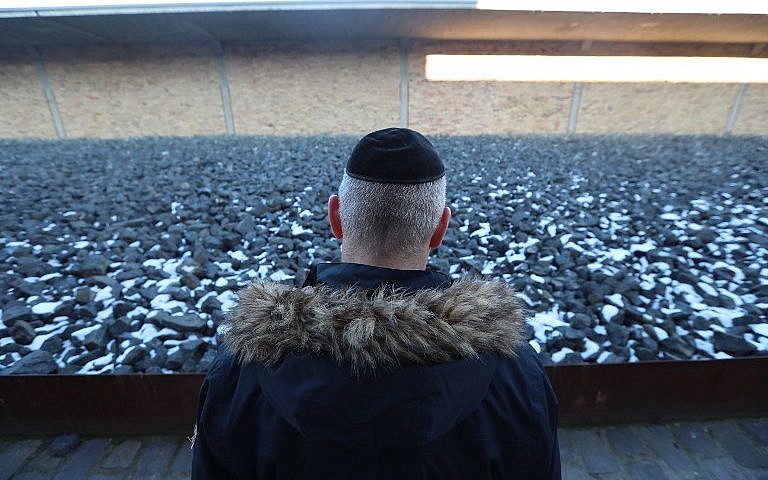
1. Fading survivors: Israel and Jewish communities around the world will mark Holocaust Remembrance Day starting Wednesday night.
- According to the Yedioth Ahronoth daily, there are some 210,000 Holocaust survivors still living in Israel, with the number quickly shrinking. By 2025, only 102,000 will be left, it reports, attributing the information to the Foundation for the Benefit of Holocaust Victims in Israel and the Central Bureau of Statistics.
- The numbers are notoriously unreliable, though. A survey commissioned by the same foundation in 2010 found that there were only 233,000 survivors in Israel, and that by 2015, it would be down to 143,500.
- The US Holocaust Museum and Memorial website notes that it has a registry of some 195,000 names of survivors, mostly in the US and Canada, though some may have since passed. It also points out that the determination of who is and is not a survivor can vary.
2. Think of the kids: Not under dispute is the fact that the number of survivors, especially those old enough to remember the war, is dwindling. According to the Yedioth stats, about 40 survivors in Israel die a day.
- That means there is an added emphasis this year on preserving stories and shifting the duty of remembrance onto younger generations.
- At the March of the Living in Poland, some survivors who accompany those at the Auschwitz Birkenau death camp will be recorded telling their stories with special devices that will be used for holographic displays for future generations visiting the site.
- “The torch of remembrance is passing to the youth,” President Reuven Rivlin writes in a column published in Yedioth.
3. A people divided by a common memory: As in years past, both Yedioth and Israel Hayom are filled with pictures and stories from survivors and their grandchildren or great-grandchildren, many in military uniform.
- The pictures follow the theme of the Jewish people rising from the ashes to become stronger, which is much more a feature of Israeli Holocaust remembrances than in the US, where commemoration is emphasized more.
- “The yellow stars worn on lapels have been replaced by combat insignia, and a Star of David flies proudly on the flag of an independent and defended Israel,” IDF chief Aviv Kohavi writes in Israel Hayom.
- Haaretz’s Chemi Shalev notes that US and Israeli Jewish communities also diverge in what lessons they draw from the Holocaust for today’s times.
- “The era of Donald Trump has accentuated the gaps in the two differing approaches and brought them to center stage. In Israel, the Jewish majority has grown increasingly suspicious – and, some say in the wake of the nation-state law, increasingly tormenting as well – toward minorities, while American Jews suddenly see themselves as a minority threatened by the white majority that elected Trump. Israeli Jews view Trump as their friend in need and indeed, while their Jewish cousins in the US see the president as an inciter, dangerous to America in general and to their own well-being in particular.”
4. Never again? With the last year seeing two deadly synagogue shootings in America and an uptick in anti-Semitic assaults, according to the ADL, many note that today’s times require not just lighting a candle and listening to sad stories, but actively combating hate.
- “80 years on, the challenges of remembrance, commemoration and understand the meaning of the Holocaust are only growing, and becoming even more relevant given the surge in anti-Semitism we have witnessed recently,” Yad Vashem head Avner Shalev writes in Israel Hayom.
- Nazi hunters Serge and Beate Klarsfeld say much the same to JTA’s Ron Kampeas.
- “There is a bad wind in Europe and democracy is losing its influence,” Serge says. “It’s an atmosphere like the beginning of the ’30s, and the authority of the state is at stake.”
- Beate adds: “Anyone who wants to find an enemy finds an enemy in the Jew.”
5. My aunt the Nazi lover: Papers and news sites are filled with various Holocaust-related stories and features.
- Matt Lebovic reports for ToI about writer Joop van Wijk, who thinks his aunt Nelly may have been the one to betray Otto Frank’s family as they hid from the Nazis in an Amsterdam annex.
- “Even during the early days of the war, the Voskuijl family faced trouble with Nelly. Not only was she carousing with German soldiers, but Nelly’s rowdy behavior earned her a stint in police custody. Later, when father Johan Voskuijl and sister Bep were involved in hiding Jews on the Prinsengracht, Nelly was working for the Nazis across town,” he writes.
6. A forgotten tale of Chelm: Israel Hayom tells the story of a forgotten death march of the Jews of Chelm, a Polish town mostly known as the butt of Jewish jokes.
- Unlike most marches, which happened near the end of the war, the one in Chelm took place in 1939, just months after the Nazis invaded, and is seen as an experiment or prototype of the brutal killing method.
- According to the account by Hanan Greenwood, the Jews were made to march some 60 kilometers to the Bug River, on the border with Russia, where they were told to jump in and swim to the other side.
- “The problem was that they were shooting at them from one side, and on the other were the Russians, who suspected the Jews of being spies, and also opened fire,” says Hila Blatt-Arad, whose grandfather Zvi Hirsch Blatt was killed during the march, along with thousands of others.
- While there are almost no survivors from Chelm still living, their descendants plan on setting off on a commemorative march on December 1, 80 years to the day of the original march.
- The youngest people in the march would now be 96 had they survived. Their children and grandchildren have taken on the mission of keeping the memory of the atrocities alive.
- “I don’t’ know how, but this death march was forgotten, died on the pages of history, and we have made it our goal to make people aware of it,” says Ben-Zion Levkovitz, head of the Chelmer Organization of Israel.
7. Kill the chicken, save the Jews? Perhaps the strangest story is one by Yuval Harari in Tablet about curses kabbalistic Jews tried to use against Hitler to stop him supernaturally.
- Harari writes that testimonies attest to various ritual actions taken by Orthodox communities in mandate Palestine against the Germans, from fasting to slaughtering chickens and dropping their blood from airplanes around the territory’s borders.
- “The collective narrative that emerges from contemporary and later testimonies—mainly in the hagiographic literature and in light of these interventions’ success (given that Rommel was ultimately defeated in El Alamein and his forces never reached Palestine)—points to the extensive involvement, both overt and concealed, of rabbis and kabbalists from all communities in the struggle against the Germans,” he writes.
8. Victory pose: Haaretz’s Judy Maltz writes about a project by wedding photographer Yanai Rubaja to take “victory photos” of survivors, that is, survivors surrounded by all of their offspring.
- In seven years, he has taken some 300 portraits, which he presents to the survivors, as part of “A Gift for Generations to Come.”
- “It all began with my desire to do something for Holocaust survivors,” he’s quoted telling her. “I’m not a rich man, so donating a big sum of money wasn’t an option.
- “It dawned on me that one of the things I enjoy most when photographing weddings is getting the entire family together for a group photo. And that’s how I came up with this idea.”
- You can see the sweet photos on the project’s Facebook page here.
9. No unity, no loudmouths: Perhaps no picture of Jewish resilience after the Holocaust is more poignant than the swearing in of the 21st Knesset Wednesday, highlighting not only that the Jewish people lives, but that they, and the non-Jewish lawmakers also in the Knesset, live to fight as well.
- Prime Minister Benjamin Netanyahu tried to broadcast a message of unity, telling the plenum that “We will continue to act for the benefit of all citizens of Israel, without exception.”
- In Haaretz, though, columnist Yossi Verter dismisses the idea of unity with Netanyahu as long as he is under a legal cloud.
- But he also expresses hopes for the legislature, now that two of its loudest mouths have left: “A Knesset with neither Haneen Zoabi nor Oren Hazan (and, for now, also without Itamar Ben-Gvir) promises to be quieter and more civilized. That’s good news. Perhaps children will now be able to watch the Knesset broadcasts without their parents having to jerk them away from the screen as if they were showing a snuff film.”
10. Zman Yisrael’s hour has arrived: Hebrew speakers also have a new news site to turn to, the first major one in over a decade, according to The Seventh Eye: ours.
- Some seven years after launching in English, ToI has now spun off a Hebrew sister site, Zman Yisrael, which officially launched Wednesday.
- The site won’t just have translated articles from the august publication you hold in your phone now, but also (and mostly) original investigative reporting, peering into corners nobody else will.
- “As The Times of Israel has grown over the years, we’ve gradually added more reporters to our team, and come to realize that for all the foreign coverage, so often centered on the Palestinian conflict, and for all the Hebrew-language journalism, so often chasing headlines, a great deal of what is playing out here is under-reported and under-internalized,” ToI editor David Horovitz writes.
- “For Israel to survive and to thrive, it needs to meet the challenges it faces from the outside — to build relationships and bolster alliances, to protect itself and face down its enemies. And it needs to flourish within — honoring its twin responsibilities as both Jewish state and democracy,” he adds. “The years ahead are going to be fraught in both of those fields. Clear-headed journalism, reliable, independent journalism, journalism that delves deep, is going to be essential. Zman Yisrael intends to provide it.”
- Read Hebrew (or just like spiffy web design)? Cruise on over to the site here.








The Times of Israel Community.