

Muslims celebrate Islam’s biggest holiday as hajj nears end
2 million pilgrims take part in final rites of annual pilgrimage in Saudi Arabia
 Add ToI as a Preferred Source on Google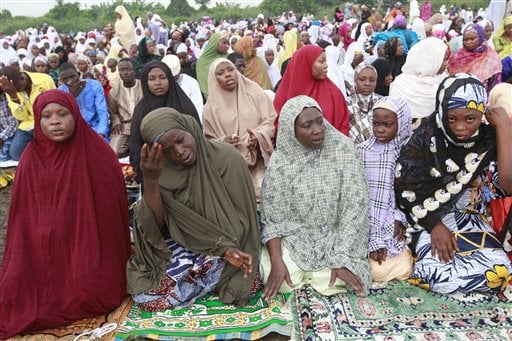
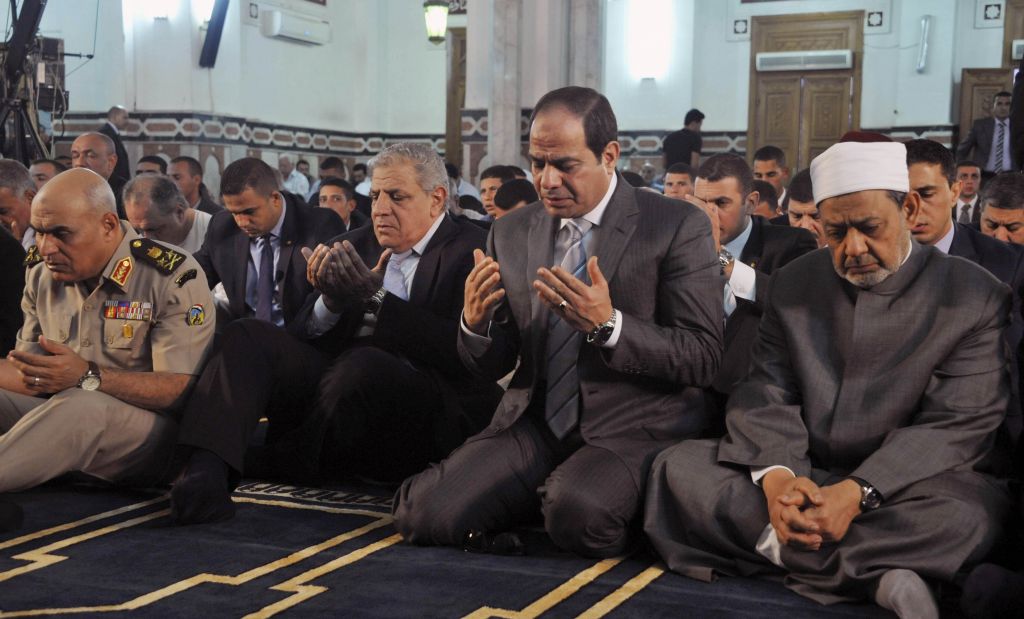
MINA, Saudi Arabia (AP) — Muslims around the world celebrated the start of Islam’s biggest holiday on Saturday as more than 2 million pilgrims took part in one of the final rites of the annual hajj pilgrimage in Saudi Arabia.
Eid al-Adha, or Feast of Sacrifice, commemorates what Muslims believe was Prophet Abraham’s willingness to sacrifice his son Ismail — the Biblical Ishmael, though Christians and Jews believe his other son Isaac was the near-sacrifice — as a test of his faith from God. In the end, he is provided with a sheep to sacrifice instead.
In remembrance, Muslims around the world slaughtered sheep and other livestock on Saturday, giving some meat to the poor.
Because Eid follows the Muslim lunar calendar that depends on sightings of the moon, some Muslims will be celebrating the first day of Eid on Sunday, including Iraqi Shiites and the majority of Indonesians in the world’s most populous Muslim nation of 240 million. Pakistan will celebrate on Monday.
In Mina, a desert tent city just outside the Saudi holy city of Mecca, pilgrims cast pebbles in a symbolic stoning of the devil. Male pilgrims changed out of their white pilgrim robes and shaved their heads as a sign of renewal. Women clipped a lock of hair.
Though pilgrims will repeat the stoning ritual for two more days, they can now be referred to as “hajjis,” a term of honor for completing the pilgrimage. The roughly five-day hajj is meant to cleanse the faithful of sin and required of all able-bodied Muslims to perform once in their lives.
“I feel good and satisfied with who I am and for the chance to come to the hajj this year,” said Palestinian pilgrim Mona Abu-Raya. “I am so happy that I am here.”
Not all were as fortunate. Muslims from Sierra Leone, Liberia and Guinea — the countries hardest hit in the Ebola epidemic — were not given visas by Saudi Arabia as a precaution against the virus, a measure that affected 7,400 would-be pilgrims from these nations.
Elhadj Mansour Sow, a 54-year-old herder from Guinea, said he sold 20 cattle from his herd to go to Mecca only to find out later he could not even apply for a visa.
“If I had known that, I would not have sold these companions. I have tears in my eyes when I think of those animals,” he said.
The Ebola outbreak has killed more than 3,400 people in West Africa, casting a pall over the region’s celebrations of Eid.
In Guinea, where Muslims make up the majority, the usual fields and squares where people gather to pray on Eid al-Adha were empty on Saturday, as people heeded their government’s warning to avoid large gatherings.
In Sierra Leone, which also has a sizable Muslim population, the United Council of Imams warned believers not to shake hands or embrace.
The atmosphere was also subdued in one of the last Muslim neighborhoods in Central African Republic’s capital.
The past year of attacks from Christian militias left at least 5,000 people dead and forced thousands of Muslims to flee into exile. Residents of the PK5 district in Bangui said they did not have enough money to properly celebrate the feast while others pined for their families in refugee camps in Chad and other countries.
“This is the worst Eid I have had in my life, no sheep, no festive atmosphere,” said Awa Abdoulaye, a 40-year-old merchant. “But despite our precarious state, we’re still Muslims and we have to celebrate, even if many of us won’t perform a sacrifice.”
In the northern Iraqi village of Kalak, 22 miles (35 kilometers) west of the Kurdish capital, Irbil, 68 year-old herder Hashim Mohammed said he was reeling from having to flee shelling by militants from the extremist Islamic State Group.
The summer attack also scattered many of his 250 sheep, and those that were left are too small to be sold over the Eid holiday.
“When they get skinny, we can’t sell them,” he said.
At a mosque in the Turkish border town of Suruc, Syrian refugees joined Turks in traditional Eid morning prayers as fierce fighting between Kurdish forces and Islamic State militants continued to rage across the border, in the Syrian town of Kobani.
“We want to go back to our homes and celebrate Eid like other people,” said Osman Xoja, a 42 year-old Syrian refugee.








The Times of Israel Community.