

Nazi propaganda on display at UN highlights importance of free press
The exhibit, which traces the mainstreaming of post-WWI National Socialism through the Holocaust, comes at a time of concern for some about the well-being of the media
 Add ToI as a Preferred Source on Google
Reporter at The Times of Israel
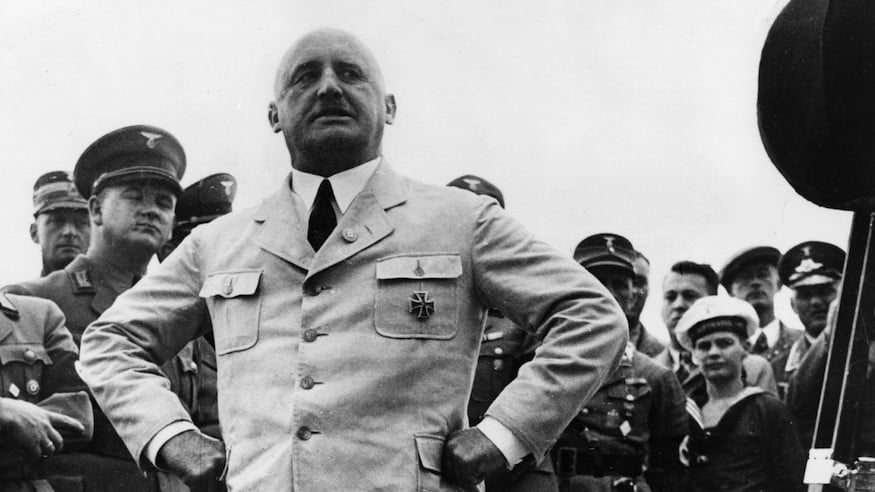
UNITED NATIONS — “Propaganda is a truly terrible weapon in the hands of an expert,” wrote Adolf Hitler in 1924.
Over the next 20 years the Nazi Party harnessed mass media to win broad voter support in Germany’s young post-World War I democracy, implement radical programs under the party’s dictatorship in the 1930s, justify war and eventually the Holocaust.
Hitler’s statement appears on a panel inside the lobby of the United Nations as part of “State of Deception: The Power of Nazi Propaganda,” a traveling exhibition running through March 5 produced by the United States Holocaust Memorial Museum. The featured artwork shows how the Nazi Party changed from an outlier, extremist group into the largest political party in what was then a democratic Germany.
“Even though the Nazis were defeated 70 years ago, propaganda didn’t die with them. Many of the same techniques are still in use today from extremist groups like IS to far-right parties in Europe where they play upon, and whip up, fear,” said Steve Luckert, senior program curator at USHMM.
“I think you’re seeing this worldwide. Here white nationalists have been able to use social media to increase their following. This is something the Nazis did: They used niche marketing to reach out to people who are disillusioned with the status quo.”
Of course 2017 is not 1924, and lies and spin aren’t new features in politics. But if the past is prologue then it is vital that people understand propaganda and its impact on critical thinking and denial of basic facts, said Luckert.
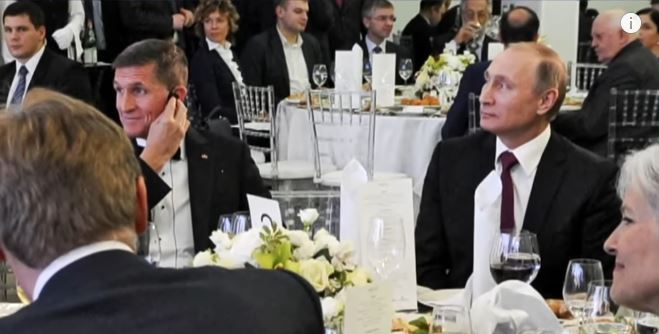
The exhibit, on display through March 5, comes at a time in American politics when charges of “fake news” are used to discredit legitimate news stories, such as Russia’s interference in the elections. According to an early January report from the Office of the Director of National Intelligence, the consensus among the US intelligence community is that Russia indeed tried to undermine the integrity of the elections.
Senior members of President Donald Trump’s administration have also been accused of circulating fake news stories themselves. Perhaps the most well-known instance is a story propagated by Retired General Mike Flynn, saying that Hillary Clinton operated a sex trafficking ring out of a Maryland-based pizza restaurant.
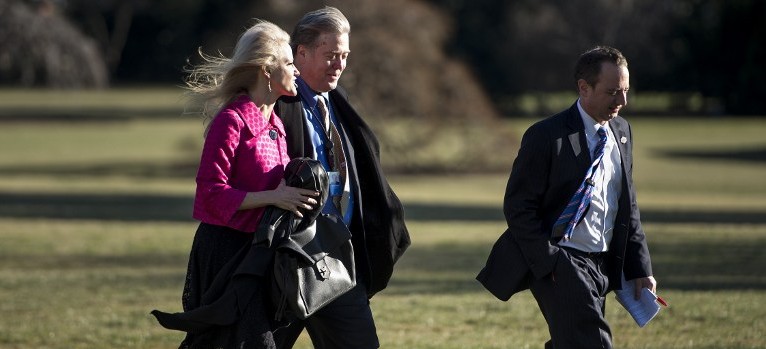
And senior Trump advisor Kellyanne Conway has received flack for telling NBC’s Chuck Todd on Meet the Press that White House press secretary Sean Spicer was presenting “alternative facts” when he reported inflated attendance figures for Trump’s January 20 inauguration.
‘We are in an era where black is white’
Dr. Michelle A. Amazeen, an assistant professor in communication, advertising, and public relations at Boston University, said that these are but a few examples of how propaganda and disinformation have reached worrisome new levels.
“I think we are seeing a resistance to being accountable for what one says like never before. Yes, we are in an era where black is white, and white is black. It’s a post-fact world and so you try to discredit where the criticisms are coming from. From what I’ve read, that was part of Hitler’s modus operandi to discredit your detractors, which you’re seeing now,” said Amazeen.
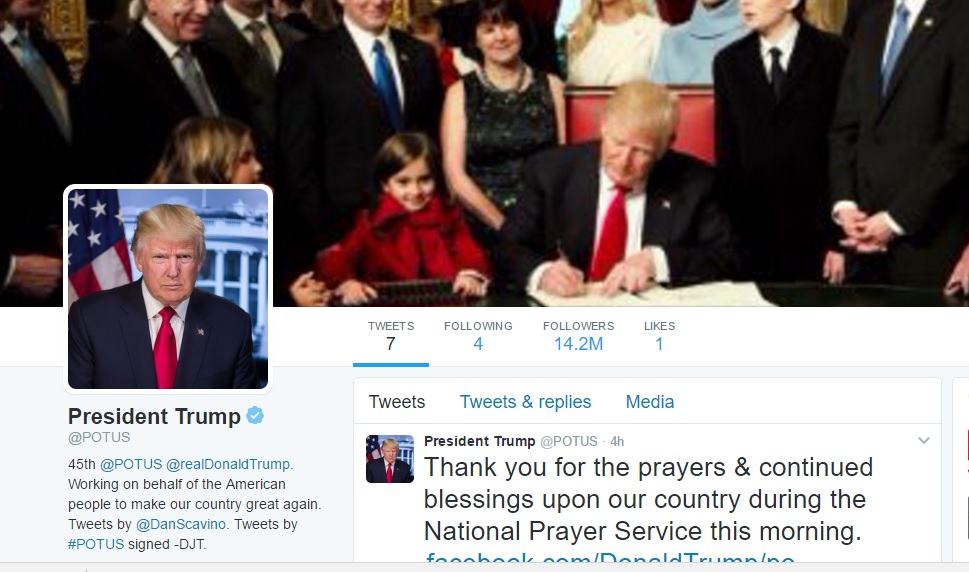
One of Trump’s most forceful attacks against the press came on February 17, when he tweeted that the “fake news media” was the “enemy of the American people,” calling out five of the nation’s biggest news outlets by name.
The FAKE NEWS media (failing @nytimes, @NBCNews, @ABC, @CBS, @CNN) is not my enemy, it is the enemy of the American People!
— Donald J. Trump (@realDonaldTrump) February 17, 2017
Attacks on the press, careful messaging and even stretching of the truth aren’t new to politics, Amazeen said.
Back during President George W. Bush’s administration, Deputy Chief of Staff Karl Rove said, “We’re an empire now, and when we act, we create our own reality. And while you’re studying that reality — judiciously as you will — we’ll act again, creating other new realities, which you can study too, and that’s how things will sort out. We’re history’s actors… and you, all of you [referring to Americans and journalists] will be left to just study what we do.”
“As [investigative journalist] I.F. Stone once said, all administrations lie. The difference with the Trump administration is the magnitude and frequency of the lies. He believes that if he says something repeatedly, it will stick,” said Jack Shafer, Politico’s senior media writer, in an email.
‘He believes that if he says something repeatedly, it will stick’
“He believes that if he scapegoats the press, his problems will vanish. He pioneered these techniques as a Manhattan real estate mogul, so he’s comfortable with them. And who’s to say he is wrong to continue the techniques that won him the White House?” said Shafer.
These techniques involve seizing on already high levels of media distrust. According to Edelman, a global communications and public relations firm, only 35 percent of Americans trust the media — and among self-described Trump supporters, that number drops to 15%. More than half of those who supported Hillary Clinton trust the media.
Additionally, the administration, and Trump, uses social media, primarily Twitter, to distract, threaten and insult. The strategy has power because there has been a nationwide decline in critical thinking skills, said Amazeen.
Several things have contributed to bringing the country to a “place where misinformation abounds,” including the rebirth of a partisan media and compartmentalized sources of information, she said.
According to Amazeen, these sources selectively present information that best serves an ideological cause, which leads to distorted pictures of reality.
‘Overall, young people’s ability to reason about information on the Internet can be summed in one word: bleak’
A recent Stanford History Education Group study entitled “Evaluating Information: The Cornerstone of Civic Online Reasoning” showed the majority of nearly 8,000 students surveyed were unable to distinguish between real news, sponsored content, and just plain fake news.
“Overall, young people’s ability to reason about information on the Internet can be summed in one word: bleak… At present, we worry that democracy is threatened by the ease in which disinformation about civic issues is allowed to spread and flourish,” said the study.
Free press staunches totalitarianism
This lack of critical thinking, coupled with a rise in authoritarian values among conservatives, means an increased willingness to accept messaging that appears aimed to instill fear and hatred — possibly about immigrants or the economy, Luckert said.
In the 1943 Nazi propaganda poster “He is to Blame for the War!” Hans Schweitzer depicted a large hand pointing at a crouching figure in black. It was a way to provoke and encourage hatred of Jews while portraying them as people who had betrayed German ideals.
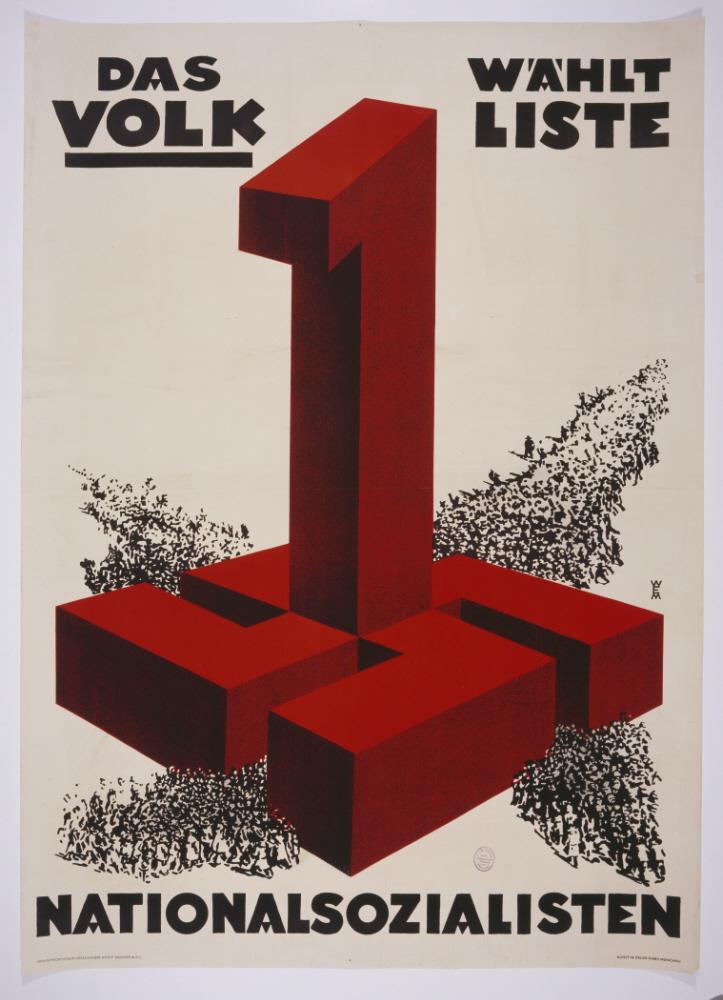
A 1932 election poster for Adolf Hitler shows an enormous red numeral “1” atop a red swastika. It captures the Nazi idea of “Ein Volk, Ein Reich, Ein Fuhrer,” or “One People, One Nation, One Leader.”
This kind of misinformation, or propaganda, feeds into a national narrative that excludes those of different nationalities or ethnicities, said Luckert.
If visitors to the exhibit leave with just one thing, he said, it is to think about their own role in combating propaganda.
“We tend to blame the propagandist but if people didn’t buy into the message then it wouldn’t work. It’s also about getting people to be more critical consumers,” Luckert said.
“There were 4,700 newspapers in Germany before the Third Reich seized power. Within a couple of months they were gone and the government had in place a very directed and controlled news apparatus. That’s a very frightening reminder of the need for a free press. It’s essential to a democracy.”







The Times of Israel Community.