

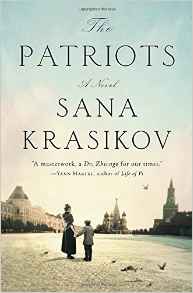
New, aptly titled novel ‘The Patriots’ is a story for our times
In a tumultuous political climate, Ukraine-born author Sana Krasikov’s book focuses on Americans who immigrated to the Soviet Union, and their decision’s fallout
 Add ToI as a Preferred Source on Google
Reporter at The Times of Israel
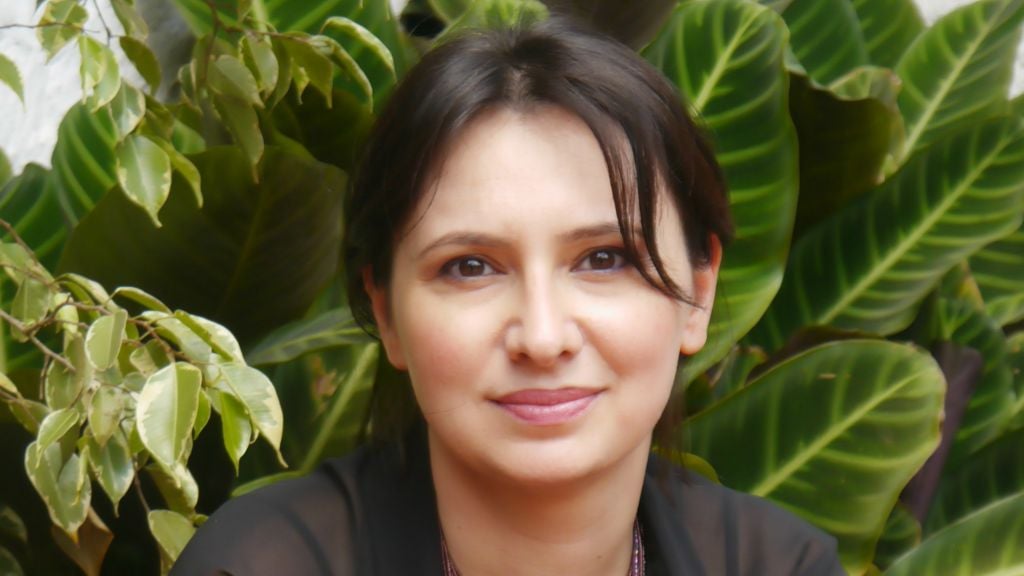
HASTINGS-ON-HUDSON, New York — Sana Krasikov’s debut novel “The Patriots” chronicles three generations of a Jewish family as they move from the United States to the Soviet Union and back again. But “The Patriots” isn’t a story of Russian immigration and American assimilation. Rather it’s Krasikov’s look at America, through a glass darkly.
“I think what fascinated me, to really take an American mind and an American mindset and put them in that situation and see how they psychologically adapt to it and internalize it and become part of it,” said Krasikov, 37, who just made Granta Magazine’s once-a-decade issue dedicated to the “Best of Young American Novelists.”
Sitting in a shoebox-sized falafel spot in the river town of Hastings-on-Hudson, Krasikov spoke with The Times of Israel about the themes embedded in her debut novel: family, patriotism, history, and survival.
The novel opens in 1932 when Florence Fein uproots from Brooklyn, leaving behind her parents and brother for the Soviet Union and what she naively imagines will be a life filled with “meaning and consequence.” She heads to Magnitogorsk, an industrial city in the Urals, and then finally to Moscow.
Her character represents scores of Americans who left the United States during the Great Depression. To them the Soviet Union promised progress and opportunity in the face of what appeared to be total collapse. Many were Jews who also believed they were leaving behind anti-Semitism.
In spite of Fein’s stubborn idealism and periodic bouts of self-righteousness, she holds on to her American passport, which represents an escape hatch of sorts. But when the Soviet authorities seize her only means of getting away, she seeks help from the American Embassy, which doesn’t intervene — sacrificing her and countless other Americans on the altar of foreign policy. Fein, like so many of her real life counterparts, is marooned, destined to live under Stalin.
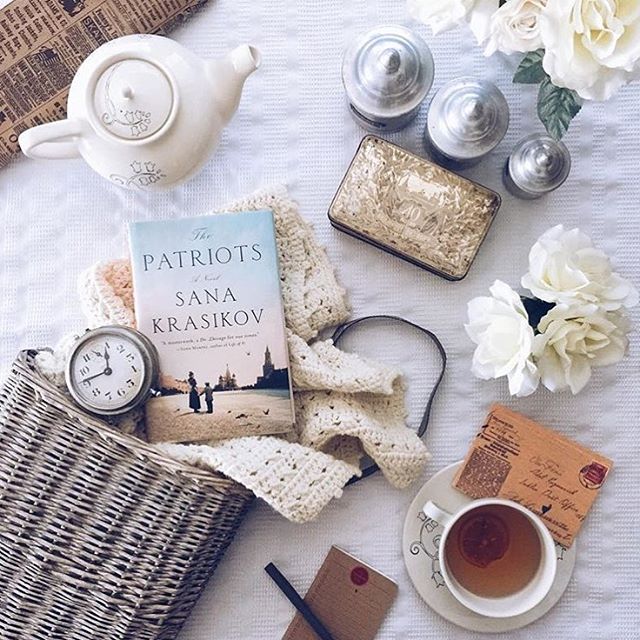
“It is a claustrophobic moment,” Krasikov said of the scene. The author adds that she regards her US passport as one of her most precious possessions.
Aside from Florence, there is her son Julian, who designs icebreakers to help get oil from the Russian Arctic.
His storyline hews more closely to the present, and readers travel with him as he commutes between Washington and Moscow. During one business trip he gets his mother’s declassified KGB file. For years he’s been at a loss to understand his mother’s steadfast refusal to condemn the system that destroyed his family, after the Soviets executed his father and imprisoned his mother for eight years.
Readers also meet grandson Lenny, who is trying to succeed as a businessman in contemporary Russia. Both Julian and Lenny’s corporate entanglements with Russian oligarchs echo Florence’s situation at the hands of the KGB so many years before.
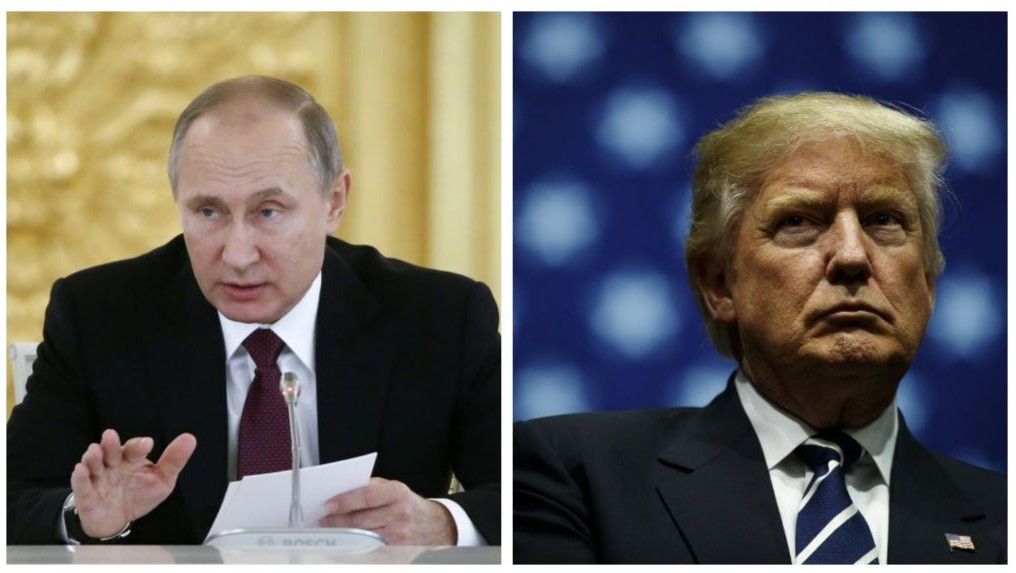
Some readers may superimpose the story over today’s tumultuous political climate, as Congress investigates President Donald Trump over alleged collusion with Russian President Vladimir Putin, and after Trump has called the press “the enemy of the people.” To many, this label carries overtones of Nikita Khrushchev, who famously said, “The press is our chief ideological weapon.” Additionally, on the left there is a growing move to shut down any discourse that offends, particularly on college campuses.
That many are reading the novel through this political prism doesn’t surprise Krasikov.
“I didn’t predict this era, but I felt like I was writing into a divide. I just didn’t think it would happen so quickly,” Krasikov said.
The idea for the novel germinated from a conversation with Timothy Friedman, a long-time family friend who immigrated to the US in 1979.
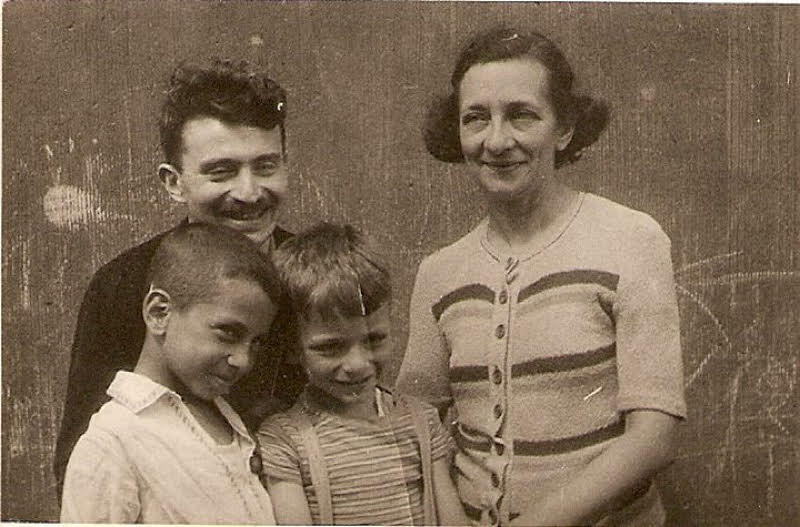
Friedman, whose mother spent nearly a decade in a Siberian gulag and whose father was executed by the Soviets, shared his mother’s declassified KGB file with Krasikov.
“I kind of had heard his parents were Americans. I decided to ask him about it because he really just seemed like another Soviet immigrant. Then he told me about his mother Pauline. A couple of things really fascinated me about her story. Especially that it just went so against the American grain during this period of time,” said Krasikov.
During her year in Moscow doing research, Krasikov found the archives “surprisingly open” as many government files and documents were declassified in 1992. Subsequent research visits to Moscow followed, as well as a trip to Texas where she spoke with friends in the oil industry who provided insight about doing joint ventures with the Russians in the Arctic.
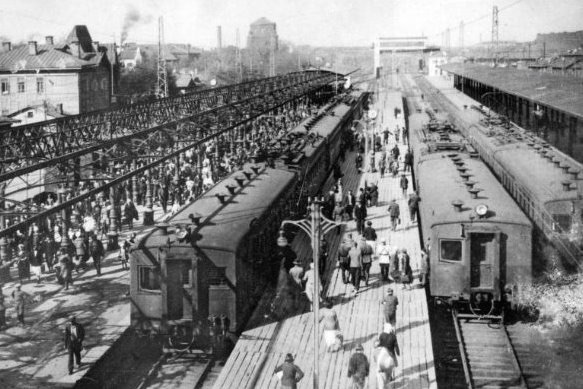
In the book Florence resists returning to America with Julian — in fact, she can’t even utter the word America when he proposes the idea.
“How she would have gone over there and become this different person fascinated me. It made me wonder what would have to happen for someone to put that word in some locked drawer inside their mind,” said Krasikov.
Born in Ukraine, Krasikov was 8 years old when she and her family immigrated to the United States from Georgia, a former Soviet republic. It was 1987 and the Cold War was ending, even though songs such as Alphaville’s “Forever Young” about the atomic bomb and movies such as “The Day After” about nuclear war continued to permeate pop culture.
‘My dad was like, this much anti-American propaganda means they are going to let people out’
While Krasikov’s parents didn’t explicitly prepare her for life in America, she figured it out soon enough.
“You could see them buying the suitcases,” she said, “and I remember there were these documentaries coming out on Russian TV about how terrible life was in America — the homelessness problem, the drug problem, people dying on the street. I remember my dad was like ‘This much anti-American propaganda means they are going to let people out.’ That was the original relation with fake news. People knew how to decode it.”
When she, her parents, older sister and grandparents arrived at John F. Kennedy Airport in New York, members of the synagogue were there to greet them, banner in hand. They settled in Katonah, about an hour’s drive north of New York City.
“I remember the new language, the aggressive good will of people. We moved into a nice community and I assimilated freakishly quickly. I had no choice; there weren’t many other immigrants there. The cultural shock came later,” she said.
After graduating Cornell in 2001, Krasikov has been published in The New Yorker, The Atlantic Monthly, The Virginia Quarterly, Epoch, and Zoetrope.
Her first book, “One More Year: Stories,” for which she won the Sami Rohr Prize for Jewish Literature, was published in 2008.
She wrote “The Patriots” while living in Nairobi, where her husband, Gregory Warner, a reporter for NPR was based. They returned to the US last September and in some ways she is still readjusting.
“The other day I was pulled over for speeding by the police. I started crying. In an odd way, though, it was weirdly gratifying. I’d been living in Nairobi for four years so I was really used to bribing the police. I was so used to it, it’s not an uncommon experience. You’re always bribing the police,” Krasikov said.
“Then we came here and it was reverse culture shock. There is a ticket; I have to defend myself in court. But there is a structure of institutionally and legality here — and this is my American patriot speaking,” she said. “No matter what people feel about our political leaders, I don’t feel that that is fundamentally shaken.”



The Times of Israel Community.