

New phase in Syria war brings Israeli disputes to light
Which is greater threat, Islamic State or Shiite axis? Defense Minister Ya’alon seems to be sending different message from IDF chief
 Add ToI as a Preferred Source on Google
Mitch Ginsburg is the former Times of Israel military correspondent.

Defense ministers are generally judged for their handling of a war. Dayan in ’67 and ’73, Sharon in ’82, Peretz in 2006. The battlefield is where their legacies are made and lost. But the current defense chief has made his mark, thus far, in another manner — in the artful, non-capitulatory avoidance of war.
Next door an internecine war is being waged, a maelstrom of historic proportions. It is the whirlpool at the heart of the Middle East, drawing in some of the region’s cruelest actors. And Israel, without selling its soul or discarding its crucial interests, has managed not to get sucked in.
But the spreading barbarism of Islamic State, drawing more Western states more firmly into the theater of war, coupled with the arrival in Syria of the Russian air force, together mark a new stage in the war. It’s not a final turning of the tide — the battle is still far from over — but it’s a significant milestone, one at which Israel, after years of denial, is beginning to show differences of opinion at the top of its defense establishment: Defense Minister Moshe Ya’alon is apparently advocating for the weakening of Hezbollah and the Shiite axis, a goal seemingly shared by none of the world’s top powers, while the army’s top commander, Lt. Gen. Gadi Eisenkot, reportedly considers IS to be the greater threat.
“Eisenkot believes that an Islamic State victory in Syria is a slightly worse scenario for Israel than an Assad victory,” Amos Harel wrote in Haaretz on Thursday, because while Assad and Hezbollah are far more powerful they are also more readily deterred.
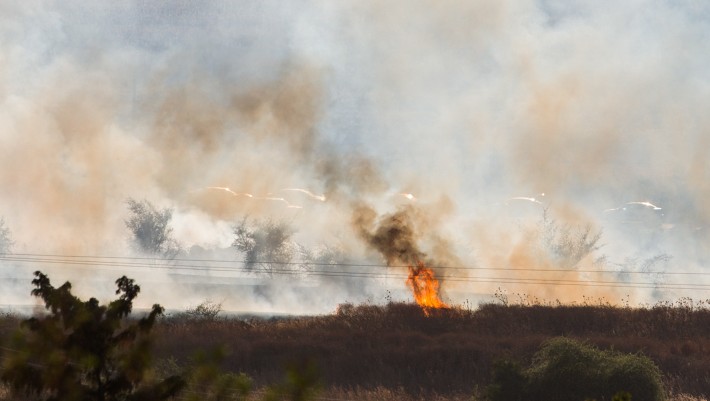
A close listening of Ya’alon’s Saban Forum interview last week indicated a different understanding.
During the five years of the gruesome Syrian civil war, Israel has made several key decisions, moral and operational.
The first moral decision was to treat Syrian wounded. There are those who see Israel’s decision to treat wounded Sunni warriors, even those perhaps belonging to the most extremist groups, as part of a calculated plan to support the battle against Assad. That is a skewed reading. The decision to put Israeli troops in harm’s way and offer medical assistance was made primarily in the service of Israel’s neutrality; as a neighbor it could stand on the sidelines while hundreds of thousands were killed and millions were plunged into a Hobbesian existence and maintain its own sense of dignity only if it knew that, at the very least, it offered help where possible. If hearts and minds were slightly altered by the succor provided, it’s an added bonus.
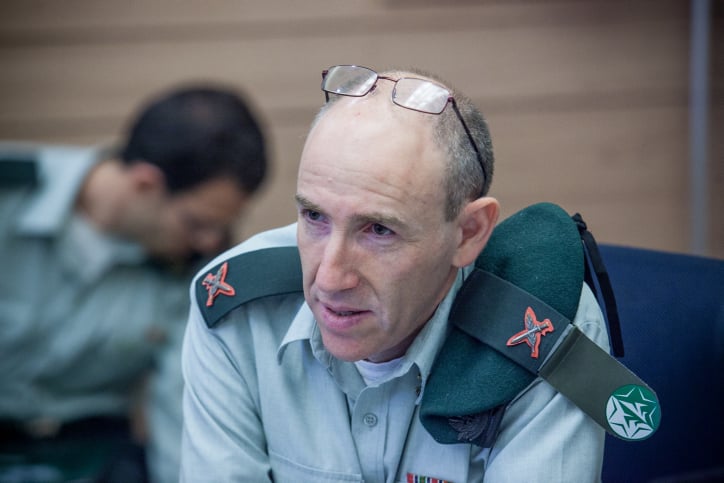
The whistle-blowing on Bashar Assad’s murder by nerve gas is a slightly less-clear case. It’s hard to know which motives guided Brig. Gen. Itai Brun in April 2013 when he revealed what several intelligence agencies must already have known, that Assad had used sarin gas on his own people; that the red line drawn by POTUS had been brazenly crossed. But it seems reasonable to suggest that Israel would have exposed that sort of murder regardless of the identity of the killer.
Operationally, Israel set two red lines irrespective of the perpetrator — preventing fire on the Golan, and preventing the proliferation of chemical weapons; and one geared specifically toward Hezbollah: barring the Shiite semi-state actor from acquiring weaponry that would alter its nature as a fighting force.
This realist policy — a radical antithesis to the thinking that prevailed in advance of the First Lebanon War — states that Israel will not hamper Hezbollah’s war effort in Syria, but will bar the organization from reaping the benefits of the engagement for subsequent wars against Israel.
The cornerstone of success in this campaign has been clarity. It is a much overlooked thread in the fabric of a state’s deterrence. The simple fact that you are clear about what will trigger action and are equipped and able to follow through, demonstrably, over time, means that your enemies are not surprised and jolted into a rash reaction. In this, Ya’alon has been masterful.
Israel has reportedly launched airstrikes — acts of war — in Syria and Lebanon, targeting Hezbollah-bound weapons and personnel. It shot down a Syrian warplane. It did not blink when Iran and Hezbollah began establishing a front on the Golan Heights, reportedly killing an Iranian general, accompanied by senior Hezbollah operatives, just a few miles east of the border. And yet, the fire has not skipped across the border.
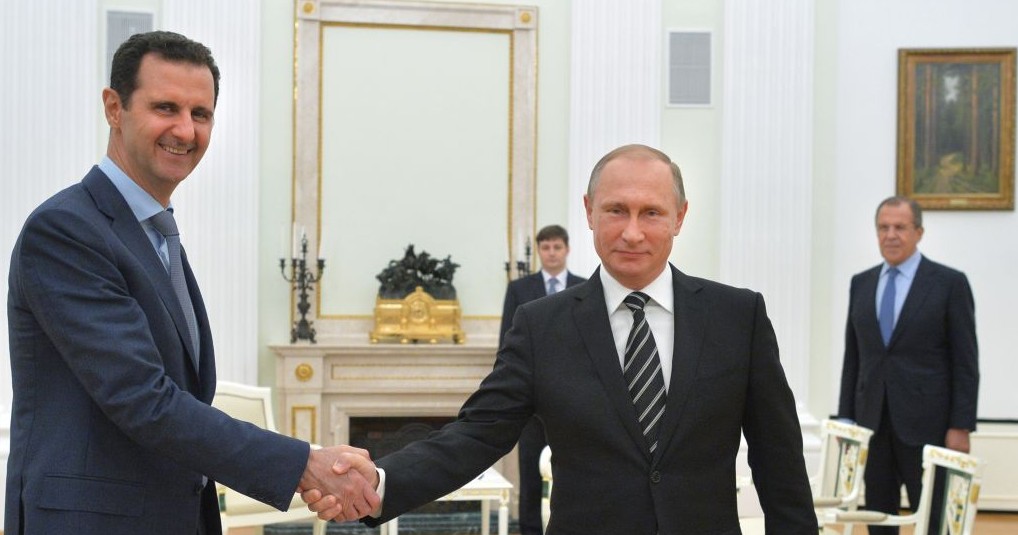
Hezbollah and Bashar Assad and the Iranian Revolutionary Guards, and, now, the Russian Air Force, have all accepted this incredibly unusual military posture — against the force that Russia has come to the Mediterranean to defend — as something that is to be expected, natural, and part of the rules of the game.
But as the war approaches the start of its sixth year, Israel is beginning to show its interests. Officially, in all matters relating to Syria, Israel, the strongest military power in the region, is the only neutral country in the Middle East. It has no preference as to the victor. Speaking of Sunni and Shiite extremists, Prime Minister Benjamin Netanyahu said in 2014, and again recently, that Israel “does not have to strengthen one to weaken the other. My policy is: weaken both.”
Ya’alon’s very frank remarks to the Saban Forum in Washington last week indicated a change. He refused to state Israel’s preferred outcome in the war next door — rushing through a phrase about Israel having its own “opinions” — but was quite clear when he said that “we believe, in the end, Da’esh [Islamic State] is going to be defeated. Iran is very different. It’s actually an original super power.”
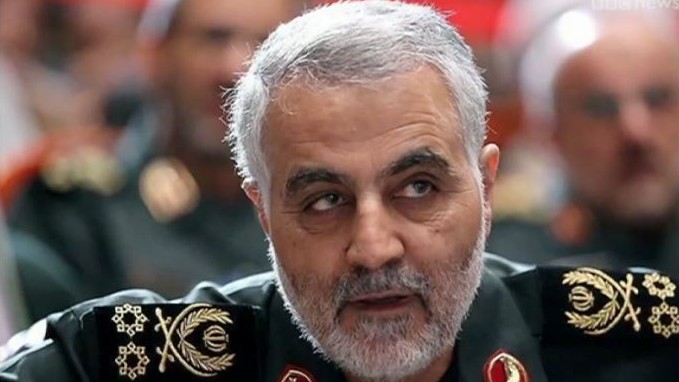
The Shiite axis, Ya’alon said, has very clear guidance. The commander of Iran’s al-Quds Force, Qassem Soleimani, and Hezbollah, under Iran and in concert with Assad and Russia, have assembled a coherent war effort. The Sunni camp, excluding the Salafist elements like IS, “should be orchestrated and led in order to make it [operate] in a better way.”
A cynic could view this as Israel’s attempt to perpetuate the war. It seems far more likely that it is an expression of Ya’alon’s preferred bottom line – a Sunni victory, with or without IS, and preferably without.
Netanyahu’s former national security adviser, Yaakov Amidror, a researcher at Bar-Ilan University’s BESA Center, said in a phone interview that Israel does have a clear interest: “Iran is amassing strength, it has terror networks around the world and Hezbollah has 100,000 rockets.
“At this point in time,” added Amidror, “the Shiite threat is far more severe.”






The Times of Israel Community.