

Palestinian officials: Liberman ‘conspiring’ to overthrow Abbas, sow chaos
Defense minister is charged with seeking to discredit, dethrone PA leader by partnering with his rival
 Add ToI as a Preferred Source on Google
Dov Lieber is a former Times of Israel Arab affairs correspondent.
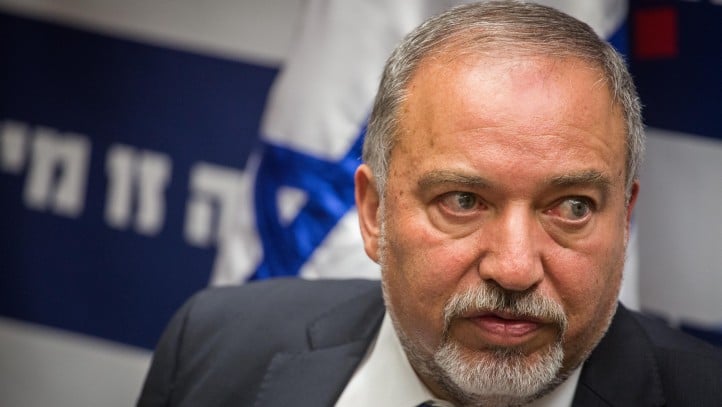
A slew of Palestinian officials accused Defense Minister Avigdor Liberman of sowing strife among Palestinians, while trying to dethrone PA President Mahmoud Abbas by boosting his rivals.
The officials were responding to statements made by Liberman — who dismissed the allegations — in an interview with the Palestinian daily Al Quds, published on Monday.
In the interview with Al-Quds, the first-ever attempt by the defense minister to speak directly to the Palestinians, Liberman accused Abbas of corruption and of shying away from the difficult decisions necessary to achieve peace.
On Wednesday, Adnan Damiri, the official spokesman for the Palestinian Authority’s security forces, seemed to assign to Liberman a portion of the blame for an outbreak of anti-Abbas riots in three Palestinian refugee camps on Tuesday.

In a report in the PA’s official news outlet Wafa, entitled “Who’s responsible for the crisis in the camps?” Damiri was quoted as saying Liberman “is managing a conspiracy against the Palestinian people… and seeks to ignite the fire of sedition on the Palestinian streets for personal reasons, or to impose certain figures on society.”
Damiri does not specify who Liberman was supposedly seeking to foist on the Palestinians, but was likely referring to Mohammad Dahlan, a bitter political rival of Abbas in the ruling Fatah party who was expelled from Gaza in 2011 by Abbas and now lives in the United Arab Emirates.
The refugee camp riots were linked to the firing of a popular Fatah politician, after he called for unity within the party, which would mean reconciliation between Abbas and Dahlan.
Since August, Abbas has dismissed five leaders from his party over their support for Dahlan. He also recently fired the Fatah spokesperson in Jerusalem, Rafat Alayan, for the same reason.
Since August, Abbas has dismissed five leaders from his party over their support for Dahlan.
In an article last week, before the Al Quds interview, Mahmoud Jaraba, a researcher at the Erlangen Center for Islam and Law in Europe, argued that the defense minister’s attacks against Abbas, along with rumors in January 2015 of a secret meeting between Dahlan and Liberman, “helped sow suspicion regarding Israel’s position on the Fatah power struggle.”
Jaraba added that some Palestinians believe Liberman might also be part of a plan by Arab countries “to ease” Dahlan back into Fatah. Abbas bitterly opposes this plan.
Damiri wasn’t the only high-level official to suggest Liberman and Dahlan are in bed together.
On Wednesday, Wafa published statements from eight leading figures of the Palestinian Liberation Organization denouncing the recent statements by Liberman to Al Quds.
The PLO is headed by Abbas and is the largest political umbrella organization representing the Palestinians.
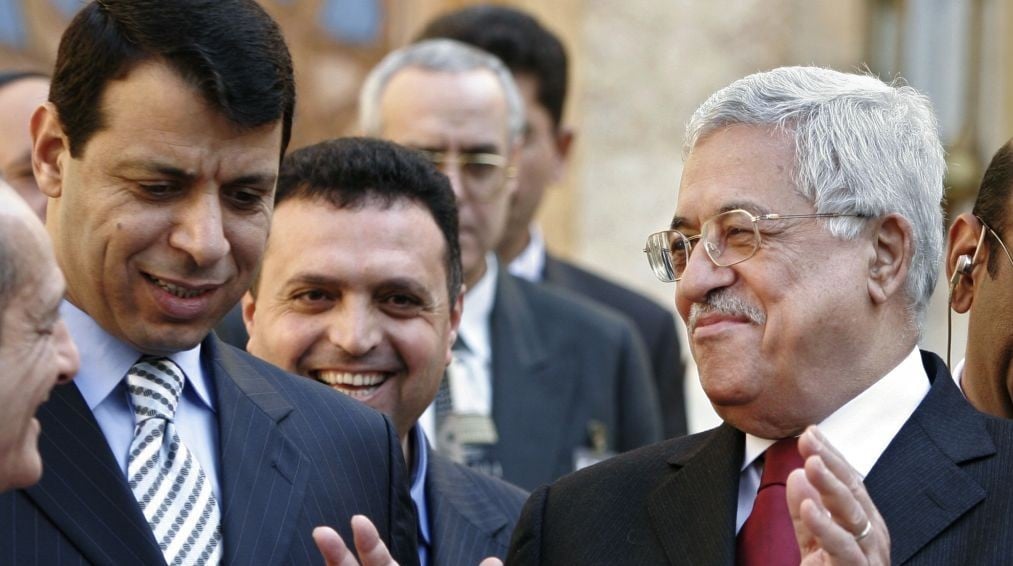
The eight officials all charged that Liberman has been working to discredit and ultimately overthrow Abbas.
Amin Maqbul, secretary-general of the Fatah movement’s Revolutionary Council, however, went a step further, suggesting Liberman was looking for Abbas’s replacement himself.
Maqbul warned of Liberman’s “attempts to build relationships with Palestinian figures beyond the national front and to create an alternative leadership.”
Maqbul also did not mention Dahlan specifically by name.
Liberman’s spokesman Tzahi Moshe, in message to the Times of Israel, called the allegations against the defense minister “nonsense, unworthy of being addressed.”
Arab leaders, especially in the so-called Arab Quartet of Jordan, Egypt, the UAE and Saudi Arabia, have recently pressured Abbas to patch up differences within Fatah and make peace with Dahlan.
Abbas has so far been unwilling to welcome Dahlan back into the fold, and even uncharacteristically lashed out against “the [Arab] capitals” in September, saying: “No one will dictate to us any position or idea.”



The Times of Israel Community.