

State watchdog set to weigh in on contentious gas deal
Comptroller to release report Monday ahead of Knesset vote on arrangement awarding US-Israeli partnership access to offshore fields
 Add ToI as a Preferred Source on Google
Tamar Pileggi is a breaking news editor at The Times of Israel.
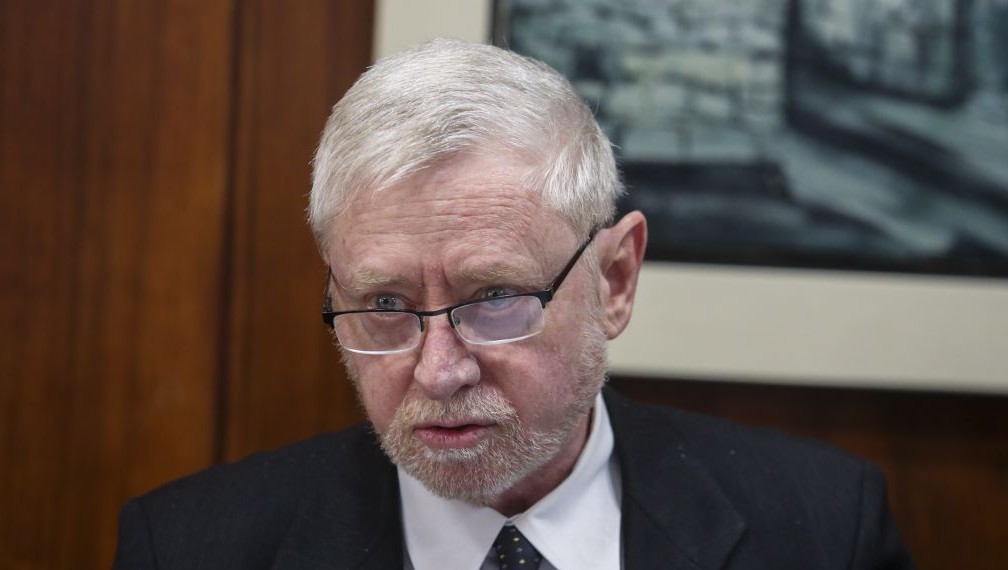
Ahead of a Knesset vote to approve a controversial deal granting the sole rights to develop Israel’s offshore gas fields to a US-Israeli conglomerate, the state comptroller is set to publish a report on the government’s handling of the natural gas market on Monday.
The July 22 parliamentary vote would exempt the multi-billion dollar deal between the government on one side and the US-based Noble Energy and Israel’s Delek Group on the other from antitrust laws, despite the partnership being branded a de facto monopoly by the head of Israel’s Antitrust Authority last year.
US-based Noble Energy and Israel’s Delek are seeking to develop the large Leviathan gas field, on top of the Tamar, Tanin and Karish holdings in the Mediterranean Sea.
As opposition to the emerging deal has increased in recent months, State Comptroller Yosef Shapira announced last month his office would investigate the controversial deal and release its findings ahead of the Knesset vote.
The comptroller’s report is expected to address the issuing of drilling and exploration permits distributed by the National Infrastructure, Energy and Water Ministry in the past decade.
Shapira requested that Energy Minister Yuval Steinitz delay a Knesset vote on the natural gas deal scheduled for last month — endorsed by Prime Minister Benjamin Netanyahu — until after his office publishes the report on the government’s handling of the lucrative resource.
But the parliamentary vote was postponed anyhow, after Netanyahu failed to cobble together a Knesset majority to pass the legislation.
Critics of the gas deal awarding Noble Energy and Delek Group access to the Tamar and Leviathan offshore reserves say it amounts to “robbery” of Israel’s natural resources and urge increased government transparency on the agreement.
Antitrust Commissioner David Gilo, who labeled the arrangement a monopoly, announced his resignation over the issue earlier this year.
Under the terms of the deal, the two companies would retain control over the Leviathan gas field, the largest of the four, but must sell off part of their ownership in the Tamar, Tanin and Karish fields.

The deal provides the Noble-Delek group immunity from the Israeli Antitrust Authority for a period of 15 years and allowed the energy giants to keep their majority holdings in the Leviathan offshore gas reserve until 2030, even if the reserve becomes Israel’s only source of natural gas.
Noble and Delek have been selling gas to the Israeli market from the Tamar field, which went online in 2013, and have agreed to sell to neighboring countries as well. The Leviathan field, the largest gas field in the Mediterranean, has not yet been developed.
The future forced sales are aimed at opening the industry to competitors. The deal also sets a price ceiling for future sales to Israeli companies and commits the gas firms to complete the development of the Leviathan gas field by 2019.
However, critics say the deal might in fact strengthen the gas monopoly because the companies will maintain a de facto monopoly over the Tamar field for the next six years before embarking on a similar partnership to develop the Leviathan field.
Environmentalists have also voiced opposition to the plan, saying that increased competition would encourage the industry to use more environmentally friendly resources.
Times of Israel staff contributed to this report.









The Times of Israel Community.