

Tel Aviv shooting victim mourned as ‘fighter who fell on battlefield of hatred’
Thousands turn out as Shimon Ruimi and Alon Bakal are laid to rest; ‘your death has left us crushed,’ says Bakal’s father
 Add ToI as a Preferred Source on Google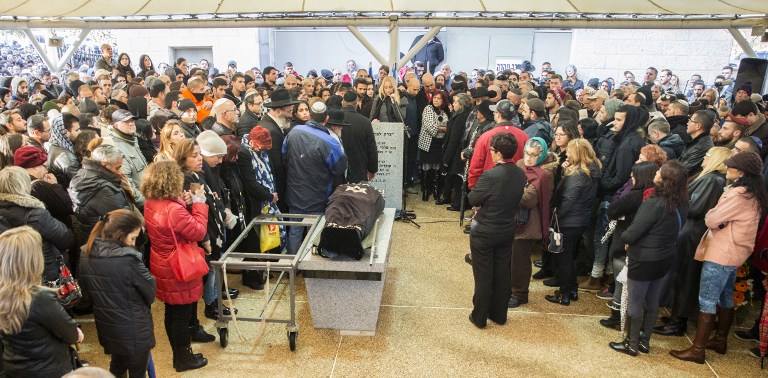
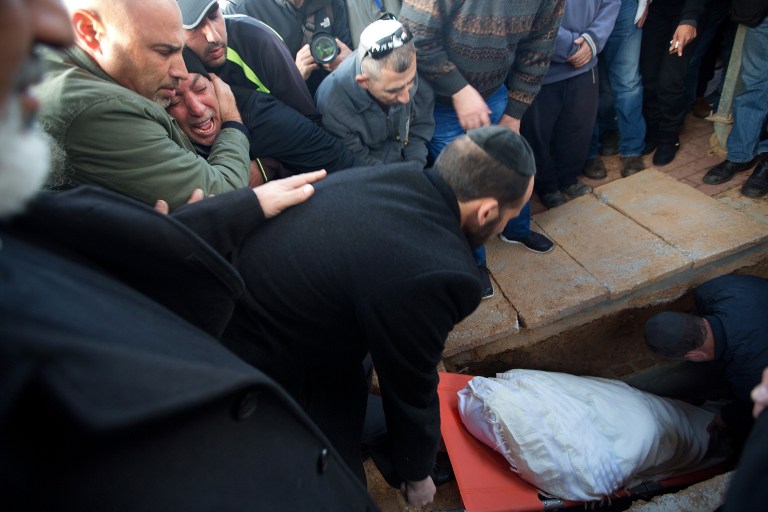
Thousands of people turned out Sunday for the funerals of two people killed in a Friday shooting attack at a bar in Tel Aviv.
Alon Bakal, 26, the manager of the Simta bar targeted in the shooting, was buried in his hometown of Carmiel, in northern Israel, while Shimon Ruimi, 30, was laid to rest in the southern town of Ofakim.
The two were killed when the suspected gunman, 29-year-old Arab Israeli Nashat Milhem from the village of Arara in northern Israel, opened fire on a bar on Dizengoff Street on Friday afternoon. Seven others were wounded in the attack. Milhem fled the scene and has yet to be apprehended.
Bakal’s girlfriend, Lior, mourned the fact that they had been parted so soon after his final message to her had pledged that they would be together forever.
Paying tribute to his son, David Bakal said that “your death has left the family crushed, while you are in Heaven with your generous soul. Aloni, Aloni, Aloni, we will love you forever.” He also asked how it was possible to part from someone who was not yet 27, and how a father could have to eulogize his son.
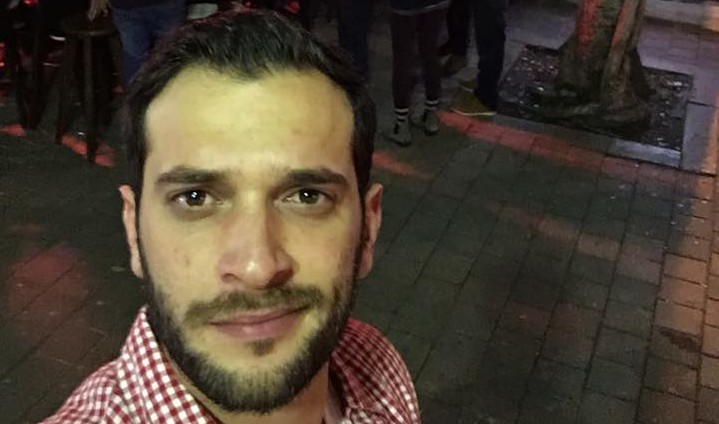
David Bakal recalled his son’s drive and his giving nature, saying that as soon as he had achieved one goal, he would immediately move on to his next goal, and that he had collected items for Holocaust survivors but wanted to do even more. He also stressed Alon’s love of people and Israel, and his strong and dedicated personality.
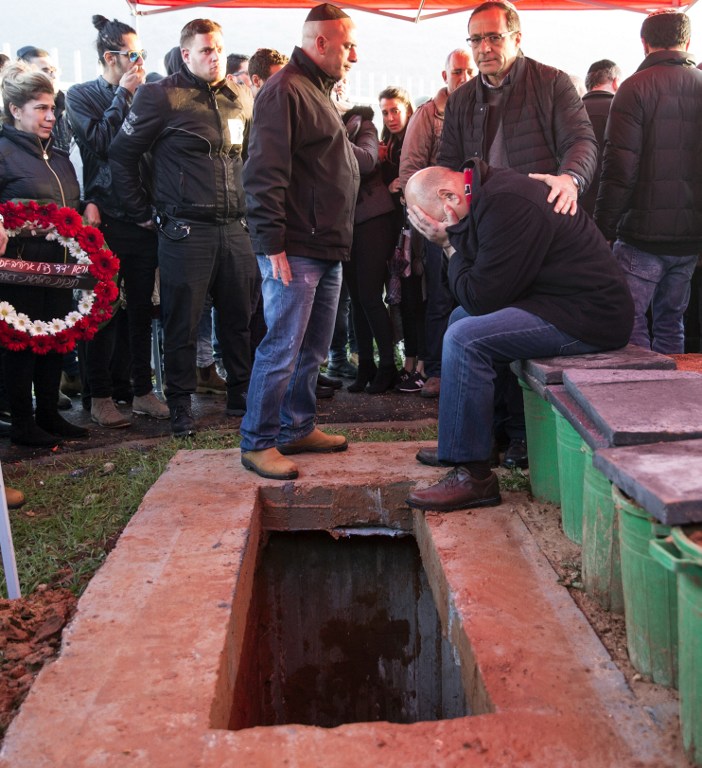
“We had a son, but he is no more,” Alon’s mother, Nitza, added. “Alon, our beloved child, my prince. I always carry a heavy burden, but I cannot carry this terrible pain forever.”
Nitza also called upon the Israeli government to define the attack as a nationalistic attack and that the terrorist should receive the appropriate punishment stating “that every mother who gives birth to a terrorist should have her home demolished. The terrorist needs to receive a punishment [according to the adage] a tooth for a tooth and an eye for an eye and that he shouldn’t sit in jail but should get what he deserves. His father shouldn’t feel that his conscience is clean because he turned his son in. They should have disarmed him.”
In attendance were Likud MK Yaron Mazuz and Yesh Atid leader Yair Lapid, of whose party Bakal was a member. The heads of the nearby Arab regional councils also attended the funeral, among them Sakhnin mayor Mazen Ganaim, and the heads of the Deir al-Assad and Deir Hanna local councils.
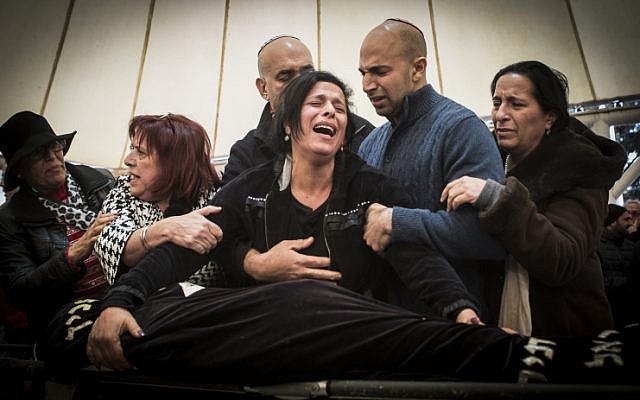
In Ofakim, some 2,000 mourners attended the funeral for Shimon Ruimi, who had been on a weekend trip to Tel Aviv when he was killed. He was eulogized by his aunt, Mor Peretz.
“Today, we are standing here and instead of celebrating your birthday, we are burying you. It is not the natural way of life for parents to bury their child.Now we understand the term ‘before his time.’ May God avenge your blood, Shimi,” she said.
“You died a martyr’s death and have become everyone’s child. The fierce rain of the past few days shows how Heaven is crying at your passing,” she added.
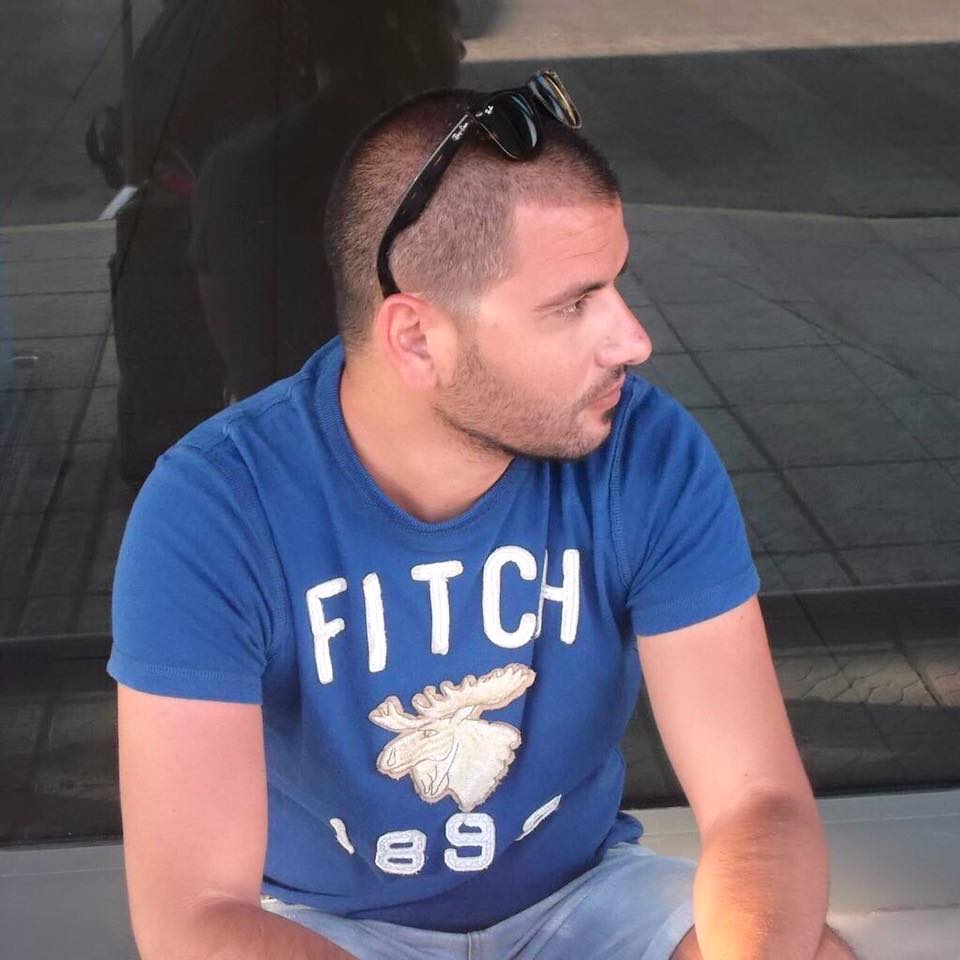
“You survived serving in Gaza, you survived war, but you were unable to survive one bullet of hatred that pierced your heart and at the same time, pierced all of our hearts.”
Ofakim Mayor Itzik Danino also paid tribute to Ruimi.
“Our beloved Ruimi family, the hearts of those in Ofakim and in Israel are crying with you at this time, over the murder of your beloved son Shimi, in broad daylight in a noisy street in Tel Aviv.”
He also praised Ruimi’s parents, Iris and Makluf, for raising a son of whom Israel could be proud, who had served as a fighter in the Givati Brigade. Ruimi, he said, fell as a fighter on the battlefield of hatred, murdered simply because he was a Jew.
The government was represented by Likud Minister Ofir Akunis, who said that Ruimi had been “murdered by a bloodthirsty terrorist simply because he was a Jew. While we sanctify life, the murderer and his accomplices sanctify death.”








The Times of Israel Community.