

Top doctor: Coronavirus vaccine will take 18 months — rush it at your own peril
Manfred Green, who has tested vaccines for Health Ministry, warns a hastily made shot could cause adverse effects, erode public faith in inoculations
 Add ToI as a Preferred Source on Google
Nathan Jeffay is The Times of Israel's health and science correspondent
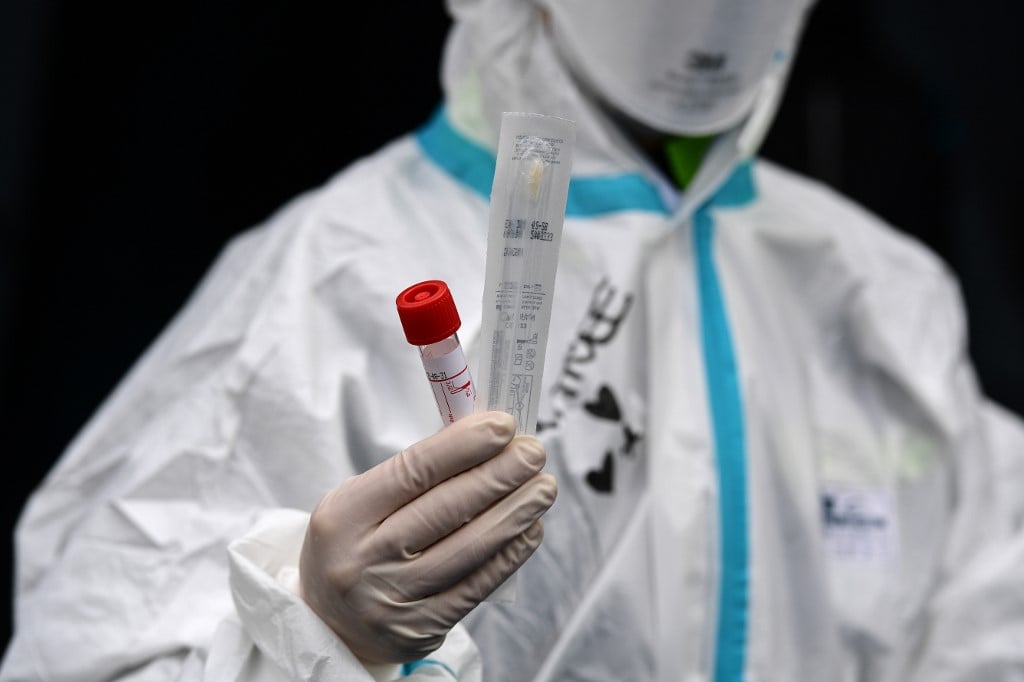
A coronavirus shot is more than 18 months away, and attempting to accelerate the process could be “very risky,” a former vaccine evaluator has told The Times of Israel.
Manfred Green said he understands the public pressure for relaxing testing procedures, given the scale of the pandemic. But a badly tested vaccine could have “adverse effects,” he argued.
Green, who has conducted vaccine tests for Israel’s Health Ministry, said: “If a vaccine is developed in the next few months, you can imagine if there were a one in 1,000 or one in 10,000 adverse reaction. That could be very problematic if you’re giving it to millions of people.”
He made his comments on Sunday, as the race to develop and test a vaccine is intensifying — even to the point of generating international friction. German media reported that the Trump administration has offered the German company CureVac “large sums of money” in return for exclusive access to their work.
In Israel, ever since the Science Ministry made headlines two weeks ago by saying that a state-funded institute’s vaccine could be three months away, there is excitement about the research and widespread support for accelerated testing. In America, the Food and Drug Administration has signaled that it is open to speeding up normal processes.
“When responding to an urgent public health situation such as novel coronavirus, we intend to exercise regulatory flexibility and consider all data relevant to a certain vaccine platform,” FDA spokeswoman Stephanie Caccomo said in a statement.
But Green believes that if a vaccine is to be safe, it needs a long verification period.
He stressed that initial tests don’t even deal with whether a vaccine is effective, but just verify that it doesn’t harm people.

“You wouldn’t want to be giving large numbers of people a vaccine when you’re not convinced it’s safe, so you’d have to test it on a large number of people over a long time,” he said. “And that’s before you test its efficacy.”
He said that a coronavirus vaccine could actually take longer than other vaccines to test. His logic is that while new vaccines commonly use long-established technology, coronavirus differs from familiar viruses and a vaccination is widely thought to require new technology.
“If it’s a new technology, not just a new vaccine, we don’t know much about it and we need to learn about it. That would require more extensive testing,” said Green, director of the University of Haifa’s international master’s program in public health, and previously head of the Public Health Branch for the IDF and founding director of the Israel Center for Disease Control.
Prematurely approving a vaccine that turns out to prove problematic would not only have a health cost, but also impact confidence in inoculations, Green said. He noted that in 1976 the US government initiated a widespread vaccination campaign against an expected flu threat, but stopped it when the vaccine was associated with a syndrome that causes paralysis, respiratory arrest, and death. “People lost faith in vaccines at the time,” said Green.
Green thinks that testing aside, the public and researchers are underestimating the complexity of the science needed for a vaccine.
“For the lay public this seems to be a panacea,” he said. “People know we have vaccines, but don’t know how they are developed. They think you go to a lab and a month later have a vaccine but it’s not like that. It’s a naive view.”
Vaccine research moves far more slowly than most people realize, he said, observing that many shots that are administered today use decades-old vaccines. “If you look at the story of vaccines, we haven’t really had large numbers of new vaccines coming in to the market very frequently,” he sad. “There are some but it’s not frequent.”

He said that when new vaccines are developed, there are “long and difficult processes that are usually not without bumps in the road.” Often, the vaccine in development is not yet sufficiently safe or sufficiently effective, “and you’d go back to the drawing board and try to improve it.”
Chen Katz of Israel’s state-funded Migal Galilee Research Institute told The Times of Israel last week that a vaccine could get to human testing within the three-month time frame announced by the Science Ministry. Boston-based biotech firm Moderna expects to start human trials for its own vaccine next month.
Asked about claims that a breakthrough is imminent, Green said: “There are many companies and research teams that have been researching vaccines for years and they have to be optimistic or they wouldn’t be in business.”










The Times of Israel Community.