

US envoys pushing UN to back Trump’s Mideast peace plan
Diplomats say Greenblatt and Kushner trying to secure support for upcoming proposal while continuing to keep it under wraps
 Add ToI as a Preferred Source on Google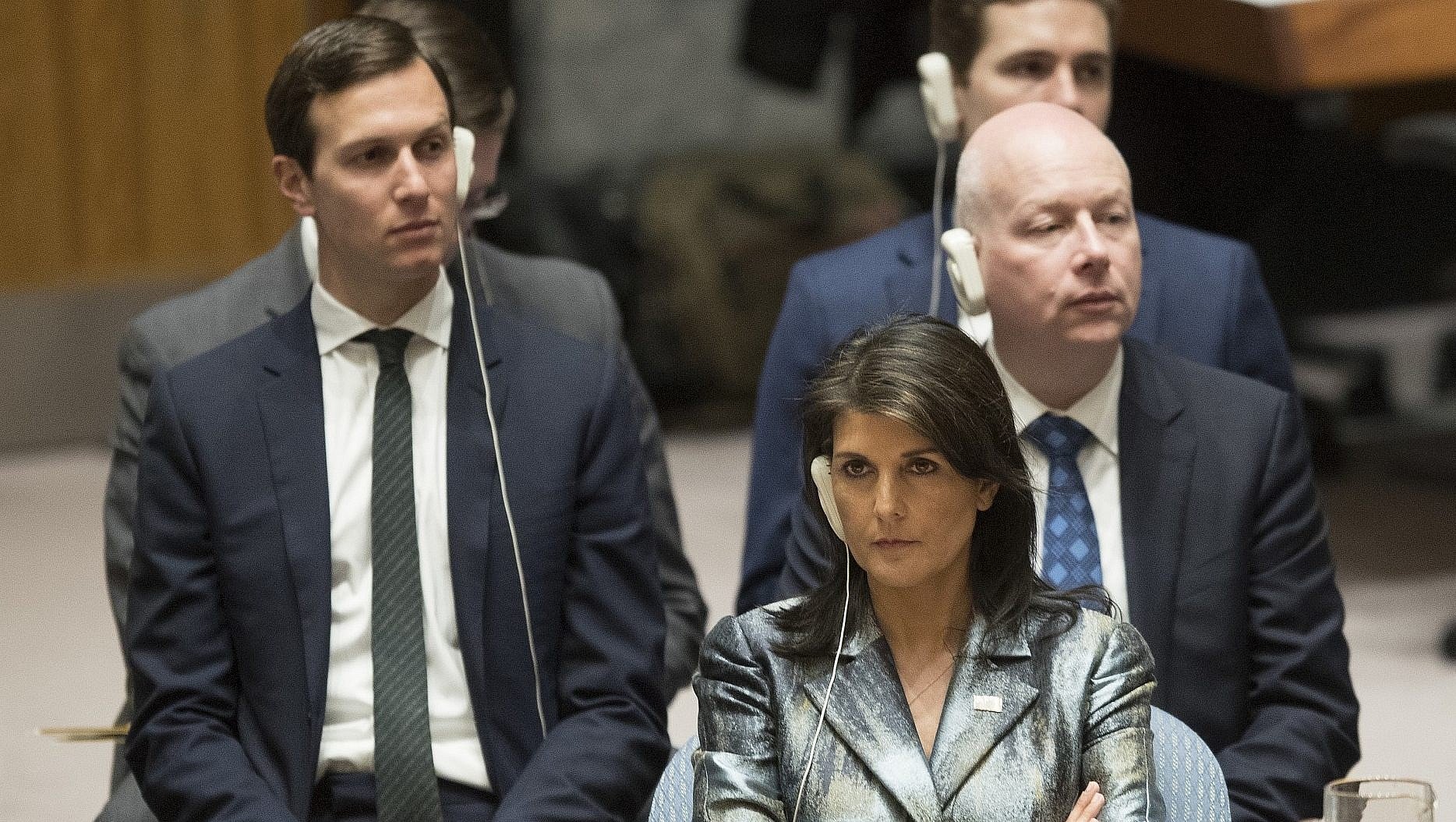
UNITED NATIONS, United States — US President Donald Trump’s two top envoys on the Middle East have told UN Security Council ambassadors that they hope for their support for the upcoming peace plan, diplomats said.
Jason Greenblatt, the US envoy for Middle East peace, and Jared Kushner, Trump’s son-in-law and adviser, met behind closed doors with the ambassadors on Tuesday.
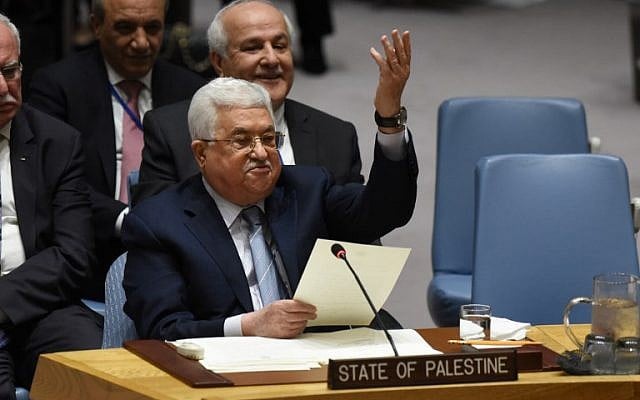
The council had just heard Palestinian Authority President Mahmoud Abbas call for an international conference to be held by mid-2018 to launch a wider peace process in which the United States would not have the central mediating role.
During the one-hour meeting, the envoys did not share details of the Trump plan nor did they indicate when the US administration planned to unveil its proposals, diplomats said.
“They asked for support at the time the plan comes out,” said a diplomat, who asked not to be named. Another diplomat confirmed that Greenblatt and Kushner had made the request, even though no details of the plan were shared.
French Ambassador Francois Delattre said the US administration was signalling its willingness to engage on the Middle East peace process and its respect for the Security Council by dispatching the two US envoys.
“They talked about the progress in their efforts and contacts, and this was useful,” said Delattre.
While France said it would consider Abbas’ proposal for an international conference, Delattre stressed that the United States plays an “indispensable” role in the search for an Israeli-Palestinian peace settlement.
A Security Council diplomat separately stressed that the “next step” will be the US peace proposals, adding “we are going to see if the Palestinians push really on that.”
The Palestinians want a new international mechanism to shepherd peace talks after Trump decided to recognize Jerusalem as Israel’s capital.
In a December address from the White House, Trump defied worldwide warnings and insisted that after repeated failures to achieve peace a new approach was long overdue, describing his decision to recognize Jerusalem as the seat of Israel’s government as merely based on reality.
The move was hailed by Netanyahu and by leaders across much of the Israeli political spectrum. Trump stressed that he was not specifying the boundaries of Israeli sovereignty in the city, and called for no change in the status quo at the city’s holy sites.
Times of Israel staff contributed to this report.




The Times of Israel Community.