

US Senate passes tougher sanctions on Iran ahead of Baghdad talks
Iranian lawmaker says his country will only ‘take the next step’ if Western powers ease restrictions
 Add ToI as a Preferred Source on Google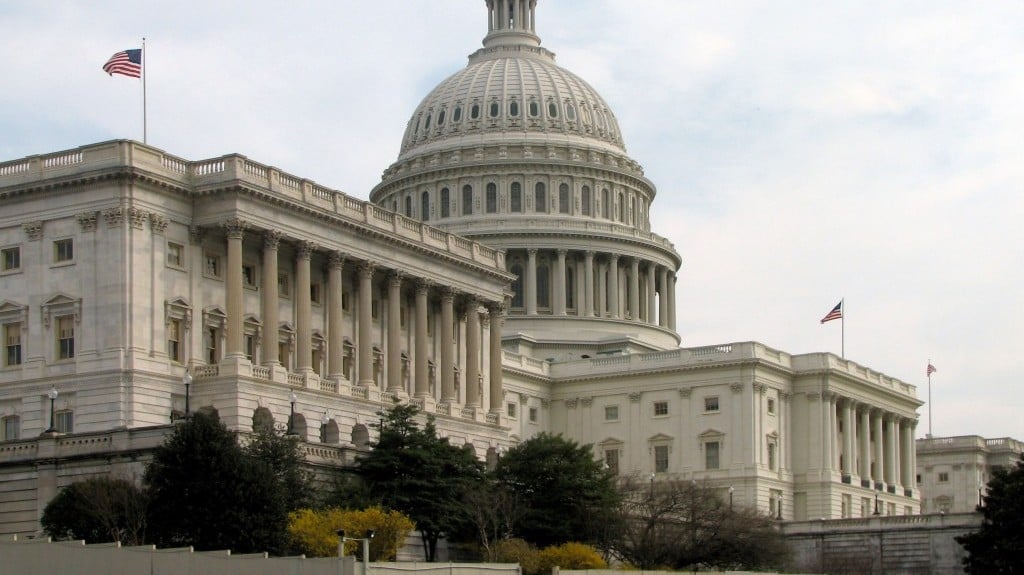
Intent on weakening Iran economically, the Senate on Monday approved tough new penalties on the Tehran regime to thwart its nuclear ambitions.
By voice vote, the Senate backed the measure ahead of talks between leading nations and Iran in Baghdad on Wednesday. The bill would target Iran’s Revolutionary Guard Corps, require companies that trade on the US stock exchange to disclose any Iran-related business to the Securities and Exchange Commission and would expand penalties for energy and uranium mining joint ventures with Tehran.
The bill also would deny visas and freeze assets on individuals and companies that supply Iran with technology that could be used to crack down on its citizens, such as tear gas, rubber bullets and surveillance equipment.
Both the Obama administration and the international community have imposed tough sanctions on Iran over its nuclear development program, which Iran maintains is for peaceful purposes only.
“Any comprehensive policy that seeks to end Iran’s effort to acquire a nuclear weapon needs to convince the rulers in Tehran that their survival is in question,” Republican Senate Minority Leader Mitch McConnell said in a statement. “While sanctions are one part of convincing the Supreme Leader that the costs of pursuing this weapon outweigh any perceived benefit, Senate Republicans insisted that the Senate pass nothing less than the president’s commitment that all options are on the table, in order to prevent any contrary perception that silence on the use of force would have created.”
Democratic Sen. Bob Menendez, a leading proponent of tough penalties on Iran, said the legislation sends a clear message to Tehran in advance of the talks: “Provide a real and verifiable plan for the complete dismantling of your nuclear weapons program, or Washington will further tighten the economic noose.”
Republican Sen. Mark Kirk said, “Today the US Senate put Iranian leaders on notice that they must halt all uranium enrichment activities or face another round of economic sanctions from the United States.”
Last year, the Senate voted 100-0 for a measure sponsored by Menendez and Kirk to the annual defense bill that targeted financial institutions that do business with Iran’s Central Bank. President Barack Obama signed the wide-ranging defense bill on Dec. 31.
In a rare bipartisan vote in February, the Senate Banking Committee, led by Sens. Tim Johnson, a Democrat, and Richard Shelby, a Republican, overwhelmingly approved the sanctions. Johnson and Shelby said tougher penalties were necessary to deter Tehran from pursuing a nuclear weapon.
Among the provisions of the legislation is an expansion of US sanctions to include companies involved in joint energy ventures anywhere in the world in which Tehran is a significant partner or investor. The penalties also would apply if Iran receives energy technology or information that wasn’t previously available to the government.
Penalties also would be imposed on companies involved in a joint venture with Iran in the mining, production or transportation of uranium. Individuals who agree to abandon such projects within six months would be exempt from the penalties.
The legislation would require the president to identify and designate officials, affiliates and agents of the Revolutionary Guard Corps. These individuals would be subject to sanctions and barred from the United States. Individuals or companies that engage in transactions with the Revolutionary Guard Corps, even through bartering, also would be subject to sanctions.
Penalties also would be mandatory for shippers or insurers who knowingly aid the shipment of materials that contribute to Iran’s weapons of mass destruction or terrorism-related activities.
The new version of the bill includes elements of amendments that Kirk and Menendez had proposed, including tougher sanctions against companies that engage in or back censorship in Iran.
In a letter to Senate leaders last week, the American Israel Public Affairs Committee, the powerful pro-Israel lobby, praised the bipartisan legislation and Congress for forcing “Iran’s leaders to face the choice between compliance with its international obligations and international opprobrium.”
Iranian parliament member Seyyed Hossein Naqavi Hosseini, who also serves on the Iranian National Security and Foreign Policy Committee, said Monday that “sanctions, threats and international pressure” are inconsistent with the “West’s message [of] resolving the Iranian nuclear energy issue through diplomatic channels.”
Hosseini insisted that the P5+1 nations, which will begin a second round of negotiations with Iran in Baghdad on Wednesday, “prove their good will in the first step by limiting [anti-Iran] sanctions and by lifting some of them.” The Majlis official news agency quoted Hosseini as saying that only after the West does so will Iran be “be ready to take the next step.”
Regarding discussions between IAEA chief Yukiya Amano and Iranian officials, Hosseini said, “Amano’s presence in Iran will certainly lead to a common understanding of Iran’s nuclear activities.”





The Times of Israel Community.