

US, UK officials: No specific terror threat behind laptop ban
Travelers grumble over restrictions on some Middle East flights, as Washington source says jihadists aggressively pursuing new tactics
 Add ToI as a Preferred Source on Google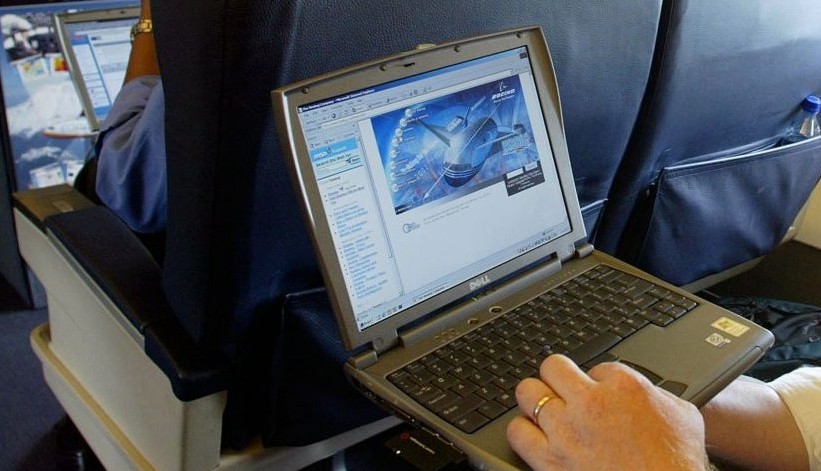
WASHINGTON (AP) — US and British officials said Tuesday the decision to bar laptops and tablets from the cabins of some international flights wasn’t based on any specific threat but on longstanding concerns about terrorists targeting jetliners.
Unimpressed, some travelers and civil liberties groups denounced the ban, raising concerns that included lost worktime on long flights and worries that checking laptops in baggage will make them more vulnerable to theft.
Under the new bans, electronic devices larger than smartphones, such as laptops, tablets and gaming devices, will have to be checked on some international flights. American officials announced the US ban early Tuesday, and the British followed later in the day after discussions between the countries.
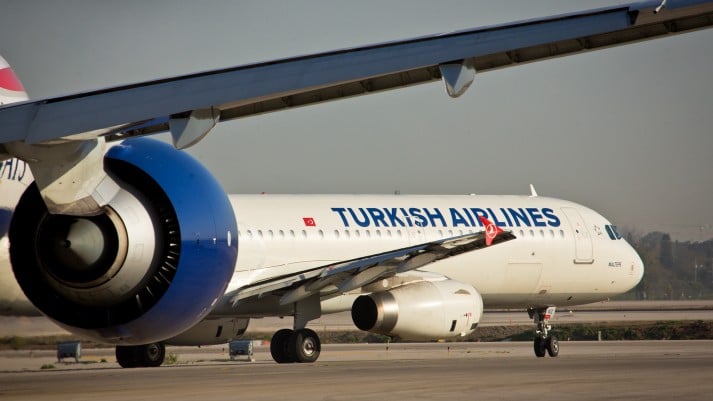
The US ban affects flights from Amman, Jordan; Kuwait City, Kuwait; Cairo; Istanbul; Jeddah and Riyadh, Saudi Arabia; Casablanca, Morocco; Doha, Qatar, and Dubai and Abu Dhabi in the United Arab Emirates. About 50 flights a day, all on foreign carriers, will be affected. Senior Trump administration officials who briefed reporters about the ban said no US-based airlines have nonstop flights from those cities to the US.
The British security rules will apply to flights from Turkey, Lebanon, Jordan, Egypt, Tunisia and Saudi Arabia.
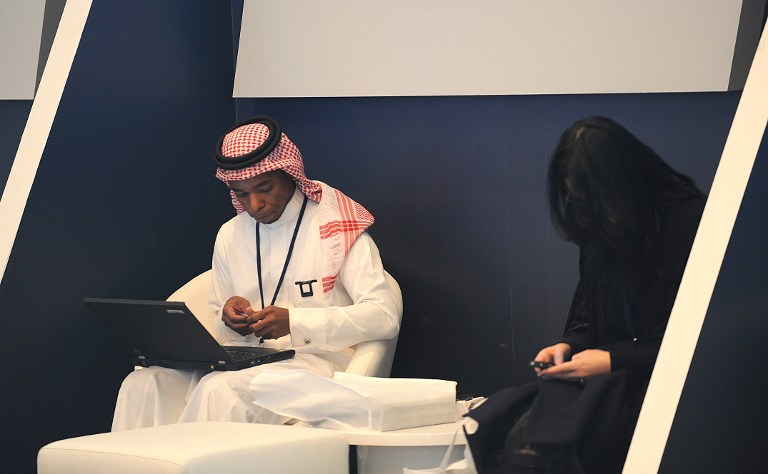
A US government official said the ban was not prompted by any new or specific threat uncovered in recent days, but rather was based on awareness of continuing terrorist desires to target commercial aircraft. Terrorists are aggressively pursuing new methods to conduct attacks, including smuggling explosives in consumer items, the official said.
That official spoke on the condition of anonymity because the official was not authorized to discuss internal government security discussions.
The administration officials who spoke to reporters earlier said the security change was the result of “evaluated intelligence.” They noted that an explosion aboard a Daallo Airlines flight in Somalia last year was believed to have been the result of a laptop-borne bomb. That explosion killed only the suspected bomber.
A British security official also said there have not been, to that official’s knowledge, recent European-directed plots involving such explosive devices. The official spoke on the condition of anonymity because the official was not authorized to speak publicly about ongoing intelligence operations.
Bennet Waters, principal at the Chertoff Group, a Washington consulting firm, and a former senior official at the Homeland Security Department, said Tuesday that threats to commercial aircraft have been evolving since before the September 11, 2001, terrorist attacks.
He said when he was in the government, the threat to aircraft was “very clear, very consistent and it was very persistent.”
The new US and British rules for electronics appear to address an evolving threat. The targeted airports are in a region where the terror threat has been elevated for several years.
The 10 airports singled out by the US may have been selected because screening equipment and procedures for carry-on luggage may not be effective enough to detect certain types of non-metallic explosive devices. Waters said screening of checked bags is often more intensive.
Travelers expressed concerns that the new requirements would curb their efforts to work on long flights and subject their costly electronics to damage or theft.
Banu Akdenizli, an associate professor of communications at the Doha, Qatar, campus of Northwestern University, said she is scheduled to fly to the US in early April for a conference, where she will be a speaker and moderator, in Greensboro, North Carolina. The Turkish native said traveling 17 hours without her laptop will cost her precious time to work and prepare for the conference. She said she’s also worried her computer could be stolen.
“There are massive amounts of data on my computer,” Akdenizli said.
Others expressed doubt about the motives behind the electronics ban.
“Given the track record for truthfulness by the Trump administration thus far, I am very doubtful of the underlying claims this policy is based on,” said Morgan Sparks, an American fisheries ecologist currently living in Tbilisi, Georgia, who plans to travel to the US in mid-April on a flight connecting in Doha.
The US rules took effect Tuesday, though airlines will have until 3 a.m. EDT Saturday to implement them or face being barred from flying to the United States, the Trump administration officials said. The officials briefed reporters on the condition they not be identified publicly, despite President Donald Trump’s repeated insistence that anonymous sources should not be trusted.
British officials said there is no specific time frame to implement Britain’s new rules and airlines are deciding that question.
Each week, about 94,000 passengers on some 333 flights arrive in the US on trips that will be affected by the device ban, according to the most recent Department of Transportation data. About 36 percent of those affected passengers come from Dubai.
With the order affecting flights from predominantly Muslim nations, the US ban may invite comparisons to Trump’s orders barring travel from several Muslim-majority-nations, which have been blocked by courts. Early in his candidacy, Trump called on barring Muslims from entering the United States.
But the comparison has its limits. The travel ban was more severe, separating families and barring students from studying in the US. The laptop ban is more of an inconvenience, and its stated reason is to protect the travelers who are affected by it. Still, it’s bound to annoy powerful business people and diplomats, and could affect the travel plans of wealthy tourists sought after by the US travel industry.
The American Civil Liberties Union, which has fought Trump’s travel order in federal court, suggested the new ban was simply another way to target Muslim travelers to the United States.
Copyright 2017 The Associated Press.




The Times of Israel Community.