

Without fence, thousands of jihadists would flood in from Sinai, PM says
Netanyahu defends policies in south, heckled by protesters at Negev conference
 Add ToI as a Preferred Source on Google
Tamar Pileggi is a breaking news editor at The Times of Israel.
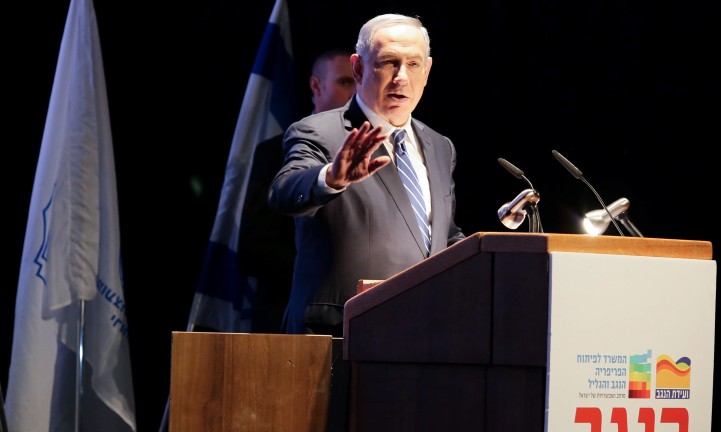
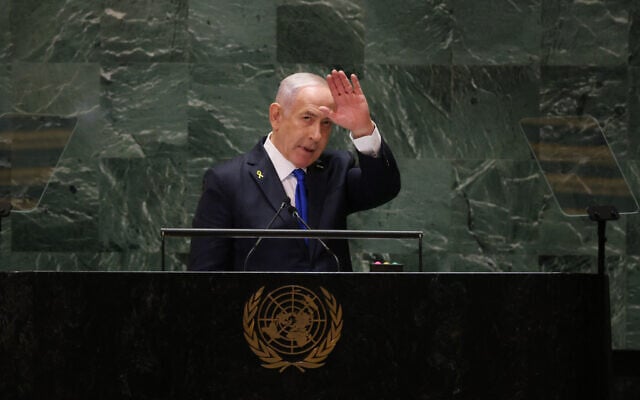
Prime Minister Benjamin Netanyahu defended Israel’s policies in southern Israel as helping keep jihadists and migrants from flooding the country, while sparring with a group of hecklers at a conference Tuesday.
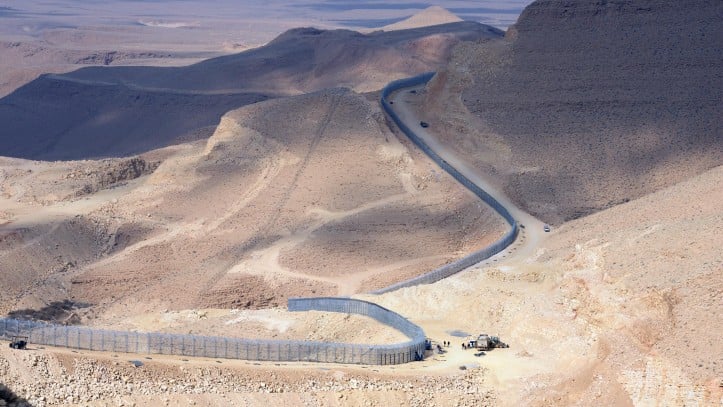
Netanyahu touted a recently upgraded security fence along the Egyptian border as the only thing keeping thousands of Islamic State fighters and more African job-seekers out of the country.
“I ask you to imagine what would be happening here if it wasn’t built — we would be inundated with thousands of Daesh fighters and hundreds of thousands of illegal migrant workers from Africa,” he said in the southern town of Yeruham, at the 7th annual Negev, Galilee and Periphery Development conference.
The prime minister has repeatedly pointed to the 400-kilometer (245 mile) fence, completed in 2014, as a keystone of Israel’s security infrastructure in the south.
Late last year, Netanyahu announced the country would build a similar fence along the Jordanian border in the Negev, saying Israel was surrounded by “beasts,” likely referring to Islamist elements.
The five-meter-high barbed wire fence along the Egyptian border was originally planned as a means to curb the growing number of African migrants and refugees from entering Israel via Egypt’s Sinai Peninsula. In the wake of the 2011 Egyptian revolution, which resulted in an upsurge in jihadist terror activities across the border, Israel upgraded the NIS 1.6 billion ($400 million) steel barrier to include cameras, radar and motion detectors.
In his remarks at the Tuesday conference, Netanyahu also spoke of the urgent need to help develop the Negev’s economy, and hailed the benefits that increased private investment would bring to the sparsely populated region often considered a neglected economic backwater.
“My vision is to enable the Negev to become economically independent, allowing it to stand on its own. After decades of lip service about how we need to develop the area, we are now embarking on a real revolution,” he said.
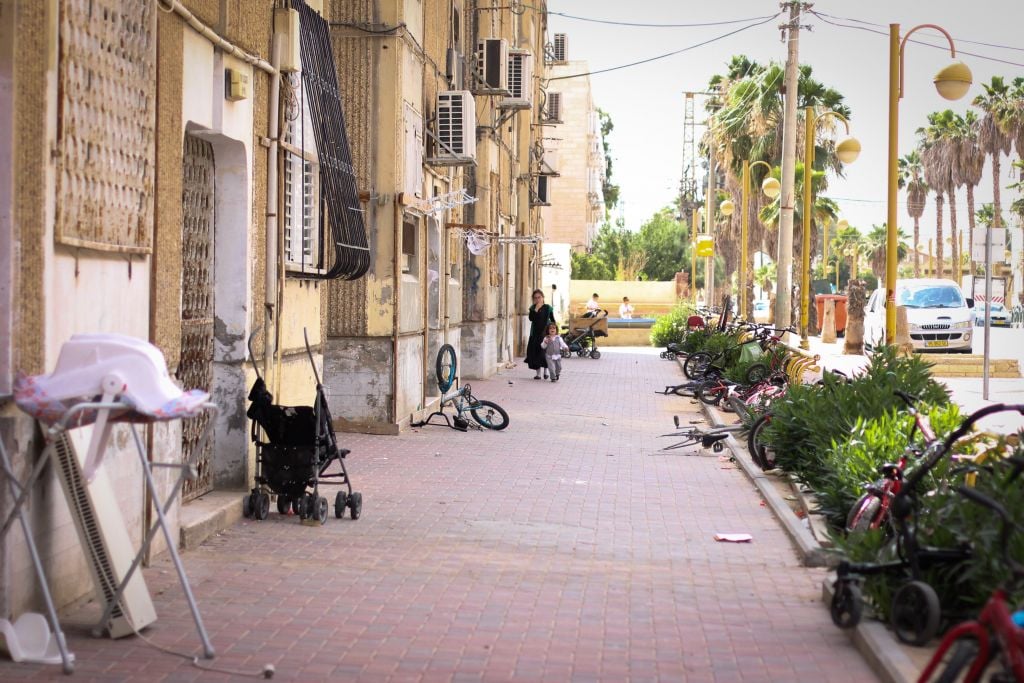
In 2006, the Development of the Negev and Galilee Ministry was inaugurated, announcing a large-scale plan to construct new communities and bring 250,000 new Jewish residents to the area.
Local environmental organizations like Green Course have expressed concern that the creation of isolated suburban communities in the Negev would lead to water- and energy-intensive suburban sprawl and strain relations between Jews and the local Bedouins.
Halfway through his speech, Netanyahu was heckled by Green Course activists charging the government’s development initiatives would only benefit a small number of relatively well-off residents in a region with high poverty rates.
“Why is there no money for Yeruham? Because in Yeruham there’s unemployment, and the government builds new towns instead of providing employment opportunities in existing cities,” shouted Ben-Gurion University student Shahaf Avital before he was swiftly removed from the venue by security guards.
Unfazed, Netanyahu continued with his address.
“This is what happens when reality gets distorted,” he said firing back at Avital’s outburst. “Nothing these young people are saying will materialize without an engine to drive it forward.”
“How do they think that jobs are created? Do they think the government has a money tree that grows infinite amounts of money on it?” Netanyahu said.
“You have to lay the foundations for a strong economy,” he said. “Some of the most advanced companies in the world have operations in the Negev. How did that happen?”
Netanyahu went on to say that both Jews and Arabs stood to benefit from greater investment in the Negev. “I call on the Bedouin citizens: we must come to some understanding that is honest for both of us. In any agreement there is give and take. There is an opportunity to do this. We are obligated to find a solution, just as you are.”





The Times of Israel Community.