

Death and taxes
Israel is troubled by the proposition of a widening conflict in Syria, and by tax hikes that are right around the bend
 Add ToI as a Preferred Source on Google
Ilan Ben Zion is an AFP reporter and a former news editor at The Times of Israel.
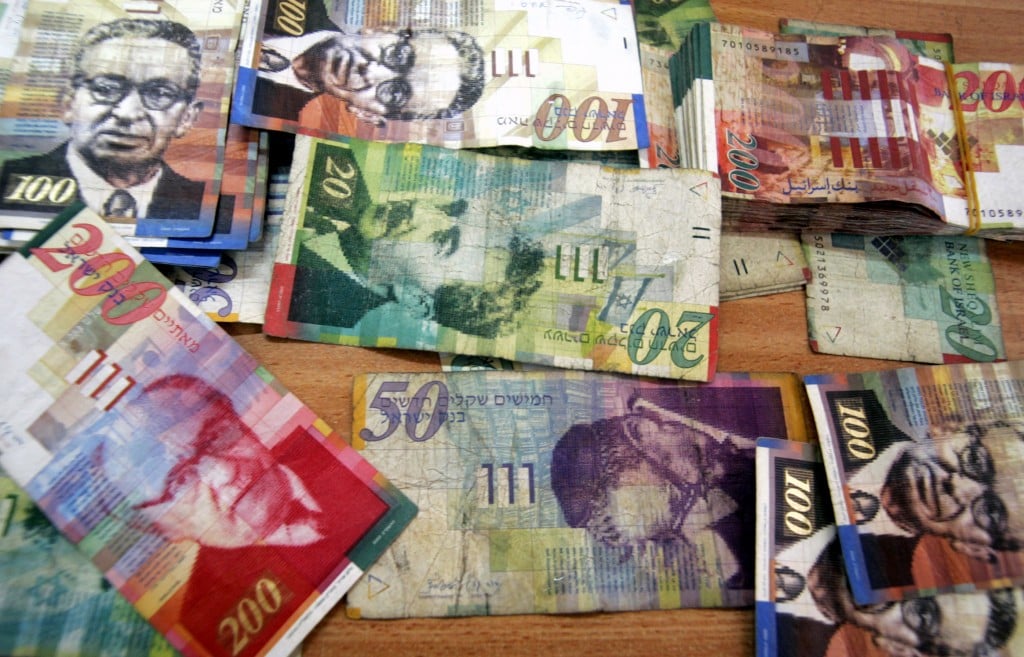
Nothing in this world can be certain, Benjamin Franklin said, “except death and taxes.” Tuesday’s front pages lived up to the American founding father’s expectations, with a major tax hike announced by the government and Syria being rent asunder.
Taxes
Maariv, Yedioth Ahronoth, and Israel Hayom lead with the planned tax hikes scheduled to take effect as early as next week. “The global economic crisis comes to Israel,” Maariv writes. Israel Hayom tries to give it a populist silver lining: “VAT will go up by 1%” but adds “the rich will pay more taxes.”
It quotes the opposition saying, “This will certainly kill the middle class.”
According to Maariv, Value Added Tax will rise from 16% to 17%, income tax on those who earn more than NIS 1 million per year will rise 2%, and taxes on cigarettes, alcohol, gasoline, and electronics will go up. Government offices — specifically welfare programs — will lose NIS 800 million in funding.
Israel Hayom says it’s either-or: either raising the VAT to 17% or more taxes on alcohol and gasoline, and in either case there will be a 5% slash in financing for government offices: a total savings of approximately NIS 2.7 billion. It mentions that the Defense Ministry budget will be cut by NIS 700 million.
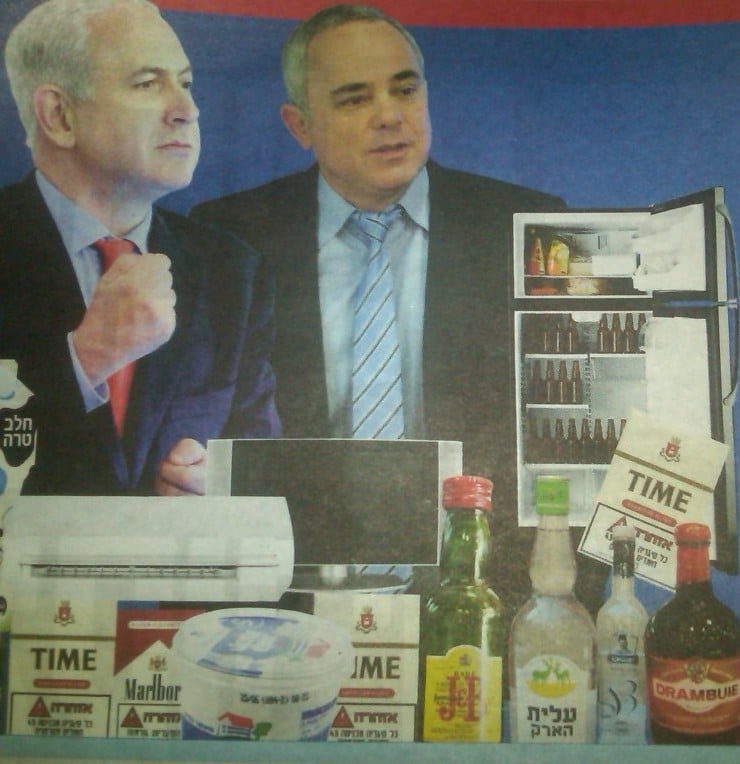
Yedioth Ahronoth puts things into perspective for the common folk such as myself. See that fridge full of beer, those tempting bottles of liquor, packs of cigarettes, dairy products, and shiny new electronics? “That guy is about to pound his tax-fist into them so you can’t have them,” Yedioth Ahronoth’s graphic seems to say.
To learn more about the effects of the tax increases, Yedioth Ahronoth also interviewed a panel of experts: a smoker, a convenience store clerk, a taxi driver, and a liquor store manager. Their assessment: taxes bad.
Haaretz’s Nehemia Shtrasler takes the opportunity to poke fun at Prime Minister Benjamin Netanyahu for saying that “there’s no such thing as a free lunch.” Netanyahu offered us Churchillian prose akin to “blood, toil, tears and sweat” [note: Shtrasler misquotes the Last Lion], and yet Netanyahu landed us in this financial mess to begin with.
Netanyahu and Finance Minister Yuval Steinitz “signed postdated checks for years in the distant future, in the hope they wouldn’t come. Unfortunately for them, the postdated checks came up for payment now, in an election year,” Shtrasler writes.
In Israel Hayom, Hezi Shternlicht warns those complaining about paying more taxes that “if we increase the deficit a little more in order to finance the spend-a-thon, we’ll end up like Greece or Spain” but without a Eurozone to bail us out.
Shternlicht asserts that if Israel follows the 2012 social justice protest school of thought, which he terms “radical and socialist,” “our economy would go up in flames.”
“Want social justice?” he says. “Pay up.”
Death
Haaretz leads with Syria and Lt. Gen. Benny Gantz’s prediction that a strike on Syria’s chemical weapons arsenal could trigger a broader conflict. He offered the Knesset’s Foreign Affairs and Security Committee words of advice: “Take into account what remains after we act.”
Zvi Bar’el writes in Haaretz that “the IDF might be hoping that Hezbollah fires the first Katyusha so it can hit the Shi’ite group with a “once and for all” blow.” The greater concern, however, is “that Hezbollah will obtain chemical or other weapons and take steps to use them against Israel.”
“Will Iran, which is no longer sure Assad will remain in power, want its outpost in Lebanon destroyed or will it tell Nasrallah to maintain his deterrence and, as a future strategic asset, his ability to threaten the Lebanese government?” Bar’el asks. He concludes that there is no sense attributing logic or reason to either Iran or Hezbollah.
Maariv reports that requests by Israeli citizens for chemical weapons protection — i.e., gas masks — has spiked 70% since the beginning of the week following news reports of chemical weapons in Syria.
Yedioth Ahronoth reports that the Russian government fears the death of the Assad regime and has begun pulling military advisers and intelligence equipment out of Syria.
Israel Hayom columnist Yoav Limor writes that “Israel has absolutely no interest in war with Syria — definitely not a war which would likely strengthen [Syrian President Bashar] Assad and extend his rule — and therefore the relevant option at the moment is a targeted operation.”
“A strike by a single squadron which can be flown in under the radar wouldn’t draw a reaction from the other side,” he posits.





The Times of Israel Community.