

In terror-struck southern Jerusalem, few venture out
A walk through Armon Hanatziv, 24 hours after two Israelis were killed on a bus, reveals a neighborhood on edge
 Add ToI as a Preferred Source on Google
Jessica Steinberg, The Times of Israel's culture and lifestyles editor, covers the Sabra scene from south to north and back to the center
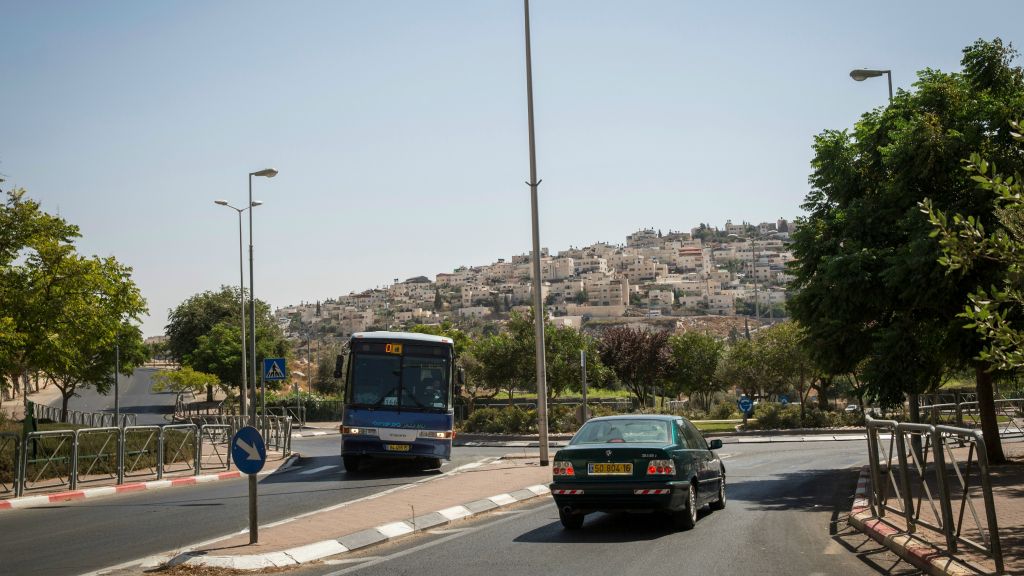
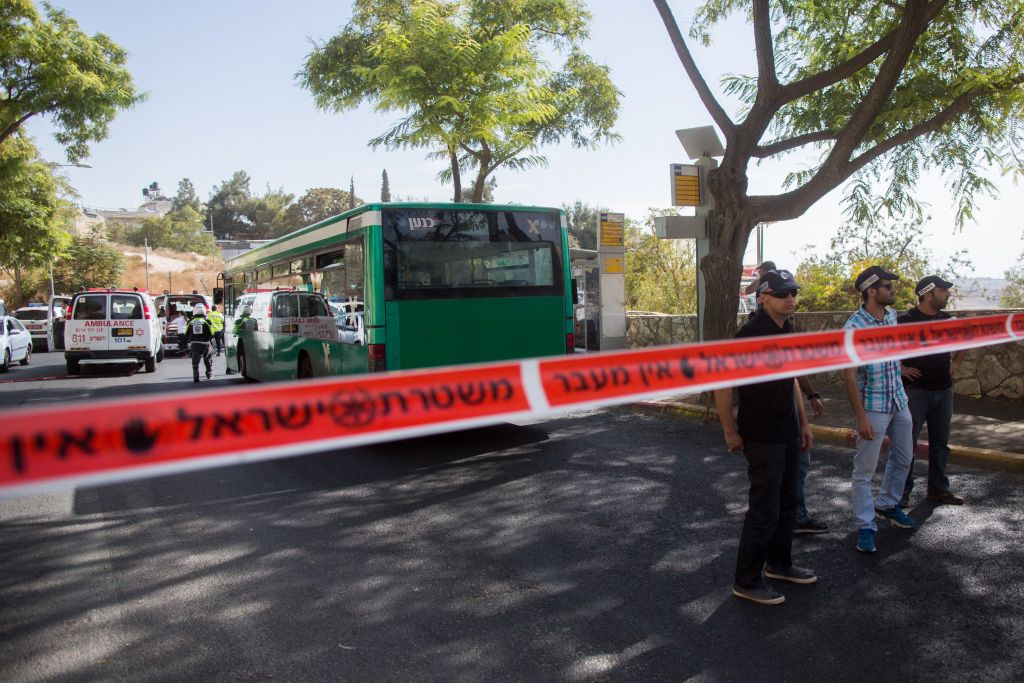
It was 9:53 on Wednesday morning, approximately the same hour when, a day earlier, two attackers boarded the 78 bus on Olei Hagardom Street, a main thoroughfare in the southern Jerusalem neighborhood of Armon Hanatziv, and shot and stabbed some 15 people before they were shot and subdued by police. Two Israelis were killed in the attack.
The bus stop where Tuesday’s attack took place was empty, though up the street at other stops, a small crowd of passengers stood waiting quietly for the number 12 and number 78 buses, routes that weave through the neighborhood, which borders two Arab villages, Jabel Mukaber and Tsur Baher.
“It’s stressful, but there’s not much I can do about taking the bus,” said Yehoshua Yam, who lives in Katamon but still has his account at the Bank Hapoalim branch in Armon Hanatziv, where he used to live.
Ditto for Ilya Shapiro, an older, Russian-speaking man with poor Hebrew, who lifted his hands and shrugged his shoulders when asked if he’d rather not be taking the 78 bus this morning.
“How can I feel?” he asked. “You need to do what you need to do, and live your life regularly.”
That was the general reaction from most of the few pedestrians and shoppers who ventured out to the neighborhood’s small shopping complex on Wednesday morning.
“I feel stressed and somewhat scared, but I have errands to do,” said Yossi Levy, 65, who was on his way to buy a lottery card. “That’s how it is around here.”
With the bank at its center, a strip of stores including a small supermarket and a post office, and a stationery store nearby, the shopping complex is usually busy on weekday mornings, and parking spots are hard to find. It’s located across the street from the local community center, where kids and adults attend afternoon and evening activities.
But parking was readily available on Wednesday, and when a middle-aged man hurried out of the bank, clutching his car keys and speaking in Arabic on his cellphone, more than one person quickly moved away and eyed him suspiciously.
“You can’t be too careful right now,” said Levy. “That’s how we’re all feeling.”
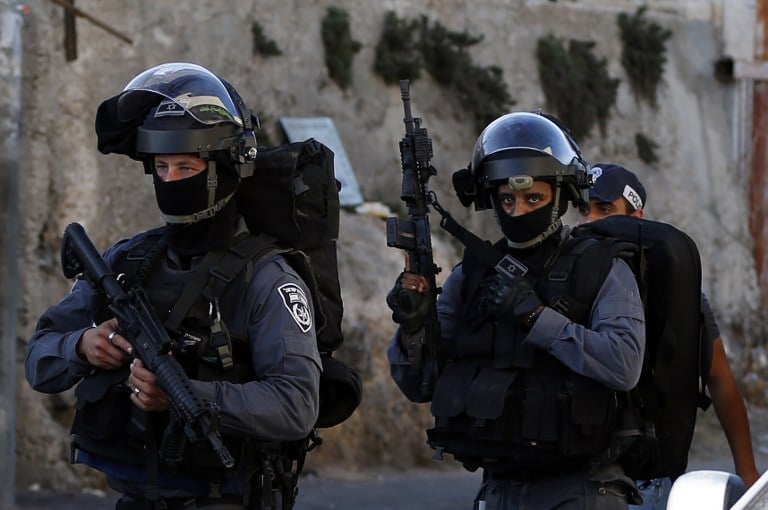
There was a security guard in front of the bank, and several police commandos milling around the complex, their dark pants, shirts and hats identifying them as members of the elite Yamam patrol unit that travels on motorbikes and often handles riots during periods of unrest.
Down the road, where the entrance to the village of Jabel Mukaber hits Olei Hagardom Street, a number of Border Police vans and officers had sealed off the village. One police officer said they had done the same at two other spots in the village that exit into Armon Hanatziv.
Still, some people were taking their own precautions. Mor Selecter and Aviya Moshe, two university students who recently moved to Jerusalem from Yokne’am and Rishon Lezion, respectively, and live in nearby Talpiot, were waiting for the 12 bus along with Yam and Shapiro. Both had had doctor appointments at the health clinic located down the block, just across the street from the bus stop where Tuesday’s attack took place.
“I wasn’t going to cancel my appointment, but I couldn’t wait for the bus at that stop,” said Moshe. “My parents want me to just stay home and not go out at all. But you can’t stop your life.”
She did, however, buy pepper spray a few days ago. Selecter said she tried to as well, but the store was sold out.
“I have it in my pocket all the time, with my hand on the trigger,” said Moshe.
There were fewer pedestrians farther down the block, closer to the entrance of Jabel Mukaber, and many bus stops on the 78 route were empty, creating the sense that people were avoiding the bus entirely. According to Yossi, a taxi dispatcher, cab drivers have been busy driving passengers “all over the city.”
“No one wants to get on a bus,” he said.
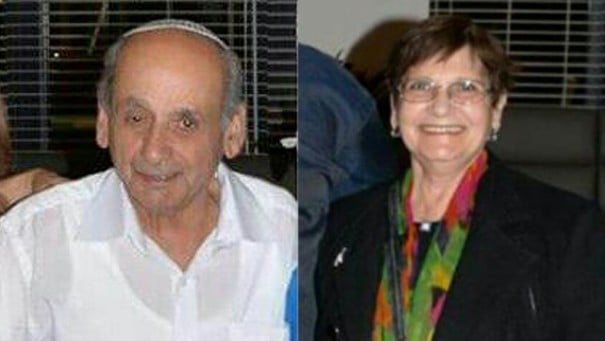
As one of the empty 78 buses made its way out of the Armon Hanatziv neighborhood, it passed the Elkahi Street home of Haim Haviv, 78, one of the two Israelis killed in the bus attack. The fence in front of the house was covered with white mourning notices. His wife, Shoshana Haviv, is hospitalized in serious condition.
From Armon Hanatziv the bus made its way through part of Arnona before turning left onto Hebron Road. One street away, on Bethlehem Road, sidewalks were emptier than usual for a weekday morning, but cafe tables weren’t all deserted, particularly at the Grand Cafe, where an armed guard sat on the sidewalk.
The presence of the guard, dressed in a dark, navy-blue T-shirt that showed off his muscled upper arms, and with a dark blue cap on his head, made customers feel more comfortable, said David, who was sitting at one of the small round tables on the sidewalk outside the cafe.
“I wasn’t planning on sitting down for my coffee,” he said. “I figured I’d rather be in my car. But when I saw the guard, I figured I could take the chance.”







The Times of Israel Community.