

Saudis shudder over Boston report
Iraqi PM taken to task for security mayhem and Mubarak’s smile irks Arab columnists
 Add ToI as a Preferred Source on Google
Elhanan Miller is the former Arab affairs reporter for The Times of Israel
The explosion at the Boston Marathon leads the headlines of Arab media on Tuesday, alongside reports on a series of explosions across Iraq.
“Casualties in explosions before ‘the finish line’ at the Boston marathon,” reads the headline of London-based daily Al-Hayat, which features a video grab image of the moment of the explosion.
“Two explosions shake Boston and security alert in New York and Washington,” reads the main headline of Saudi-owned daily A-Sharq Al-Awsat.
Qatari news channel Al-Jazeera leads its coverage of the event with the statement of US President Barack Obama to bring the perpetrators to justice.
Although most media outlets avoid the Arab angle and focus on a factual description of events, largely based on news agencies and American media, Dubai-based news channel Al-Arabiya interviews a Saudi student in Boston who reports that “100,000 Saudis in the US shuddered” as they read the news in The New York Post that a Saudi man was being interrogated on suspicion of involvement in the blast.
The channel reports that the initial depiction of the Saudi’s investigation was erroneous; the young man himself was injured and “if he were involved he would not have remained at the site of the blast, and if he were a suicide bomber he would have perished in it,” Saudi ex-pats commented.
Al-Arabiya reports the severe injury of another Saudi researcher on scholarship at Tufts university, Dr. Noura Al-Ajaji.
Meanwhile, in Baghdad…
A series of seven explosions across Iraq on Monday left 37 people dead and more than 270 injured, Al-Jazeera reports. The channel says that no less than 21 car bombs were used in the attacks which took place in 6 provinces, including Baghdad.
The attacks come just days before regional elections take place in Iraq, considered a “test of political stability in the country following the withdrawal of American forces,” Al-Jazeera reports.
The Iraq attacks, it would seem, cannot be detached from the highly tense political context.
A-Sharq Al-Awsat columnist Abdul Rahman Rashed opines that Prime Minister Nuri Al-Maliki is violently crushing his opponents in the more liberal, Sunni-oriented Iraqiya bloc.
“We watch the image of Iraq’s dictator grow in a frighting manner. Prime Minister Nuri Al-Maliki does not hesitate to use all means to remain in power, even in local provincial elections. The means of exclusion are varied: security investigators, courts, and state institutions. All this, in order to eliminate his rivals using the pretexts of terrorism, security and corruption.”
Meanwhile, Maliki’s primary Shiite opponent is also calling for his resignation. Muqtada Sadr criticized Maliki in a press statement Monday published by Saudi news website Elaph, claiming that the prime minister is busy with election propaganda while “the people are being exploded, killed, and humiliated.”
Mubarak off the hook, partially
An Egyptian court has decided to release deposed Egyptian president Hosni Mubarak from prison on charges of involvement in the killing of anti-regime protesters, after the legal two-year remand period has lapsed. But Mubarak will remain in jail while charges of corruption continue to be investigated.
“Mubarak released on ‘the mother of cases’,” reads the main headline of independent Egyptian daily Al-Masry Al-Youm on Tuesday.
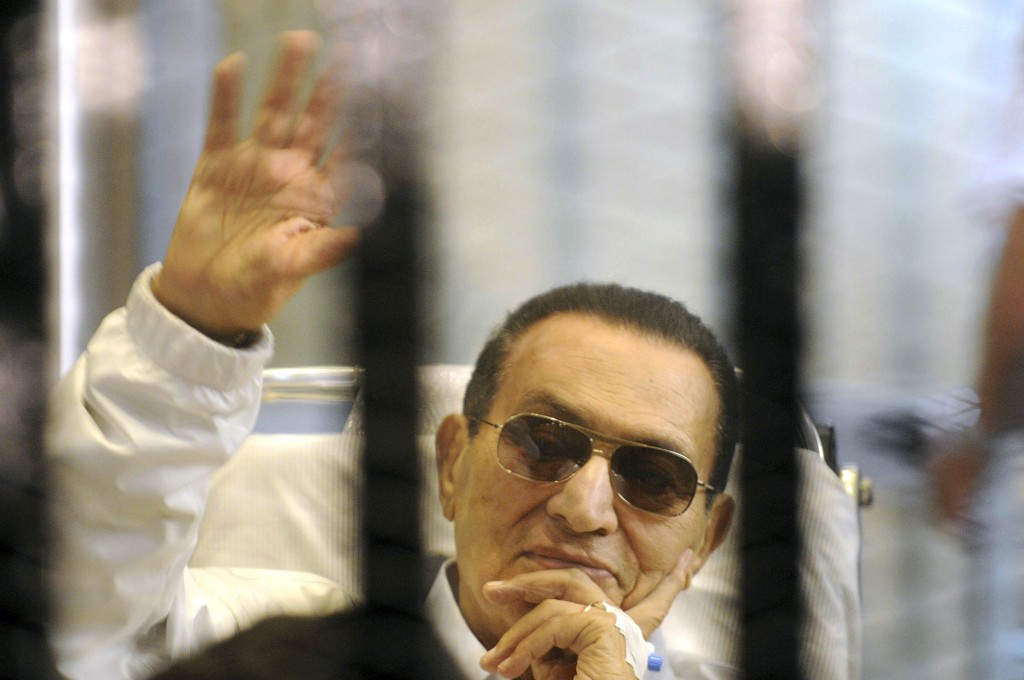
Mubarak’s smile as he appeared in court this week has managed to irk Egyptian and Arab columnists.
“Will Mubarak maintain his smile?” wonders Egyptian columnist and novelist Alaa’ Aswani.
“Mubarak considers himself a national hero. He believes that he has achieved great things for his nation, and does not sense his regime’s corruption and crimes at all, crimes which have led Egypt to the abyss in all domains. This case of self-deception has repeated itself throughout history with all dictators,” writes Aswani.
For Abdel Bari Atwan, editor-in-chief of London-based daily Al-Quds Al-Arabi, Mubarak’s self-confidence indicates the precarious situation of the Egyptian revolution.
“Those who witnessed the pompous deposed president Hosni Mubarak, greeting his supporters from behind bars — supporters who were more numerous and vociferous than the families of the martyrs for the first time since the start of the trials — were aware of the huge gap in perception of this man. At the same time, they realize the extent of change which occurred in the country and the general mood of the people, two years after the start of the revolution.”





The Times of Israel Community.