

Treasurer bars self from resolving gas field monopoly
Moshe Kahlon cites friendship with Tamar rig part-owner, draws flak for earlier electioneering vows to deal with issue
 Add ToI as a Preferred Source on Google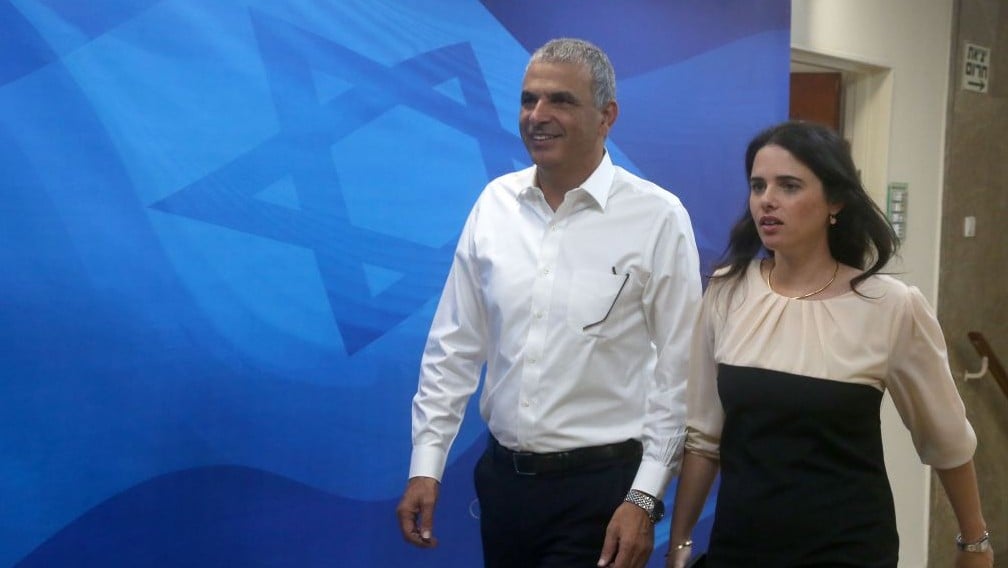
Finance Minister Moshe Kahlon declared on Tuesday that he had disqualified himself from dealing with regulating Israel’s offshore gas fields because of his personal friendship with one of the owners of the Tamar field — despite having in the past claimed the relationship was not significant.
Kahlon notified Prime Minister Benjamin Netanyahu that he will not take a hand in the breakup of a monopoly of companies that control the offshore fields due to his closeness to businessman Koby Maimon.
The minister’s announcement came a day after Antitrust Authority Commissioner David Gilo announced his resignation amid an ongoing dispute over opening Israel’s natural gas market to increased competition.
Gilo, who had late last year threatened to declare the partnership a cartel, said Monday that preserving the stranglehold of Noble and Delek on the natural gas market “undermines competition.”
Kahlon, prior to the March 17 general election, had pledged to “dismantle the monopoly,” saying his friendship with Maimon would not get in the way.
Maimon’s Isramco owns over one-quarter of Tamar.
The Finance Ministry stressed that Kahlon still “supports dismantling the gas monopoly and opening the market to competition,” while noting he had transferred his powers on the issue to Netanyahu’s office.
“With my entry into the position of finance minister, I notified the relevant people on the gas subject in a meeting last week — among them the legal adviser to the Treasury and also David Gilo — that in order to prevent an appearance of impropriety because of my long years of acquaintance [with Maimon], I decided to give the matter to the prime minister and he will decide which minister to give it to,” Kahlon said.
Hebrew media pundits quickly recalled statements Kahlon made to the contrary during interviews before the national elections in March, in which he vowed to break apart the gas field monopoly and candidly dismissed suggestions that his connection with Maimon was at all a problem.
“It doesn’t matter, it isn’t relevant,” he said at the time during a Channel 2 interview.
The developments came as Prime Minister Benjamin Netanyahu’s new government began to backpedal on a proposed plan jointly drafted earlier this year by the previous government and the authority, aimed at dismantling a potential duopoly in the Israeli gas market.
In December, Gilo ruled to void the partnership that allows its chief companies — the US-based Noble Energy and Israel’s Delek Group — to develop the Leviathan and Tamar gas sites in the Mediterranean Sea over protests regarding the price at which the companies were preparing to sell gas to the Israeli economy.
A committee led by officials from Prime Minister Benjamin Netanyahu’s office has reportedly proposed that Delek sells its shares in Tamar while Noble reduces its holdings in that field, disregarding Gilo’s position.
Netanyahu on Tuesday defended the impending gas arrangement, saying Israel would “not repeat mistakes other countries made seeking ideal solutions for their gas,” which left them undeveloped.
“We will act in accordance with a prudent consideration that balances competition and worthwhileness and extracts the gas from the depths of the sea,” Netanyahu told his cabinet.
Newly appointed Energy Minister Yuval Steinitz stressed at an energy conference on Tuesday the “urgency to reach decisions now, to enable immediate investments.”
While the revised draft would reduce Noble’s holdings in the Tamar reservoir from 36 percent to 24% within six years, and remove its veto rights in the partnership, the Texas-based company would still have the privilege of marketing gas from both reservoirs.
In 2013, Israel decided to export 40% of the country’s offshore gas finds, in an effort to transform Israel from an energy importer to a major world player in the gas market.
Critics of the emerging deal say it neither breaks up the monopoly, nor affords a mechanism to supervise gas prices to Israeli clients.
“Israel is willingly giving itself away to full control of tycoons, dismantling and humiliating its regulators, and announcing the sky is the limit for prices,” said MK Shelly Yachimovich of the opposition Labor Party.
The size of the Leviathan field is estimated at 18.9 trillion cubic feet (535 billion cubic meters, or bcm) of natural gas, along with 34.1 million barrels of condensate, making it the largest gas deposit found in the world in a decade.
The Tamar field, which holds 250 bcm of natural gas, lies 80 kilometers (43 nautical miles) west of the northern Israeli port city of Haifa.








The Times of Israel Community.