

White House toughens stance on Iran ahead of weekend talks
Echoing Israeli demands, administration calls for complete halt to local uranium enrichment
 Add ToI as a Preferred Source on Google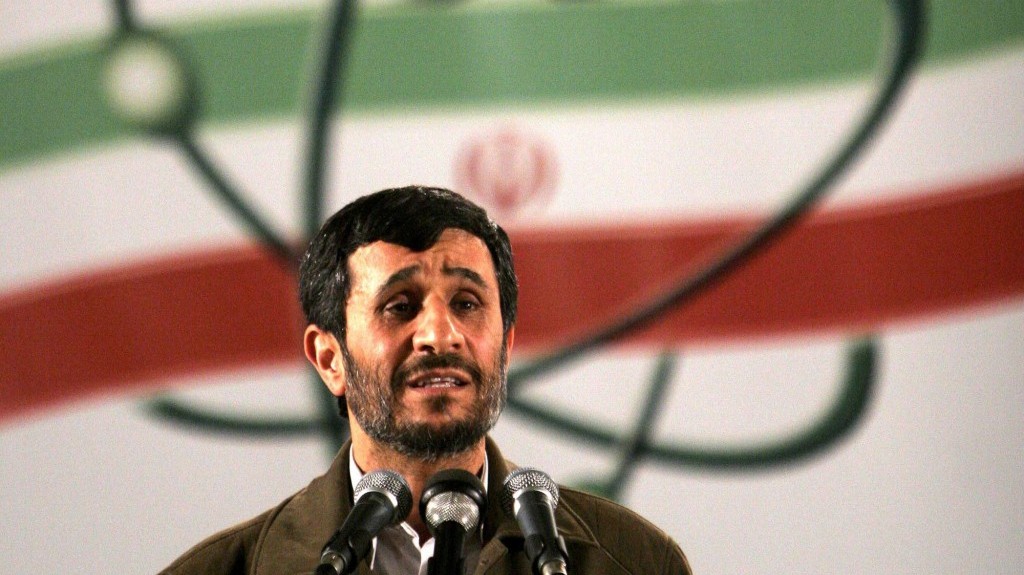
As the summit to deal with Iran’s nuclear program nears, the United States stepped up the rhetoric and called on Iran to completely halt uranium enrichment.
On April 14 Iranian officials are scheduled to meet with representatives of the P5+1 (the US, UK, France, Russia, China and Germany) in Istanbul, Turkey. White House press secretary Jay Carney said in a briefing on Monday that while the US is very hopeful that the talks will create “a conducive environment for concrete progress,” the administration is also “very clear-eyed about what Iran needs to do in order to fulfill its international obligations and be able to reassure the international community that it is not pursuing nuclear weapons.”
Carney emphasized that “the window is closing and time is not infinite” for pursuing a diplomatic solution. He further stressed that Iran must live up to its international obligations, including the full suspension of uranium enrichment, as required by multiple UN Security Council resolutions and that the world needs to see “concrete steps taken by the Iranians to assure that they will forsake their nuclear ambitions.”
Regarding Iranian President Mahmoud Ahmadinejad’s comments on Sunday that Iran is not interested in nuclear weapons, Carney said that “regardless of what the Iranians have said about what their intentions are, no one on the international stage has faith in those assurances.”
For Iran, uranium enrichment is a proud symbol of its scientific advances and technological self-sufficiency. Ahmadinejad, called the nuclear program on Sunday “a locomotive” for other showcase projects such as Iran’s space effort.
The US and its allies contend that the same sites that make fuel for reactors could also eventually churn out weapons-grade material.
The ideas put forth late Sunday by Iran’s nuclear chief, Fereidoun Abbasi, are an attempt to at least acknowledge this huge divide.
Abbasi said Tehran could eventually stop its production of the 20 percent enriched uranium needed for a research reactor, used for medical research and treatments. But, he added, Iran would continue enriching uranium to lower levels of about 3.5 percent for power generation.
The framework addresses one key Western concern. The US and others worry the higher-enriched uranium could be turned into warhead strength — more than 90 percent enriched — in a matter of months.
Yet Abbasi also directly snubbed a demand backed by the US and some other countries. They want Iran’s stockpile of 20 percent-enriched uranium to be transferred out of the country. Abbasi indicated that it would remain in Iran.
“Such a stockpile could enable Iran to make a bomb in the future, should it decide to do so,” said Meir Javedanfar, an Iranian-born political analyst now based in Israel.
“Unless an agreement is reached whereby this stockpile is transferred abroad for conversion into nuclear fuel or, at the very minimum, placed under international supervision in an another country, it will be very difficult for the (world powers) to accept Iran’s current offer,” he said.
The US and its allies have sought to press Iran to suspend uranium enrichment in exchange for receiving reactor-ready fuel from abroad. Iran has pushed back by refusing to curtail enrichment, which is permitted under the UN treaty overseeing the spread of nuclear technology.
Last week, US Secretary of State Hillary Rodham Clinton said it was up to Iran to show that its claim of rejecting nuclear weapons is “not an abstract belief but it is a government policy.”
“And that government policy can be demonstrated in a number of ways, by ending the enrichment of highly enriched uranium to 20 percent, by shipping out such highly enriched uranium out of the country, by opening up to constant inspections and verification,” she said at a conference in Istanbul to seek ways to aid opposition forces in Syria — Iran’s main Arab ally.
Clinton will not be attending Friday’s conference on Iran. The State Department’s third-ranking diplomat, Under Secretary of State for Political Affairs Wendy Sherman, will lead the US delegation. The Iranians have not yet announced whom they will be sending to Istanbul.
Abbasi also insisted that Iran will never close down its new underground enrichment facilities south of Tehran, saying it would be “illogical” for the West to raise such a demand.
It’s unclear, however, whether Abbasi was conveying a real negotiating position or simply testing the waters.
Abbasi said production of uranium enriched up to 20 percent is not part of the nation’s long-term program — beyond amounts needed for its research reactor in Tehran — and insisted that Iran “doesn’t need” to enrich beyond the 20 percent levels.
“The job is being carried out based on need,” he said. “When the need is met, we will decrease production and it is even possible to completely reverse to only 3.5 percent” enrichment levels.
Meanwhile, Foreign Minister Ali Akbar Salehi was quoted on the Iranian parliament’s website Monday as saying he hopes for some progress in the talks. But he warned that Iran would not accept preconditions — an apparent reference to last year’s impasse.
“We will honestly try to have the two sides conclude with a win-win situation in which Iran achieves its rights while removing concerns of five-plus-one group,” Salehi said, using the name often used for the five permanent Security Council members and Germany. “But imposing any conditions before the talks would be meaningless.”








The Times of Israel Community.