

2 scientists get $1m, world’s biggest alternate fuel prize
For their achievements in generating solar power and hydrogen fuel, two researchers receive a million dollar prize
 Add ToI as a Preferred Source on Google
The inventor of a low-cost solar cell that works even when the sun isn’t out and a researcher who is using artificial photosynthesis to convert solar energy into hydrogen fuel are the two winners of the $1million Eric and Sheila Samson Prize, the world’s largest award for innovation in the field of alternative fuels. The winners were announced Monday by Prime Minister Benjamin Netanyahu and Science, Technology and Space Minister Yaakov Peri.
The winners — Professor Michael Grätzel of Switzerland and Professor Thomas Meyer of the US – are well-known experts in alternative energy. They were chosen from among hundreds who submitted ideas and projects as part of the Prime Minister’s Prize for Innovation in Alternative Fuels for Transportation, a competition that began last year. The winners were selected by a committee of international experts who submitted their recommendation to a board of trustees, headed by former Technion President Professor Yitzchak Apeloig. The winnings will be split between the winners.
Grätzel, director of the photonics laboratory at the Swiss Federal Institute of Technology in Lausanne, developed and perfected the Grätzel Cell, which uses dye-sensitive particles that imitate the photosynthesis process and convert light energy into electric energy. The solar cells are very thin and do not require silicon, as other cells do – making them about half the price of other cells — and use a natural dye that, like chlorophyll in plants, converts sunlight into energy.
The dye is harvested from fruits and berries. The dye absorbs the sunlight to produce negative and positive charges, generating an electrical current. The system works even when light is at a minimum, as on cloudy days and other low-light conditions, like in the shade.

Grätzel has published more than 900 scientific articles and the winner of a plethora of prizes, including the European Prize for Innovation and Technology, the Leonardo da Vinci Prize of the European Academy of Sciences, the Millennium 2000 Prize for Technological Innovation and the Technion’s Harvey Prize. He was also selected by Scientific American magazine as one of the world’s 50 leading researchers.
Meyer is a pioneer in the area of artificial photosynthesis, in which hydrogen and oxygen are produced by splitting water into its atomic components. It’s a chemical process that seeks to replicate the photosynthesis process, with the objective of producing hydrogen, which can then be converted for use as an energy source. The hydrogen based fuel that is produced with this method is environmentally friendly, emitting only water vapor when it is burned.
While Grätzel cells have already been deployed in commercial settings, artificial photosynthesis is still an experimental area — but it’s considered to be one of the most important areas of alternative energy research, because it promises to enable ongoing production of energy from solar sources, even at night.
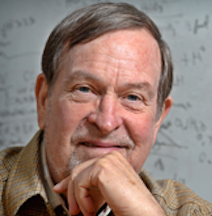
Meyer, of the University of South Carolina, is director of the UNC Energy Frontier Research Center in Solar Fuels and Next Generation Photovoltaics. He is a member of the American National Academy of Sciences and he has been awarded dozens of prizes from groups including the National Academy of Sciences, the American Chemical Society, the European Photochemical Association, the Inter-American Photochemical Society, and the Asian and Oceanian Photochemical Association.
The prize will be presented to the winners on December 3, as part of the ‘Fuel Choices Summit’, an international conference for fuel alternatives, which is being promoted by the Fuel Choices Initiative at Israel’s Prime Minister’s Office, spearheaded by Eyal Rosner and Keren Hayesod. The Summit, in its second year, will bring together government officials from around the world, international experts and senior investors. The Summit aims to create a forum for discussion of international policy in the field of alternative fuels and to position Israel as a leading center of industry and knowledge.
Commenting on the award, Netanyahu said, “We are making a major multi-year effort so that we will not be dependent on fluctuations in the price of oil. This prize gives the researchers true appreciation for their efforts.” According to Science Minister Peri, “This prize symbolizes the State of Israel’s commitment to the advancement of the field of alternative fuels, which is of utmost importance to every aspect of our lives here — to Israel’s economy, security, scientific research and society.”







The Times of Israel Community.