

At 95, Norman Lear shares secrets of how to live an applause-worthy ‘Last Act’
Co-creators Tiffany Woolf and Steve Goldbloom team up with Jewish nonprofit Reboot on video series that spotlights the wisdom of octo- and nonagenarians
 Add ToI as a Preferred Source on Google
Renee Ghert-Zand is the health reporter and a feature writer for The Times of Israel.
For those of us who grew up watching Marion Ross play perky and proper “Happy Days” matriarch Mrs. C, it’s a hoot hearing her drop an f-bomb in talking about one of her recent birthdays.
“I just had a birthday a couple of months ago, and the whole family, we all went down to the beach,” she says. “And the special cake came, and it said, ‘Eighty-fucking-eight.'”
The baker had asked Ross’s daughter if she was sure about the message on the cake, and she assured him that it was exactly what her mother wanted.
Ross’s humorous retelling of this story is part of “The Last Act,” a new growing series of short documentary videos about living life to the fullest in the twilight years. Ross, now 89, is joined by legendary television writer and producer Norman Lear in reflecting on life, love and loss as death comes closer within range.
Other episodes feature less famous individuals and couples — just average Jewish people from Los Angeles. That is, if you consider making it to your 70th wedding anniversary or becoming a bat mitzvah at 82 “average.”
Tiffany Woolf and Steve Goldbloom are the creators of “The Last Act.” They are making the first of the series’ videos in cooperation with Reboot, a nonprofit organization that explores what it means to live an inspired Jewish life in the modern age. The creators hope that the project will grow as others interview their elders and upload the clips to the series’ website. (The project includes a DIY toolkit.)
“Our idea was to create a user-supported network. We are urging people to document their elders before it’s too late. There’s a sense of urgency to it,” Goldbloom said.
Goldbloom, 34, and Woolf, 47, are many decades younger than the subjects of these interviews. Yet, they both have an abiding interest in the elderly and the wisdom they can impart from their life experience.

Goldbloom, a Canadian-born, Los Angeles-based writer, producer and actor, wrote and acted in “Remember Me,” a 2017 dark comedy feature film starring Oscar-winning actress Rita Moreno about squabbling, irresponsible cousins who find themselves suddenly responsible for their memory-challenged grandmother’s well-being.
Goldbloom has also interviewed older people for his “Brief But Spectacular” series that airs weekly on PBS and online. The series, which has garnered more than 200 million views, invites subjects to share short, yet insightful, takes on their passion in life.
Despite the fact that Goldbloom has interviewed leading authors, artists and intellectuals such as Ray Kurzweil, Anna Deavere Smith and Ta-Nehisi Coates, two of his favorite among the more than 150 “Brief But Spectacular” episodes feature individuals in their early 90s.
One is an interview with his grandfather Richard Goldbloom, who retains his wicked sense of humor but struggles with severe memory loss. The other stars Flossie Lewis, a 92-year-old woman Goldbloom met by chance in an assisted living facility while filming “Remember Me.”
“The Flossie Lewis episode was the most viewed. It doesn’t surprise me, because as I asked her about what it feels like to be in her 90s, I had that ‘Oh my God, this is amazing’ feeling rushing through me the whole time,” Goldbloom said.
“I asked her these basic questions that ended up eliciting the most profound answers,” he said. “Poetry came out of her mouth.”
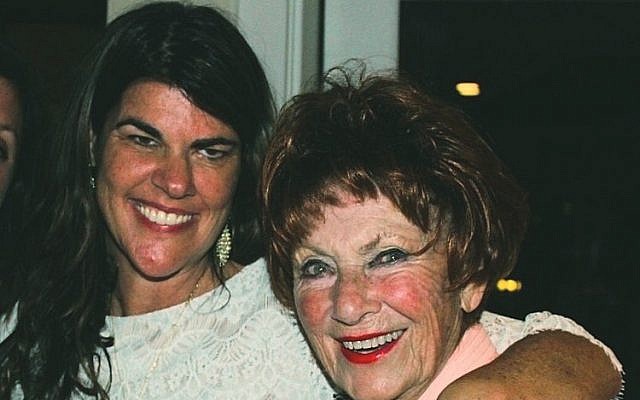
Woolf, a San Francisco-based publicist in the entertainment industry, comes to “The Last Act” from a different angle. She lost both her parents at relatively young ages and has been in search of role models that can teach her about how to grow old in the best way possible in terms of health, well-being and spirituality. She says she is fortunate to have Ross, her late mother’s best friend, in her life.
Woolf noted common threads running through all the interviews, including gratitude, self-affirmation, and an acceptance of mortality while still making the most of one’s remaining time.
“I suppose one day I will die. I don’t know… I think, perhaps because I’m such an optimist, there’s going to be the most fantastic thing that’s going to happen after you die. Not that you’d look forward to it, but what do we know?” Ross says at the end of her interview. (Unlike the other interviewees, Ross is not Jewish — though she told The Times of Israel she loved playing a Jewish woman in the “Brooklyn Bridge” TV series that ran in the early 1990s.)
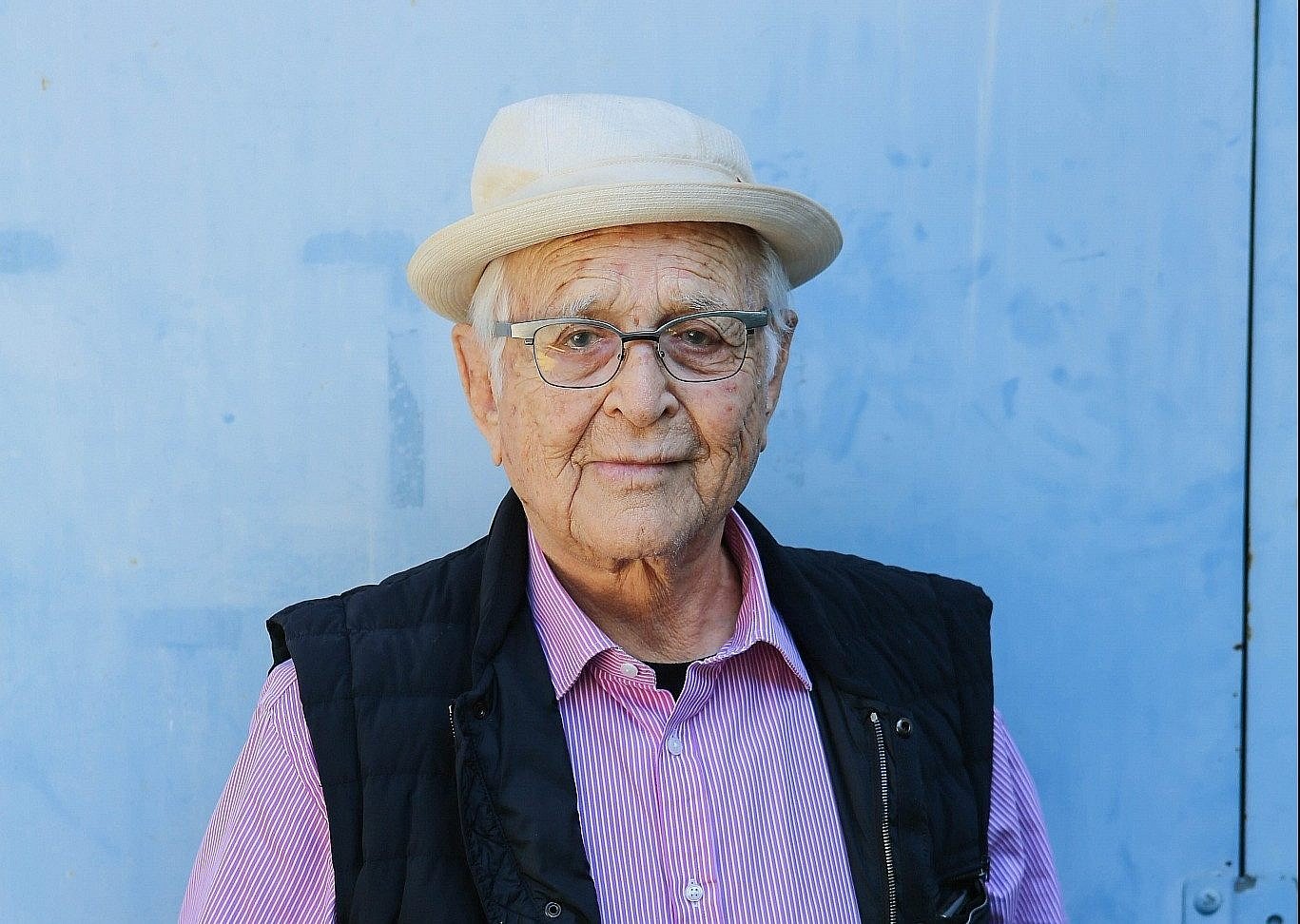
Lear, 95, compares life to a game — one in which we do not know what happens a split second after it is played out.
“I think that can be — and for me, is — exciting. I’m not looking forward to it. I want it as far away as possible. But when I think about it, it’s kind of interesting. Nobody has come back ever to tell us what has happened after that. That’s interesting, and I like interesting,” he says.
Woolf was particularly moved by something shared by Dick Gunther, who has been married to his wife Lois for more than seven decades.
“I’ve always based my life on three kinds of anchors: Service, adventure and love,” Gunther says.
Ross told The Times of Israel that society needs to get ready for more and more people living to 100, with some working into their 80s or even longer. She herself retired only two years ago at age 87, when she started having trouble remembering her lines.
“Now I can pick up the trades and read about other actors and the parts they’re getting without eating my heart out. It’s really kind of restful,” Ross said.
This, however, does not mean that the flaming red-haired Ross is sitting at home. She’s been making the rounds promoting her new memoir, “My Days: Happy and Otherwise.”
Ross can still be seen in the media (using non-PG language ), but many elderly people have told Woolf and Goldbloom that they feel invisible.
“Most people are surprised to learn that I am going to be 90. They think 90 year olds should be decrepit and old and packed away somewhere,” says sprightly Phyllis Shlecter, who still feels like she’s in her 70s.
“The Last Act” creators aim to make Phyllis and others her age their own best spokespeople.
“My impression is that those who have lived and loved have a greater acceptance. It makes sense to me that these would be the people with the least regrets — but what the hell do I know? I’m 34,” Goldbloom said.









The Times of Israel Community.