

At Sharon memorial, Netanyahu laments Gaza pullout
PM says giving Palestinians responsibility for rule in coastal enclave didn’t bring peace, but increased terror; Herzog hails ex-PM’s boldness
 Add ToI as a Preferred Source on Google
Stuart Winer is a breaking news editor at The Times of Israel.
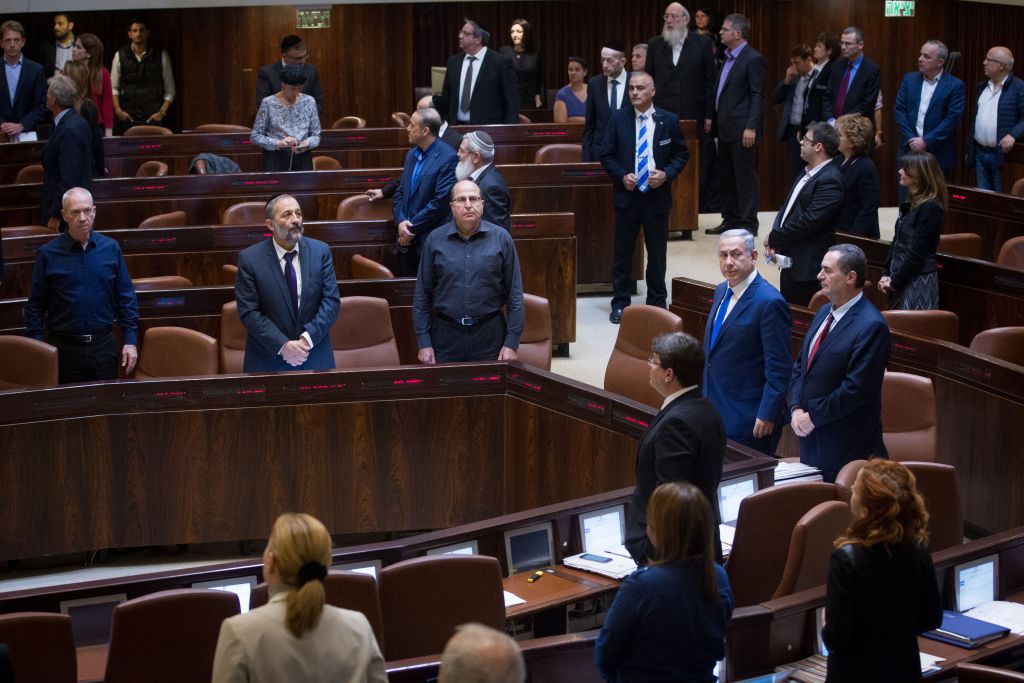
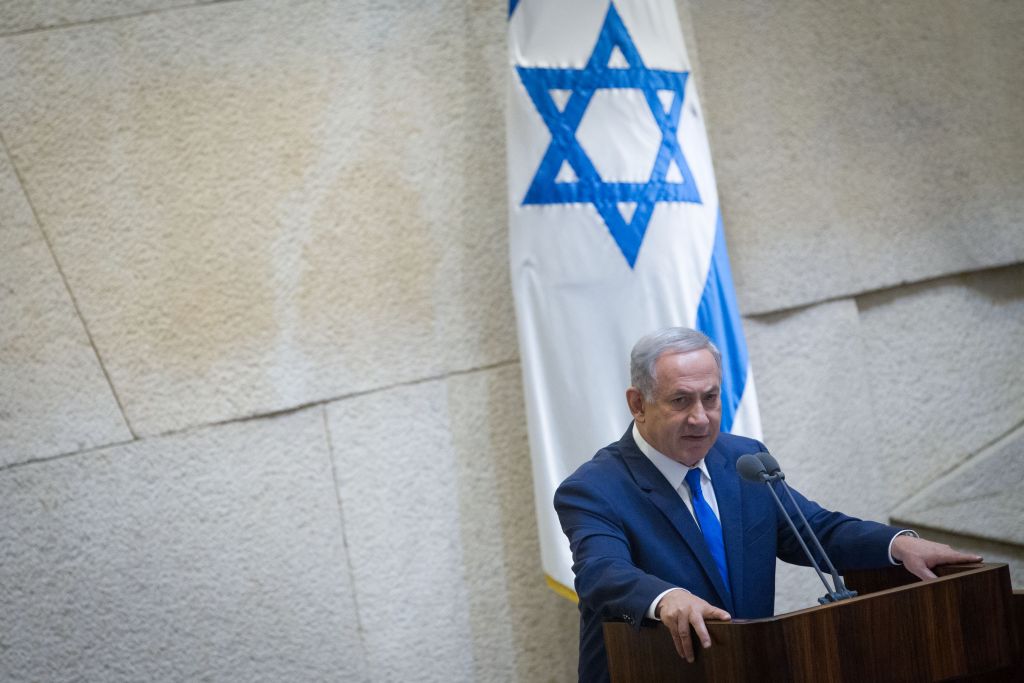
Prime Minister Benjamin Netanyahu on Monday raised his grievances over Israel’s 2005 exit from the Gaza Strip at a Knesset memorial service to mark two years since the passing of Ariel Sharon.
In 2005, Sharon was prime minister and the mastermind behind the unilateral evacuation of Jewish settlements in the coastal enclave and handing the area over to Palestinian rule.
At the ceremony, which was attended by President Reuven Rivlin and Sharon’s sons Amir and Gilad, Netanyahu recalled the late prime minister’s lasting contributions to the development of the Israel Defense Forces and the settlement movement as well as his influence on Israeli politics, but criticized the Gaza pullout as failing to bring peace.
“To my regret, transferring responsibility for rule to the Palestinians not only didn’t set us on the path to peace, it increased the arming of terror groups,” Netanyahu said.
However, the leader of the opposition, Zionist Union chairman Isaac Herzog, championed Sharon’s boldness in pushing ahead with the Gaza disengagement.
“During his last term, Sharon identified and saw the demographic threat, Herzog said. “[He] identified it, spoke out, and took action. He saw the one and half million Palestinians in Gaza increasing in number, and decided to separate from them. So that they wouldn’t be part of Israel; to preserve Israel as a Jewish state.
“I hear all those who want to annex Judah and Samaria, with the Palestinians, to Israel,” Herzog continued, using the Hebrew names for the West Bank areas. “They continue to attack Ariel Sharon over the separation from Gaza. But, it is interesting, I don’t hear even one of them say that we should return to Gaza.”

One of Israel’s greatest and most divisive figures, Sharon rose through the ranks of the Israel Defense Forces, moving into politics and overcoming scandal and controversy to become a highly popular prime minister at the time of his devastating stroke in 2006. Sharon died in January 2014 after being hospitalized in a vegetative state for eight years.
A prominent hard-line voice over the decades, he was elected prime minister in 2001.
In mid-2005, he directed a unilateral withdrawal of Israeli troops and settlers from the Gaza Strip, ending a 38-year military control of the territory. It was a shocking turnaround for a man who had been a leading player in building Jewish settlements in the West Bank and Gaza Strip.
Netanyahu resigned from Sharon’s cabinet in protest of the Gaza withdrawal.
Sharon bolted the Likud soon after and established the centrist Kadima party, where he was joined by Ehud Olmert and Tzipi Livni. He appeared on his way to an easy reelection when he suffered a severe stroke in January 2006. His deputy, Olmert, took over and was elected prime minister a few months later.
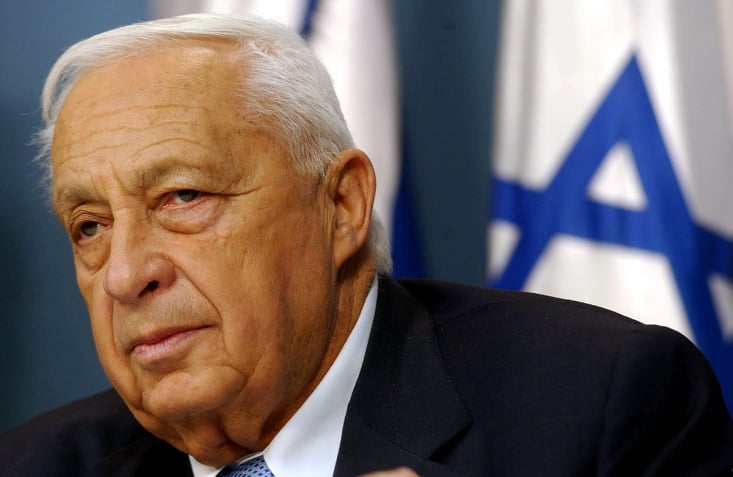
Sharon had a first, small stroke in December 2005 and was put on blood thinners before experiencing a severe brain hemorrhage on January 4, 2006. After spending months in the Jerusalem hospital where he was initially treated, Sharon was transferred to the long-term care facility at Sheba Medical Center in Tel Hashomer Hospital.
Doctors said that Sharon suffered renal failure, which led to multiple organ failure and death. He was 85 years old.
Yifa Yaakov and Times of Israel Staff contributed to this report.





The Times of Israel Community.