

Bennett says coalition broadcaster spat ‘nearly over’
Amid ongoing efforts to reach a compromise over Israel’s state-run media, senior ministers express hope that elections can be avoided
 Add ToI as a Preferred Source on Google
Raoul Wootliff is a former Times of Israel political correspondent and Daily Briefing podcast producer.
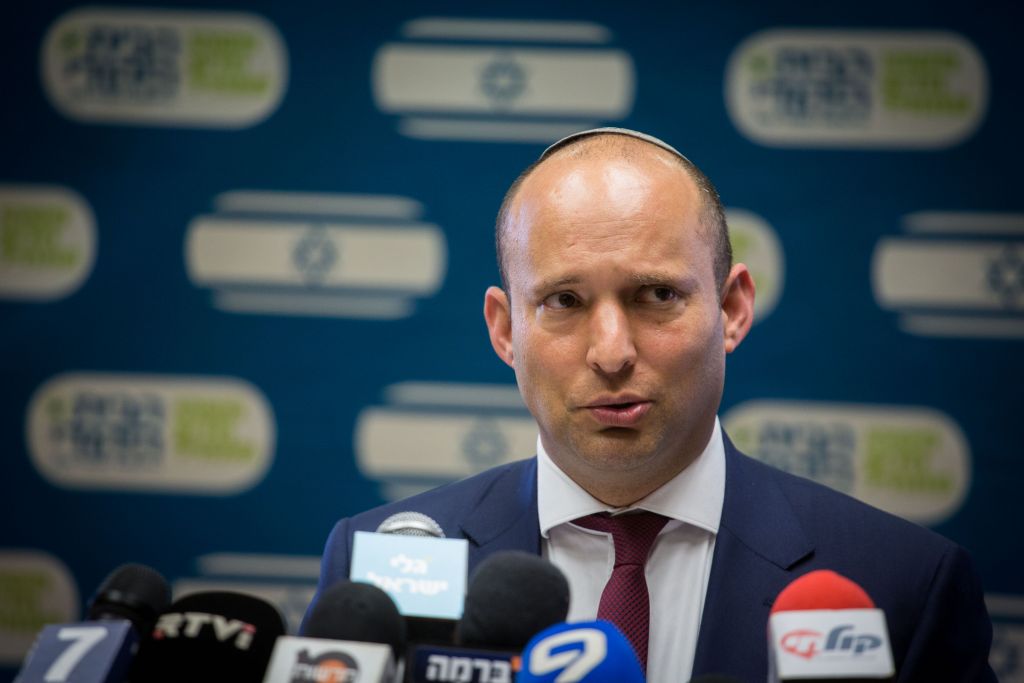
As talks continued in an effort to end a spat between Prime Minister Netanyahu and Finance Minister Moshe Kahlon over the future of Israel’s state-run media, Education Minister Naftali Bennett said Monday that the coalition crisis is “nearly over.”
Speaking at the Jewish Home Knesset faction’s weekly meeting, Bennett rejected the idea that new elections were on the horizon, saying that there was no reason to bring down the government.
”Since Saturday night, there have been determined efforts to end this unnecessary crisis,” he said, “and I can say now, with caution, that this coalition is nearly over.”
Facing the possible threat of new elections, politicians were scrambling Monday to defuse the crisis that erupted last week over the launch of a new public broadcaster to take the place of the aging Israel Broadcast Authority (IBA), slated for April 30.
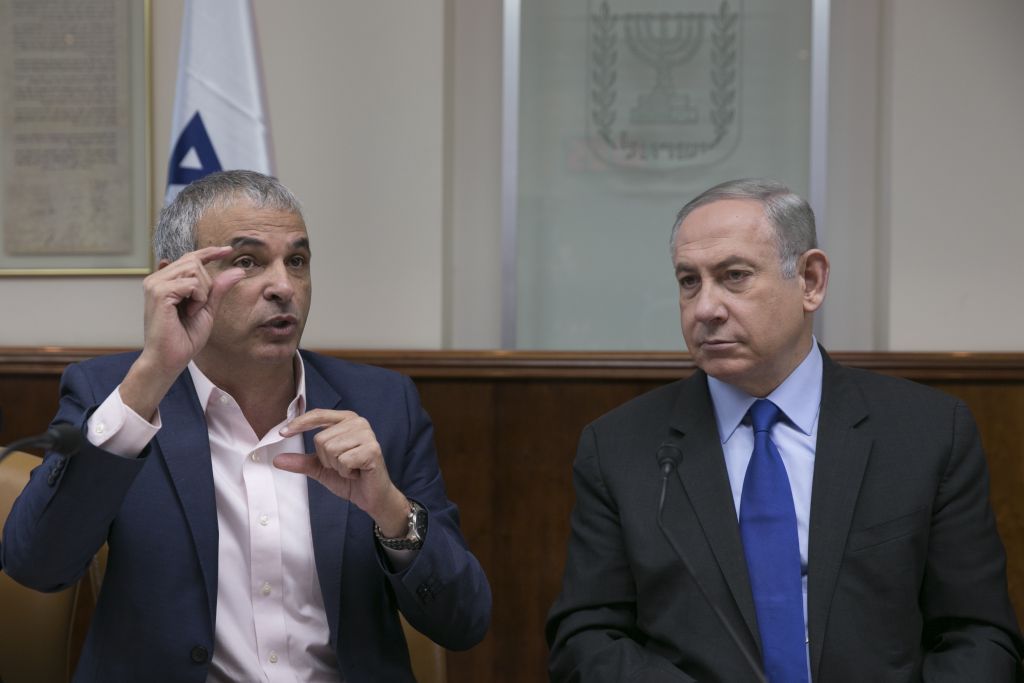
In a bid to avert the government’s fall, representatives of the prime minister and Kahlon were holding meetings intended to hammer out a compromise by Wednesday night, when Netanyahu is set to return from China. Netanyahu has threatened to call early elections if his coalition refuses to cancel reforms that would give state media greater editorial independence.
Bennett told his MKs that he had no intention of supporting elections that could potentially end a staunchly right-wing government.
“From my point of view, as the leader of the nationalist right, as long as the right-wing government continues to implement right-wing policies it will be allowed to continue its work,” he said. “We [in the Jewish Home] have been told that we would benefit most from elections but we have decided that it’s not good for the citizens of Israel. We have done a lot in government and we have a lot to still do.”
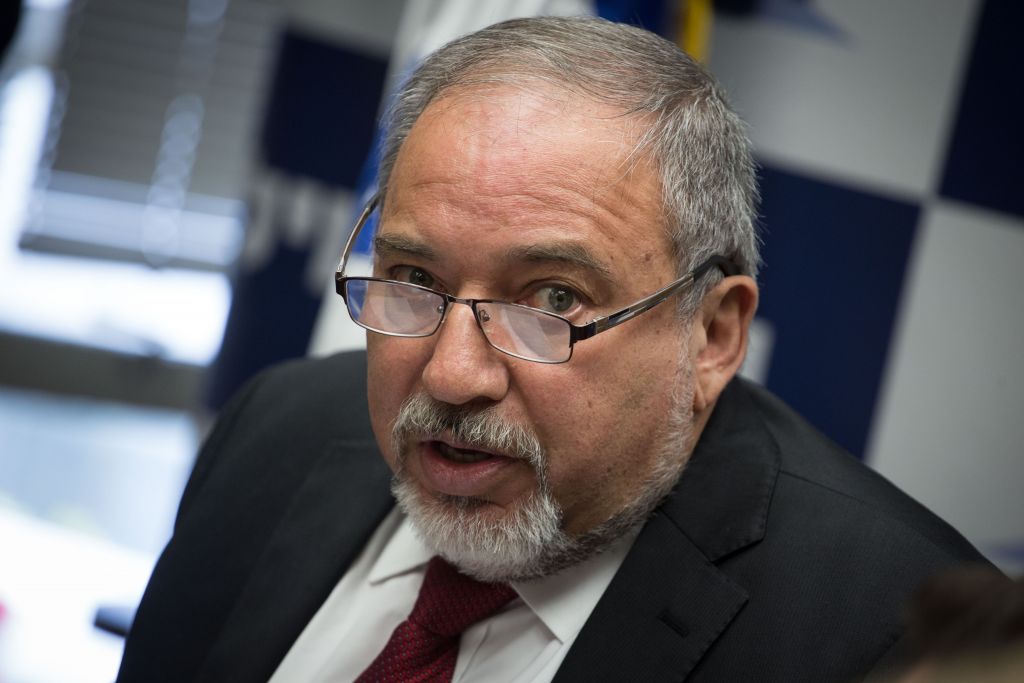
Speaking at his own Yisrael Beytenu faction meeting, Defense Minister Avigdor Liberman said that “no one in the coalition wants elections,” but warned that the country could nonetheless find itself facing snap polls if leaders fail to use “common sense.”
Liberman said he hoped Netanyahu and Kahlon “will reach a creative solution everyone can live with.”
The prime minister, who backed the 2014 legislation that established the new broadcaster, has said in recent weeks that he changed his mind and concluded the new public corporation was a “mistake.” His key complaint was the law’s guarantee of greater editorial independence for the new agency.
When Kahlon moved to oppose Netanyahu’s bid to ground the new broadcaster, the prime minister threatened new elections.
The crisis came to a head on Saturday night, when, shortly before he boarded a plane for an official visit to China, Netanyahu said he was no longer willing to allow the launch of the new broadcaster to go forward, and demanded that fellow lawmakers join him in restoring and preserving the old broadcasting authority. If they did not, he reportedly warned, he’d call for new elections, which would otherwise not be scheduled until 2019.
Netanyahu’s threat backtracked on an earlier agreement with Kahlon that would have seen some government oversight introduced but allow the new corporation to launch on time.

Kahlon has vowed not to back down, saying the new broadcaster is already up and running, employing hundreds of people, and that shuttering it so late in the game in order to revive the IBA would mean hundreds of millions of shekels in expenditures that were not budgeted for 2017.
On Sunday night, Tourism Minister Yariv Levin, an ally of Netanyahu, met with Finance Ministry director Shai Babad. That was followed Monday by a meeting of Kahlon’s chief of staff Nadav Sheinberger and Likud’s coalition chairman, MK David Bitan.
According to Hebrew media reports, the talks arrived at a preliminary agreement that would see the new public broadcaster merged with the IBA, and the removal of its CEO, Eldad Koblentz, and chairman, Gil Omer, long criticized by Netanyahu, from their posts. The key point of contention — how the new oversight body’s leadership would be determined going forward — was not addressed by the reports.
Meanwhile, a draft bill being prepared by the Communications Ministry would place unprecedented political oversight over the new broadcaster, including allowing the communications minister to directly appoint its CEO and chairperson, while expanding its authority to include the independent Army Radio.
Marissa Newman and Times of Israel staff contributed to this report.








The Times of Israel Community.