

Ministers advance bill demanding loyalty pledge from senior diplomats serving abroad
If draft bill is approved by Knesset, new ambassadors and consuls general will be compelled to swear allegiance to Israel as Jewish, democratic state
 Add ToI as a Preferred Source on Google
Carrie Keller-Lynn is a former political and legal correspondent for The Times of Israel

Ambassadors and consuls general posted abroad may soon have to make loyalty pledges to Israel as a Jewish and democratic state before receiving their postings, according to a draft bill advanced by a key governmental panel on Sunday.
Backed by Foreign Minister Eli Cohen and approved Sunday by the Ministerial Committee for Legislation, the bill would amend the law on diplomatic service appointments to say that the heads of diplomatic missions and consulates must swear allegiance as a precondition to receiving their official appointment.
Cohen’s office explained that the bill was a response to last year’s thwarted appointment of then-Meretz lawmaker Ghaida Rinawie Zoabi as consul in Shanghai. An Arab Muslim, Rinawie Zoabi has said that she does not connect to Israel’s “Jewish soul,” and before her brief stint as a lawmaker in the last coalition, she co-edited a document that does not recognize Israel as a Jewish state.
“The background of the bill is to prevent the appointment of ambassadors such as Rinawie Zoabi, who did not recognize the State of Israel as Jewish and democratic,” said a statement from the foreign minister’s office.
In 2018, Israel passed the controversial Basic Law: The Nation State, which enshrined the state’s character as Jewish and democratic.
Sunday’s draft bill, if passed into law by the Knesset, would require “heads of missions and consulates” to “express allegiance, before their appointment letter is sent, to preserving the State of Israel as Jewish and democratic.”
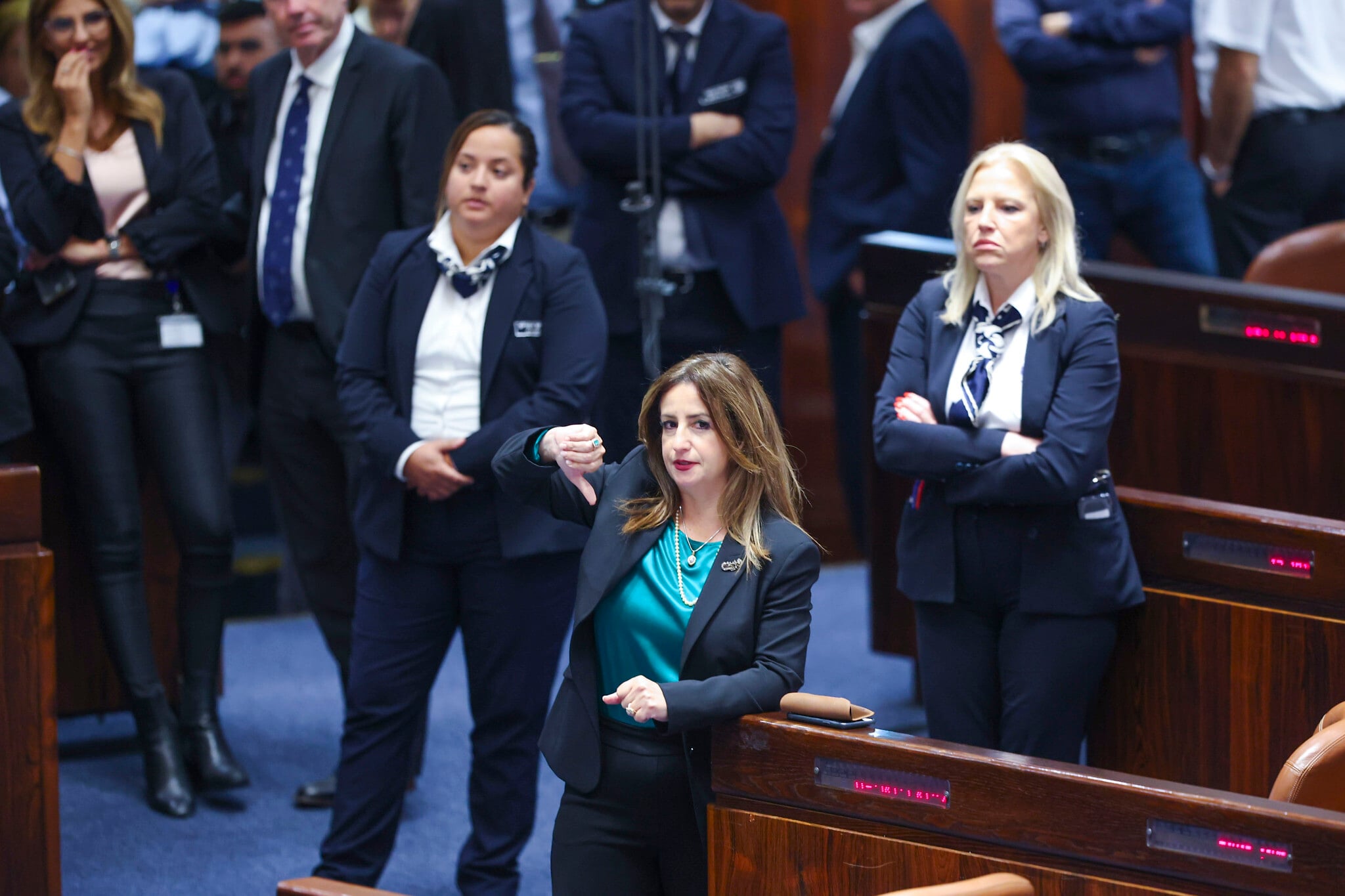
In February 2022, then-foreign minister Yair Lapid floated appointing Rinawie Zoabi as consul in Shanghai, as part of an attempt to remove her from the Knesset after she torpedoed key votes as an expression of criticism of Israel’s treatment of Palestinians and its Arab citizens. The government sought to clear her Knesset seat in order to hold its fragile coalition together, an effort that ultimately failed in June 2022.
Lapid, now opposition leader, drew considerable flak from his own coalition — and from then-opposition chief and current Prime Minister Benjamin Netanyahu — for the attempt.
In May 2022, Rinawie Zoabi withdrew her name from consideration before the appointment could be finalized. She eventually decided not to run again for Knesset in the November 2022 elections, in which her party, Meretz, failed to pass the electoral threshold.










The Times of Israel Community.