

Cabinet okays outlines of NIS 6b stimulus plan, but ministers divided on details
Blue and White pushes for those who need handout the most to be given preference, with others proposing vouchers to ensure money used to support businesses
 Add ToI as a Preferred Source on Google
The government on Sunday approved the outlines of a controversial plan to hand out billions of shekels to Israelis in stimulus money to help cope with the economic crisis caused by the coronavirus pandemic, with divided ministers set to meet later in the day to hash out the details of the plan.
Prime Minister Benjamin Netanyahu, Defense Minister Benny Gantz, Finance Minister Yisrael Katz, and Economy Minister Amir Peretz were expected to sit down and determine the best way to allocate the money.
Before that, media reports said Netanyahu was set to meet representatives of restaurant owners, who have been hit hard by the closures forced by the virus outbreak.
The proposal has been roundly criticized by Finance Ministry officials, the premier’s coalition partners and the public. The criticism has mostly centered on the plan’s call to disburse money to all Israelis — regardless of income or whether they were hurt economically by the government-mandated restrictions to contain the virus — and its high cost.
In a statement, the Prime Minister’s Office said the ministers had until Monday to put together a plan to allocate the one-time payments, which will equal a total of NIS 6 billion ($1.75 billion).
Katz must publish a memorandum of the plan by Tuesday, the statement said. After a period in which the public can submit comments about the plan, it will be quickly brought for approval by the cabinet and the Knesset, the statement said.
According to a plan announced last week, individuals over 18 will get NIS 750 each, and families with kids will get between NIS 2,000 and NIS 3,000. The plan has been derided for giving handouts to rich Israelis along with those in need, rather than directing the payments to only those who need it most.
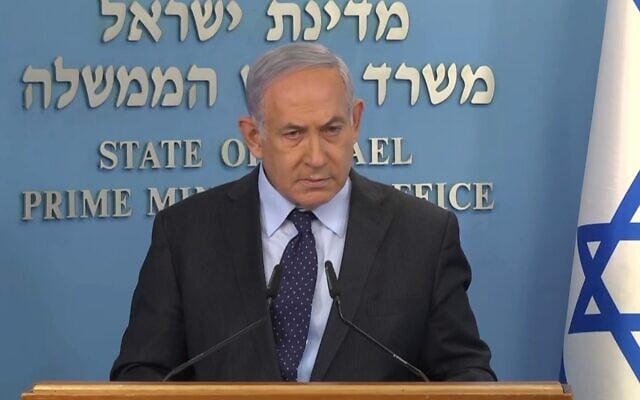
However, Gantz’s Blue and White party is pushing for those in need to be given preferential treatment. Netanyahu had said he preferred speed and wanted to avoid red tape and the need for income forms in order to ascertain who should get what.
According to several reports, Likud’s Environmental Protection Minister Gila Gamliel and Interior Minister Aryeh Deri of the Shas party both proposed at Sunday’s cabinet meeting that the public be given vouchers for Israeli businesses to encourage spending, instead of cash transfers, while others said that monetary grants should only be given to those who receive income benefits or unemployment stipends from the government.
Another offer, by United Torah Judaism MK Moshe Gafni, was that any child beyond three per family will increase the payout by NIS 500.
In a tweet, Justice Minister Avi Nissenkorn (Blue and White) said that, while the plan was a positive step, “we won’t give out the money blindly. We will support aid that differentiates with regard to social sensitivities. This way, the emphasis will be on those whose income has been hurt and those in financial distress.”
Strategic Affairs Minister Orit Farkash-Hacohen, also from Blue and White, reportedly objected to the current plan, calling it improvised and urging an “organized plan that will drive economic growth.”
She was reportedly the only minister who abstained in the cabinet vote, calling the proposal a “bad plan” and warning that “the money is limited and the public’s trust is limited.”

Welfare Minister Itzik Shmuli (Labor) said that the money should definitely be distributed, but in a different manner.
“The question is not whether we should give money to the public — we should give even more — but rather to whom it should go,” he said, according to Army Radio. “A distribution mechanism that gives everyone the same gives too little to those who need while those who don’t need get too much. There are billions here that must be divided differently, in a just and economically sensible way.”
At the opening of the meeting, Netanyahu confirmed that the allocation of grants would be examined.
“Today, we will be submitting to the cabinet a series of appointments, as well as a framework decision approving grants to the citizens of Israel in order to spur the economy and also help create employment,” he said. “We are talking about a NIS 6 billion framework. We will appoint a ministerial team that will approve the method of allocation.”

Netanyahu said that decisions on the matter needed to be made quickly to help those in need.
“The most important emphasis is on speed, with both the system and the decisions; therefore, this discussion that we want to hold needs to happen in the next 24 hours, if not today, then tomorrow, but no later, so that we can implement it as quickly as possible,” he said.

The plan, as outlined by Netanyahu last week, would see couples with one child receive a one-time payment of NIS 2,000 ($583), which rises to NIS 2,500 ($729) for those with two children, and NIS 3,000 ($875) for those with three or more. Single Israelis aged 18 and over would each receive NIS 750 ($218).
Unemployment in Israel on Sunday morning stood at 21.1 percent — or 855,380 people — as restrictions imposed amid record daily coronavirus infections further batter the economy.

Thousands of people took part Saturday evening in anti-government protests in Tel Aviv and Jerusalem, with the former focusing on the government’s economic policies amid the resurgent coronavirus pandemic, and the latter calling on Netanyahu to resign over his corruption trial.
Amid the ongoing rise in national infection rates, the latest coronavirus regulations severely limited public gatherings until further notice, ordered the closure of restaurants for in-house seating for the foreseeable future (though that move has been delayed to Tuesday after massive backlash by restaurateurs), and ordered multiple closures on weekends going forward, including of beaches, parks and other recreational activities.
The death toll since the start of the pandemic stood at 409 on Sunday.










The Times of Israel Community.