

El Al slashes executive salaries, further cuts back flights to Europe
Airline cuts pay of senior staff by 20%, also reduces travel to European cities that have seen few coronavirus cases, as outbreak batters global tourism
 Add ToI as a Preferred Source on Google
Luke Tress is The Times of Israel's New York correspondent.

El Al airlines cut salaries of its senior staff by 20 percent on Tuesday due to ongoing financial losses caused by the coronavirus outbreak.
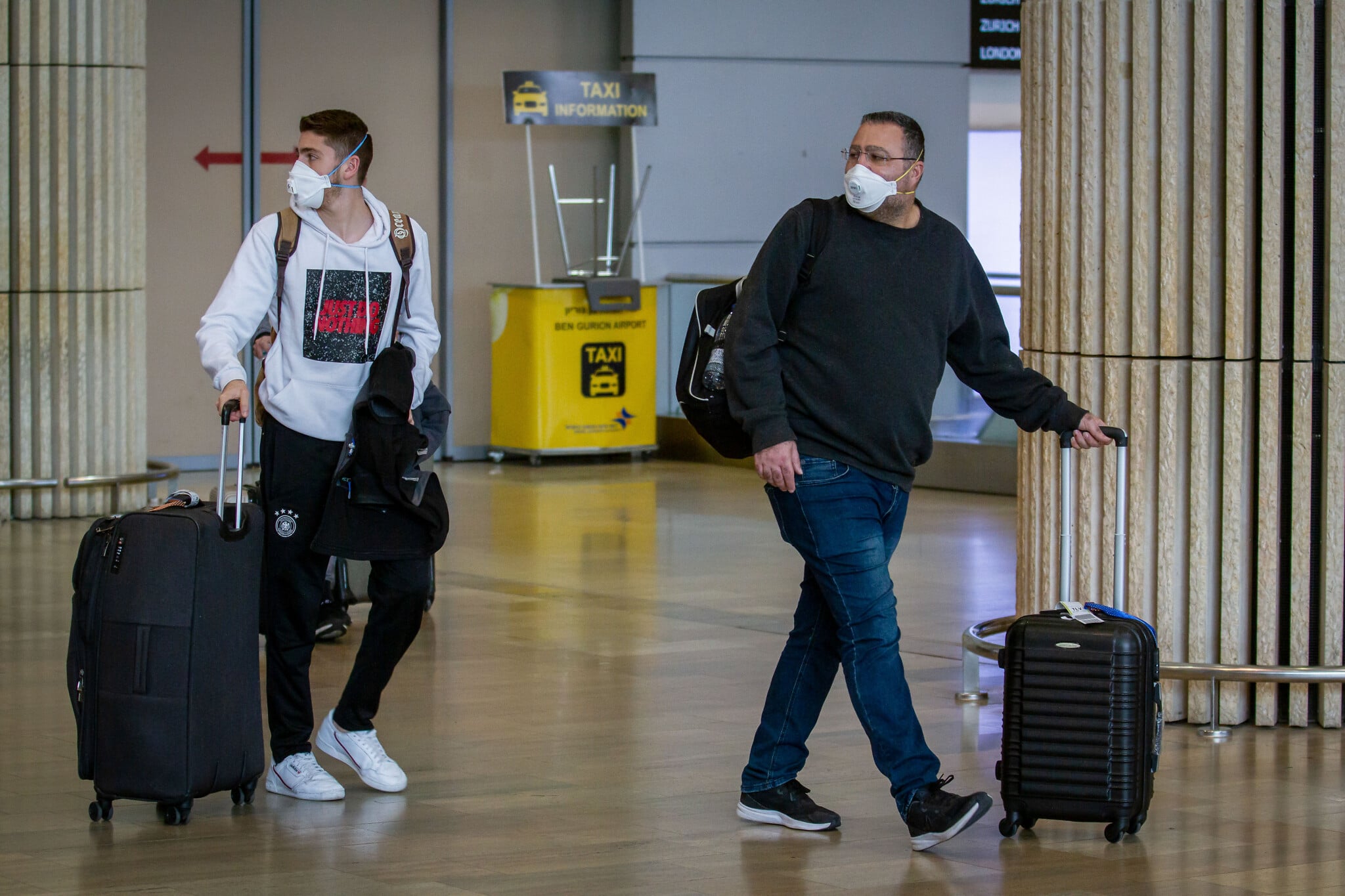
The company has been battered in recent weeks amid a global downturn in travel, government restrictions banning foreigners from entering Israel, and Health Ministry warnings urging Israelis to refrain from international travel.
The salary reduction includes the company’s board of directors and chairman, and retroactively takes effect from March 1, Channel 12 reported.
After halting flights to Italy last week due to the country’s virus outbreak, the company this week suspended flights to European destinations that have seen relatively few infections.
El Al on Monday cut back on regular flights to Europe, including to Vienna, Budapest, Brussels, and Frankfurt, due to low demand.
The airline said Tuesday it would allow travelers with tickets to Thailand and Japan set to fly between April 30 and July 31 to change their flights, including to different destinations, free of charge.
El Al on Tuesday also said it was reducing flights to Cyprus. More cancellations are expected in the coming days.

Israir, a smaller Israeli airline, announced marked down tickets of $61 with free cancellation to European destinations this week to try to entice travelers back into the air.
El Al last week suspended flights to Thailand, and said it would delay its planned launch of direct flights to Tokyo until April. The airline extended its halt of flights to Beijing and Hong Kong until May.
On Sunday El Al axed some 160 incoming employees and froze the hiring of new workers, after saying last week it was formulating a plan to fire some 1,000 people, nearly one-sixth of its workforce.
The company’s announcement on the planned firings were seen as part of a negotiation tactic in talks with labor representatives; the announcement of the plan likely does not actually mean that 1,000 people will be fired. The company employs some 6,300 people, 3,600 of whom are permanent workers.
The El Al union is said to be exploring options for reducing the company’s workforce without axing employees, including by giving up on paid vacation days and reducing the number of shifts people work.
Hundreds of El Al employees held an emergency meeting Sunday, demanding government assistance for the beleaguered airline.
Prime Minister Benjamin Netanyahu told the head of the workers’ committee, Sharon Ben Itzhak, that he had assigned a ministerial committee to help El Al and other Israeli airlines.
“I appreciate the work you do, and we will help you and care for El Al,” Netanyahu said. Transportation Minister Bezalel Smotrich also vowed to aid the airlines.
A government committee, including Tourism Minister Yariv Levin and representatives from the Finance Ministry, met on Sunday to discuss possible compensation for the travel and tourism industries. The government is not expected to provide cash handouts, but to provide indirect support, for example, by postponing payments to the government, and by providing marketing assistance, the Calcalist business daily reported.
The government holds shares in El Al and sees the company as a strategic asset, and government restrictions are partly responsible for it financial woes. Aid to the company could come in the form of cash or in the form of tax breaks. The airline pays some $100 million in taxes per year.
The airline might also be hoping for the government to cut back on restrictions against its flights — it is not allowed to fly over Saudi Arabian airspace, or to fly to Turkey, for security reasons, while foreign airlines operating out of Israel are allowed to.

El Al told Israeli investors last week that the company expects to see a loss of $50-70 million in revenue between January and April. The figure did not take into account the halt to flights from Italy. The airline’s shares on the Tel Aviv Stock Exchange have fallen 20% since the start of 2019.
In one bright spot for the airline, fuel prices have dropped worldwide due to a decrease in demand as the virus rocks the global travel and transportation industries.
Israel has implemented a strict border control regime to stem the flow of the virus, banning foreigners who were recently in China, Hong Kong, Macau, Thailand, Singapore, South Korea, Japan and Italy, and ordered Israelis returning from those countries to self-quarantine.
The Health Ministry urged Israelis Wednesday to seriously consider refraining from traveling abroad, becoming the first country to issue such an advisory.
The coronavirus, which emerged in China late last year, has killed 3,000 people and infected over 92,000 in over 60 countries. The vast majority of infections and deaths have been in mainland China. Israel has had 12 confirmed cases of the disease and no deaths.










The Times of Israel Community.