

Islamic Jihad tries to drag Hamas, and Israel, into escalation
After late night retaliation for attacks from Gaza, Israel signals the flare-up could end now… if the rocket barrages don’t resume

 Add ToI as a Preferred Source on Google
Avi Issacharoff, The Times of Israel's Middle East analyst, fills the same role for Walla, the leading portal in Israel. He is also a guest commentator on many different radio shows and current affairs programs on television. Until 2012, he was a reporter and commentator on Arab affairs for the Haaretz newspaper. He also lectures on modern Palestinian history at Tel Aviv University, and is currently writing a script for an action-drama series for the Israeli satellite Television "YES." Born in Jerusalem, he graduated cum laude from Ben Gurion University with a B.A. in Middle Eastern studies and then earned his M.A. from Tel Aviv University on the same subject, also cum laude. A fluent Arabic speaker, Avi was the Middle East Affairs correspondent for Israeli Public Radio covering the Israeli-Palestinian conflict, the war in Iraq and the Arab countries between the years 2003-2006. Avi directed and edited short documentary films on Israeli television programs dealing with the Middle East. In 2002 he won the "best reporter" award for the "Israel Radio” for his coverage of the second intifada. In 2004, together with Amos Harel, he wrote "The Seventh War - How we won and why we lost the war with the Palestinians." A year later the book won an award from the Institute for Strategic Studies for containing the best research on security affairs in Israel. In 2008, Issacharoff and Harel published their second book, entitled "34 Days - The Story of the Second Lebanon War," which won the same prize.
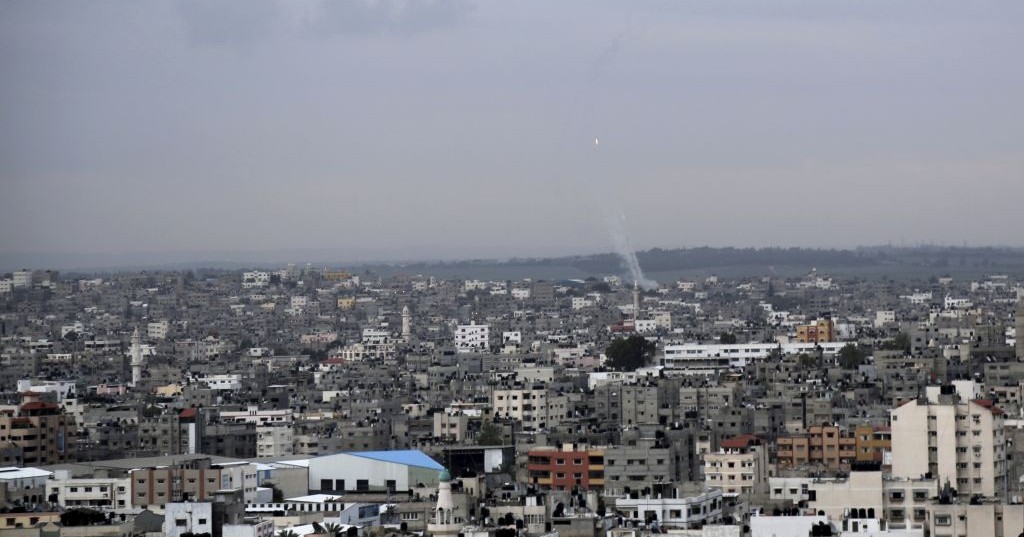
Despite the dramatic rhetoric Wednesday evening from Prime Minister Benjamin Netanyahu, who vowed that “if there is no quiet in our south, no quiet for the residents of Israel, there will be noise, lots of noise in Gaza… and that’s putting it mildly,” the decision on how to respond to the day’s massive rocket fire from Gaza was not a simple one.
A response of some kind was a given after more than 50 rockets and mortar shells were fired into Israel late on Wednesday afternoon, but the government faced tough choices, nonetheless. First of all, it had to decide at whom to fire back.
Islamic Jihad claimed responsibility for the barrage, the worst since November 2012, and boasted that more was to come. It is apparent that this organization, which lost three operatives Tuesday near Khan Younis whom the IDF said were about to carry out an attack, is making a great effort to drag Israel, and Hamas along with it, into a fresh round of conflict.
For Islamic Jihad, the rockets fired Wednesday were an excellent means to embarrass Hamas, in order to prove that it sets the agenda in Gaza, while Hamas has neglected jihad and resistance in favor of power.
Islamic Jihad had immediately recognized the public unrest across the territories following the killing this week of five Palestinians (the Gaza trio, as well as two in the West Bank — a Jordanian-Palestinian judge at the Allenby Bridge crossing, and a teen who was shot while throwing stones). The organization, apparently backed by Iran, wishes to establish itself as the new face of the resistance. Statements it issued hours after the rocket onslaught indicate that it is now focused on fashioning itself as the Palestinians’ new protectors.
If Mahmoud Abbas’s Fatah and Hamas remain silent in the face of Palestinian deaths, runs the message, Islamic Jihad will respond in their place. Moreover, the organization’s military wing spokesman explained that Islamic Jihad’s intention is to re-frame the terms of the ceasefire with Israel. From now on, for every Palestinian killed by the IDF, he pledged, the organization will respond with heavy fire. That way, Islamic Jihad can kill two birds with one rocket: embarrass Hamas and escalate the situation.
This brings us back to the problem of Israel’s response. Islamic Jihad does not possess many straightforward, easy-to-attack targets in Gaza. Its leaders are in hiding and it does not have large command centers.
Hamas is a different story. This is the organization that controls the Gaza Strip. It has no shortage of buildings for a showcase IDF attack. Israel considers Hamas a sovereign entity in Gaza and hence holds it accountable for any unrest in the area.
Still, a response that was not seriously calculated ran the risk of dragging Hamas into another round of escalation, paralyzing Israel’s south. In fact, given Hamas’s ever-improving rocket capabilities, not only the south would be under fire, but also central Israel.
A round of fighting on the eve of Purim, furthermore, is not a simple measure for the citizens of Israel. A strike that misses its target, an escalation, and the prospect of an IDF ground operation might loom — a scenario both Hamas and Israel would prefer to avoid. Islamic Jihad, on the other hand, would welcome such a development.
As of this writing, as Wednesday turned into Thursday, the IAF had struck nearly 30 targets, most of them belonging to Islamic Jihad and some to Hamas. There were no immediate reports of casualties in these attacks, since the targets were apparently empty. Israel seemed to be choosing to convey a threatening message to Hamas and Islamic Jihad, but Israeli officials also indicated that the flare-up could stop here and now — if there was no further rocket fire from Gaza.
Finally, one cannot help but tie the Islamic Jihad attack Wednesday to the Iranian weapons shipment seized on the high seas off Sudan by the Israeli Navy last week. The missiles on the Klos-C were intended for Islamic Jihad. The organization already has some missiles that can reach Tel Aviv, but another 40 that can reach Hadera in the north — part of the Klos-C cargo — would have been quite an asset.
It was noted after the Klos-C was intercepted that Iran had been seeking the capacity to target all of Israel not only from Lebanon via Hezbollah, but also from Gaza via Islamic Jihad. Thwarting that goal, for now, by stopping the Klos-C was a major success for Israel. Wednesday’s rocket barrage was both evidence of the Islamists’ displeasure at the setback, and a further warning of the escalating danger posed by the relentless arming and strengthening of Hamas and its emboldened rival Islamic Jihad.








The Times of Israel Community.